
Introduction
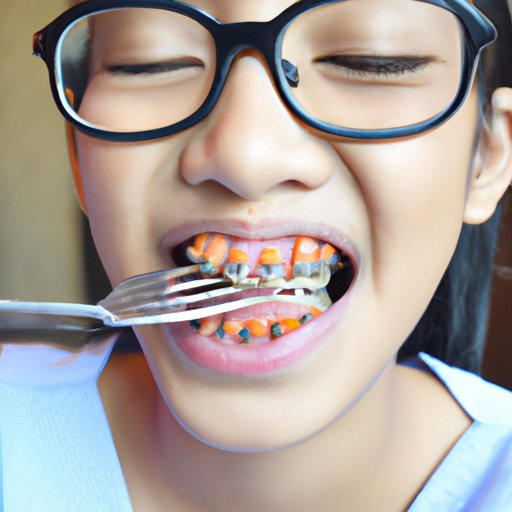
Having braces is a common experience for many children, teens, and adults. Eating with braces can be difficult and challenging at first, but it doesn’t have to be. With the right information, you can learn how to make eating with braces easier while still maintaining good oral health. This article will provide an overview of eating with braces and offer tips and techniques for doing so without damaging your braces or your teeth.
Understand What Foods are Safe to Eat with Braces
When you have braces, it’s important to know what types of food you can and cannot eat. Hard and sticky foods should generally be avoided because they can damage your braces and increase the risk of cavities. The American Dental Association recommends avoiding hard candies, popcorn, nuts, and gum when wearing braces.1
Instead, focus on soft foods that are easy to chew. These include mashed potatoes, yogurt, scrambled eggs, cooked vegetables, applesauce, and other soft fruits. You may also want to try soft-cooked grains such as oatmeal and couscous. Additionally, try to stick to cold foods and drinks like milkshakes and smoothies, which are much easier to consume with braces than hot foods and drinks.
Use Proper Eating Techniques to Avoid Damaging Your Braces
Once you know what foods are safe to eat with braces, you should also learn the proper techniques for eating them. Cutting your food into smaller pieces makes it easier to chew and swallow without putting too much pressure on your braces. It’s also important to chew slowly and carefully to avoid damaging your braces or getting food stuck in them. Additionally, try to avoid using your front teeth to bite into food, as this can put extra strain on your braces.

Tips for Keeping Teeth and Braces Clean
To keep your teeth and braces clean, it’s important to brush and floss regularly. Make sure you use a soft-bristled toothbrush and fluoride toothpaste to gently remove plaque and food particles from your teeth and braces. Additionally, you should visit your orthodontist for regular check-ups and adjustments to ensure your braces are working properly and your teeth are healthy.
Your orthodontist may also recommend special tools to help you clean hard-to-reach areas between your teeth and braces. For example, they may suggest using a water flosser, interdental brushes, or dental picks to remove food particles and plaque from these areas.
Conclusion
Eating with braces doesn’t have to be difficult or uncomfortable. By following the tips outlined in this article, you can learn how to eat safely and comfortably with braces. Stick to soft foods that are easy to chew and cut your food into smaller pieces. Additionally, brush and floss regularly and visit your orthodontist for regular check-ups and adjustments. With the right information and techniques, you can enjoy all your favorite foods while taking care of your teeth and braces.
(Note: Is this article not meeting your expectations? Do you have knowledge or insights to share? Unlock new opportunities and expand your reach by joining our authors team. Click Registration to join us and share your expertise with our readers.)