
Introduction
Rhubarb is a tart and tangy vegetable that has been enjoyed for centuries. It has a unique flavor that makes it perfect for baking, roasting, and more. But beyond its culinary uses, rhubarb also offers some impressive health benefits. In this article, we’ll explore everything you need to know about eating rhubarb, from choosing the right variety to trying out some tasty recipes.
What is Rhubarb?
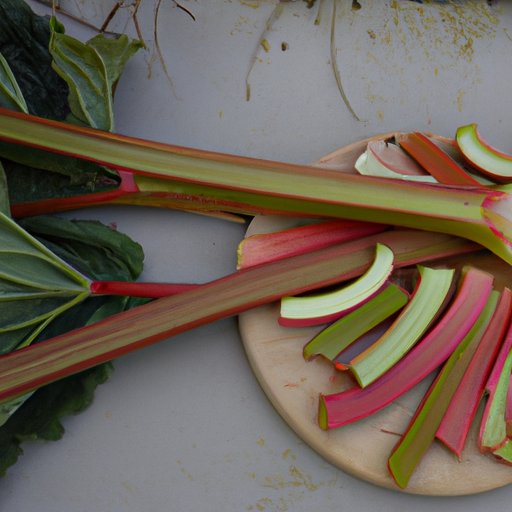
Rhubarb (Rheum rhabarbarum) is a perennial plant in the Polygonaceae family, which also includes plants like buckwheat and sorrel. It is native to China and was first introduced to Europe in the 17th century. The stalks of the plant are edible, while the leaves are not. The stalks have an earthy, tart flavor and can be used in a range of dishes, from pies and crumbles to jams and sauces.
The Benefits of Eating Rhubarb
Rhubarb is rich in essential vitamins and minerals, including vitamin K, calcium, and potassium. It is also a good source of dietary fiber, which can help support healthy digestion. Studies have shown that consuming dietary fiber can help reduce the risk of several chronic diseases, such as heart disease and type 2 diabetes. Additionally, eating rhubarb may help boost your immune system and protect against cancer.
Cooking Rhubarb: A Step-by-Step Guide
Whether you’re baking a pie or roasting some stalks, following these steps will help ensure your rhubarb is cooked to perfection.
Choosing the Right Rhubarb
When selecting rhubarb, look for stalks that are firm and crisp. Avoid any stalks that are limp or have blemishes. For best results, choose organic rhubarb if possible.
Preparing and Cooking Rhubarb
Before cooking, wash the rhubarb and trim off any leaves. Cut the stalks into 1-inch pieces. If you’re making a recipe that calls for cooked rhubarb, place the pieces in a saucepan and cover with water. Bring the water to a boil and then reduce the heat to low. Simmer for 10 minutes or until the rhubarb is tender. Drain the water from the pan and let the rhubarb cool before adding it to your dish.
Troubleshooting Common Issues
If your rhubarb is too tart, add a sweetener such as honey or maple syrup. You can also add a pinch of salt to balance the flavor. If your rhubarb is too mushy, try roasting it in the oven at 350°F for 15 minutes. This will help give it a slightly crunchier texture.

Rhubarb Recipes You Can Make at Home
Now that you know how to choose and prepare rhubarb, here are some delicious recipes you can make at home.
Rhubarb Crumble
This classic dessert is sure to be a hit with the whole family. To make it, preheat your oven to 375°F. In a bowl, mix together 3 cups of chopped rhubarb, ¾ cup of sugar, and 2 tablespoons of cornstarch. Place the mixture in an 8×8-inch baking dish and top with ½ cup of rolled oats, ½ cup of all-purpose flour, ½ cup of butter (melted), and ½ cup of brown sugar. Bake for 40 minutes or until golden brown. Serve warm with a scoop of ice cream.
Rhubarb Pie
This classic pie is sure to satisfy your sweet tooth. Preheat your oven to 375°F. Roll out a single 9-inch pie crust and place it in a pie dish. In a bowl, mix together 4 cups of chopped rhubarb, 1 cup of white sugar, and 2 tablespoons of all-purpose flour. Pour the mixture into the pie crust and top with another 9-inch pie crust. Crimp the edges to seal. Bake for 45 minutes or until golden brown. Serve warm with a dollop of whipped cream.
Roasted Rhubarb
For a simple side dish, try roasted rhubarb. Preheat your oven to 375°F. Place 4 cups of chopped rhubarb on a baking sheet and toss with 2 tablespoons of olive oil. Sprinkle with 1 teaspoon of ground cinnamon, ¼ teaspoon of ground nutmeg, and ¼ teaspoon of ground ginger. Roast for 20 minutes or until tender. Serve warm with a sprinkle of brown sugar.
Rhubarb Compote
This light and refreshing compote is the perfect way to enjoy rhubarb. In a saucepan, bring 4 cups of chopped rhubarb, 1 cup of orange juice, and ½ cup of sugar to a boil. Reduce the heat to low and simmer for 10 minutes or until the rhubarb is tender. Transfer the mixture to a bowl and stir in 1 tablespoon of fresh lemon juice. Let cool before serving.

Exploring the Health Benefits of Rhubarb
In addition to being delicious, rhubarb also offers some impressive health benefits. Here’s a closer look at the nutritional value of rhubarb and the potential health benefits of eating it.
Nutritional Value of Rhubarb
Rhubarb is an excellent source of essential vitamins and minerals. One cup of cooked rhubarb provides:
- 1.5 grams of dietary fiber
- 11 milligrams of calcium
- 86 milligrams of potassium
- 9 micrograms of vitamin K
Potential Health Benefits of Rhubarb
Studies have shown that eating rhubarb may offer a range of health benefits. Consuming rhubarb may help reduce inflammation, lower cholesterol levels, and improve digestion. Additionally, some studies suggest that eating rhubarb may help protect against certain types of cancer. However, more research is needed to confirm these potential health benefits.
Conclusion
Rhubarb is a versatile vegetable that can be used in a range of dishes. From pies and crumbles to compotes and roasted stalks, there are plenty of ways to enjoy this tart and tangy vegetable. Plus, rhubarb is packed with essential vitamins and minerals that can help support your overall health. So next time you’re at the grocery store, pick up some rhubarb and give one of these recipes a try!
How to Enjoy Rhubarb in Different Dishes
Rhubarb is a versatile vegetable that can be used in a range of dishes. Try out some of these delicious recipes to get started: Rhubarb Crumble, Rhubarb Pie, Roasted Rhubarb, and Rhubarb Compote.
Summary of Health Benefits of Rhubarb
Eating rhubarb can provide a range of health benefits. It is rich in essential vitamins and minerals, and may help reduce inflammation, lower cholesterol levels, and improve digestion. Additionally, some studies suggest that eating rhubarb may help protect against certain types of cancer.
(Note: Is this article not meeting your expectations? Do you have knowledge or insights to share? Unlock new opportunities and expand your reach by joining our authors team. Click Registration to join us and share your expertise with our readers.)