
Introduction
Pomegranate is a fruit that has been enjoyed for centuries around the world. It is known for its sweet-tart flavor and vibrant red color. This superfood is packed with antioxidants, vitamins, and minerals that can provide numerous health benefits. In this article, we will explore how to eat pomegranate fruit, as well as recipes for delicious dishes featuring pomegranates. Nutritional facts about pomegranates will also be included.
Step-by-Step Guide to Eating a Pomegranate
Eating a pomegranate can seem intimidating at first, but it’s actually quite simple. Here are the steps for preparing and eating a pomegranate:
Preparing the Pomegranate
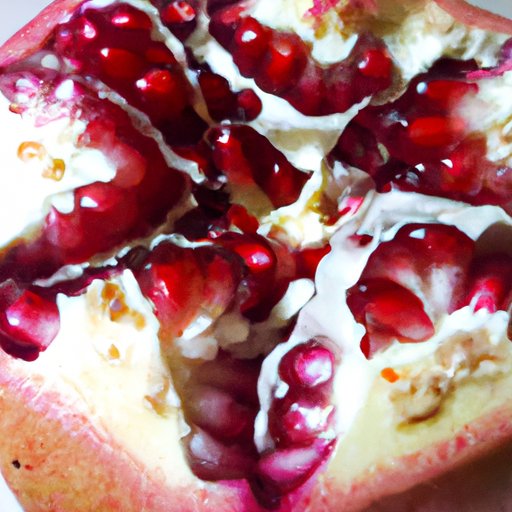
First, you need to prepare the pomegranate before you can access the juicy seeds inside. Start by cutting the pomegranate in half lengthwise so that you can see the white membrane and the seeds. Then, use a knife to cut through the white membrane without piercing the seeds.
Removing the Seeds
Once the pomegranate is cut open, you can easily remove the seeds. You can do this by hand or with a spoon. Be sure to remove all of the white membrane, as it can be bitter. Place the seeds in a bowl of cold water and agitate them gently to release any remaining bits of membrane.
Eating the Pomegranate
After the seeds are removed, they are ready to be eaten. You can enjoy the seeds raw, or you can add them to salads, smoothies, and other dishes. The seeds are sweet and tart, and the juice from the seeds adds an extra layer of flavor to dishes.
Recipes for Delicious Dishes Featuring Pomegranates
Now that you know how to prepare and eat pomegranates, here are some recipes for delicious dishes featuring this superfood.
Pomegranate Muffins
These fluffy muffins are packed with the sweet-tart flavor of pomegranate. To make the muffins, you will need:
- 2 cups all-purpose flour
- 1 teaspoon baking powder
- 1/2 teaspoon baking soda
- 1/2 teaspoon salt
- 1/2 cup butter, softened
- 1/2 cup granulated sugar
- 2 eggs
- 1 teaspoon vanilla extract
- 1/4 cup milk
- 1 cup pomegranate seeds
Preheat the oven to 350°F. Grease a 12-cup muffin tin. In a medium bowl, whisk together the flour, baking powder, baking soda, and salt. In a large bowl, cream together the butter and sugar until light and fluffy. Add the eggs one at a time, beating after each addition. Beat in the vanilla extract. Add the dry ingredients to the wet ingredients in two batches, alternating with the milk. Fold in the pomegranate seeds. Divide the batter among the muffin cups. Bake for 18-20 minutes, or until a toothpick inserted into the center of a muffin comes out clean. Allow the muffins to cool before serving.
Pomegranate Salad
This fresh salad is perfect for a summer meal. To make the salad, you will need:
- 4 cups baby spinach
- 1 cup sliced strawberries
- 1/2 cup pomegranate seeds
- 1/4 cup slivered almonds
- 1/4 cup feta cheese, crumbled
- 1/4 cup balsamic vinaigrette
In a large bowl, combine the spinach, strawberries, pomegranate seeds, almonds, and feta cheese. Drizzle the balsamic vinaigrette over the salad and toss to coat. Serve immediately.
Pomegranate Salsa
This bright and flavorful salsa is perfect for chips or tacos. To make the salsa, you will need:
- 2 cups diced tomatoes
- 1/2 cup diced red onion
- 1/4 cup chopped fresh cilantro
- 2 tablespoons lime juice
- 1 jalapeño pepper, seeded and finely chopped
- 1/2 cup pomegranate seeds
- Salt and pepper to taste
In a medium bowl, combine the tomatoes, red onion, cilantro, lime juice, jalapeño pepper, and pomegranate seeds. Season with salt and pepper to taste. Refrigerate for at least 30 minutes before serving.

Creative Ideas for Incorporating Pomegranate into Your Diet
There are many ways to incorporate pomegranate into your diet beyond simply eating the seeds. Here are some creative ideas for adding pomegranate to your meals:
Adding Pomegranate to Smoothies
A great way to start your day is with a nutritious smoothie. To make a pomegranate smoothie, blend together 2 cups of frozen berries, 1 banana, 1/2 cup of pomegranate seeds, 1/2 cup of almond milk, and a handful of spinach. This smoothie is packed with antioxidants and vitamins.
Using Pomegranate in Marinades
Pomegranate makes a great addition to marinades for meats and vegetables. For a delicious marinade, mix together 1/4 cup olive oil, 1/4 cup pomegranate juice, 2 tablespoons honey, and 1 tablespoon each of minced garlic and minced ginger. Marinate chicken, pork, or beef for at least 30 minutes before cooking.
Substituting Pomegranate Juice for Water
Pomegranate juice can be used as a substitute for water in many recipes. Try using pomegranate juice instead of water when making oatmeal, rice, or couscous. The juice will add a subtle sweetness and a burst of flavor to these dishes.

Tips and Tricks for Enjoying Pomegranate
Here are some tips and tricks for getting the most out of pomegranate:
Storing Pomegranates
Pomegranates can last up to a month in the refrigerator. If you want to extend their shelf life, you can freeze the seeds in airtight containers for up to six months. You can also freeze the juice for up to a year.
Selecting the Best Pomegranates
When selecting pomegranates, look for fruits that are heavy for their size and have bright, shiny skin. Avoid pomegranates with dull or wrinkled skin, as these may be past their prime.
Pairing Pomegranates with Other Foods
Pomegranates pair well with many different foods, including nuts, cheese, seafood, and poultry. Try adding pomegranate seeds to salads, yogurt, oatmeal, or desserts for a burst of flavor.
Nutritional Facts About Pomegranates
Pomegranates are a nutrient-dense food that can provide numerous health benefits. Here are some nutritional facts about pomegranates:
Calories
One pomegranate contains approximately 120 calories. The seeds are low in calories, but high in fiber and antioxidants.
Vitamins
Pomegranates are a good source of vitamins C, K, and B6. They are also rich in folate and potassium.
Minerals
Pomegranates are a good source of iron, magnesium, phosphorus, zinc, and copper. According to a study published in the journal Food Chemistry, pomegranates contain higher levels of polyphenols than red wine or green tea.
Conclusion
Pomegranate is an ancient superfood that is packed with antioxidants, vitamins, and minerals. Eating pomegranates can provide numerous health benefits, such as improved heart health and a stronger immune system. This article provided a step-by-step guide on how to eat pomegranate fruit, as well as recipes for delicious dishes featuring pomegranates. Nutritional facts about pomegranates were also included. We hope this article has inspired you to try different recipes featuring pomegranates and to incorporate this superfood into your diet.
(Note: Is this article not meeting your expectations? Do you have knowledge or insights to share? Unlock new opportunities and expand your reach by joining our authors team. Click Registration to join us and share your expertise with our readers.)