
Introduction
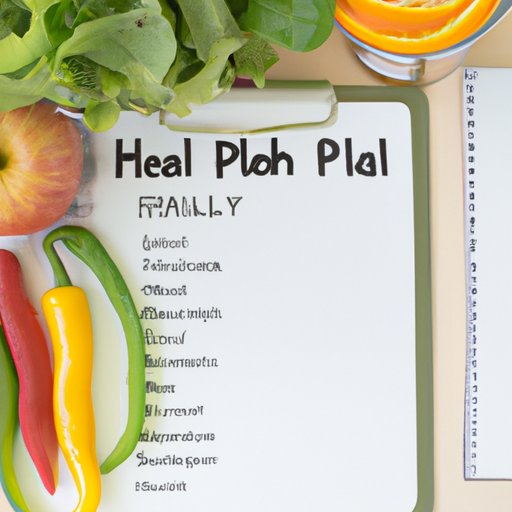
Eating healthy is an important part of weight loss, but it can be difficult to know where to start. This article will provide a comprehensive guide on how to eat healthy to lose weight, covering topics such as creating a meal plan, choosing nutrient-dense foods, increasing protein intake, tracking calories and macronutrients, and exercising regularly.
Create a Healthy Meal Plan
Creating a healthy meal plan is a great place to start when trying to lose weight. The following steps will help you create a meal plan that works for you.
Find Your Calorie Goal
The first step in creating a meal plan is to determine your calorie goal. To do this, you need to know your basal metabolic rate (BMR), which is the number of calories your body needs to maintain its current weight. You can calculate your BMR using an online calculator. Once you have your BMR, you can then determine how many calories you should consume each day to reach your desired weight loss goals.
Make a Grocery List
Once you have determined your calorie goal, it’s time to make a grocery list of all the healthy foods you need to meet your goals. When making your grocery list, focus on nutrient-dense foods such as fruits and vegetables, whole grains, lean proteins, and healthy fats. Avoid processed and refined foods as much as possible.
Prepare and Pack Meals Ahead of Time
Preparing and packing meals ahead of time can help you stay on track with your meal plan. Make sure to pack enough food for the entire day so you don’t get tempted to buy unhealthy snacks or meals while out and about. You can also save time by prepping multiple days worth of meals at once.
Choose Nutrient-Dense Foods
In order to eat healthy and lose weight, it’s important to choose nutrient-dense foods. Here are some tips for incorporating more nutrient-dense foods into your diet:
Focus on Fruits and Vegetables
Fruits and vegetables are packed with vitamins, minerals, and fiber, making them essential components of a healthy diet. Aim to consume at least five servings of fruits and vegetables per day. If you’re having trouble meeting this goal, try adding frozen fruits and vegetables to smoothies, soups, and stews.
Include Whole Grains
Whole grains are another important component of a healthy diet. They provide complex carbohydrates, fiber, and other important vitamins and minerals. Examples of whole grains include oats, brown rice, quinoa, barley, and buckwheat. Try to incorporate at least one serving of whole grains into your meals each day.
Choose Lean Proteins
Protein is essential for building and maintaining muscle, so it’s important to make sure you’re getting enough in your diet. Choose lean proteins such as chicken, turkey, fish, eggs, and tofu. Try to consume at least one serving of lean protein with each meal.
Limit Processed and Refined Foods
Processed and refined foods are high in calories and low in nutrients. Examples of processed and refined foods include white bread, candy, chips, and soda. These types of foods should be avoided or limited as much as possible.
Increase Protein Intake
Increasing your protein intake can help you lose weight and build muscle. Here are some tips for increasing your protein intake:
Benefits of Protein
Protein is essential for building and maintaining muscle, and it can also help you feel fuller longer. Eating adequate amounts of protein has been shown to increase metabolism and reduce cravings.
Sources of Protein
Good sources of protein include lean meats, eggs, nuts, seeds, legumes, and dairy products. Plant-based sources of protein such as beans, lentils, and quinoa are also great options.
How Much Protein Should You Eat?
Most experts recommend eating 0.8–1.2 grams of protein per kilogram of bodyweight per day. For example, if you weigh 70 kilograms, you should aim to consume 56–84 grams of protein per day.
Track Calories and Macronutrients
Tracking calories and macronutrients (protein, fat, and carbohydrates) can help you stay on track with your meal plan and ensure you’re getting enough of each nutrient. Here are some tips for tracking calories and macronutrients:
Benefits of Tracking
Tracking your calories and macronutrients can help you stay accountable and ensure you’re eating enough of each nutrient. It can also help you identify areas where you may be overconsuming or underconsuming certain foods.
Choosing a Tracking Method
There are a variety of methods for tracking calories and macronutrients, from pen and paper to online apps. Choose a method that works best for you and stick with it.
Staying Accountable
It can be easy to fall off track with your meal plan, but staying accountable is key to achieving your goals. Consider joining a support group or enlisting the help of a friend or family member to help keep you motivated.
Exercise Regularly
In addition to eating healthy, exercising regularly is key to losing weight. Here are some tips for incorporating exercise into your routine:
Types of Exercise
There are a variety of exercises you can do to lose weight, including cardio, strength training, HIIT, and yoga. Choose activities that you enjoy and that fit into your lifestyle.
Finding Time to Exercise
Finding time to exercise can be challenging, but it’s important to make it a priority. Try to set aside at least 30 minutes each day for physical activity. If you’re struggling to find the time, try breaking up your workouts into shorter sessions throughout the day.
Making Exercise Enjoyable
If you find yourself struggling to stay motivated, try to make exercise enjoyable. Listen to music while you work out, join a sports team, or take a fitness class with a friend. Find something you enjoy doing and make it part of your routine.
Conclusion
Eating healthy is an essential part of losing weight. To eat healthy, be sure to create a meal plan, choose nutrient-dense foods, increase your protein intake, track calories and macronutrients, and exercise regularly. With dedication and perseverance, you can reach your weight loss goals and live a healthier life.
Summary of Tips
This article provided tips on how to eat healthy and lose weight, including:
- Creating a meal plan
- Choosing nutrient-dense foods
- Increasing protein intake
- Tracking calories and macronutrients
- Exercising regularly
Final Advice
Remember, eating healthy and losing weight takes time and dedication. Don’t give up if you don’t see results right away; with patience and perseverance, you can reach your goals.
(Note: Is this article not meeting your expectations? Do you have knowledge or insights to share? Unlock new opportunities and expand your reach by joining our authors team. Click Registration to join us and share your expertise with our readers.)