

Introduction
Artichoke is one of the most popular vegetables in the world, with its crisp texture, nutty flavor, and nutrient-dense profile. It is a great addition to any meal, and can be enjoyed as an appetizer, side dish, or main course. But before you can enjoy the deliciousness of artichoke, you need to know how to select, clean, and cook it.
Overview of Artichoke
An artichoke is a perennial thistle from the family Asteraceae. The edible parts of the plant are the immature flower heads, which are harvested when they are still tightly closed. Artichokes are rich in vitamins and minerals, such as vitamin C, folate, magnesium, and potassium, and they are also a good source of dietary fiber. They have a mild, slightly sweet, nutty flavor that pairs well with many other ingredients.
Benefits of Eating Artichoke
Eating artichoke has numerous health benefits. According to a study published in the journal Nutrients, artichoke is a good source of antioxidants, which can help protect the body from oxidative stress and disease. It is also high in dietary fiber, which can help promote digestive health and reduce cholesterol levels. Additionally, artichoke is low in calories and fat, making it a great choice for weight loss and overall health.
How to Cook Artichoke: A Step-by-Step Guide
Cooking artichoke is not difficult, but it does require some preparation and knowledge. Here is a step-by-step guide to help you get started:
Selecting the Right Artichoke
When selecting artichoke, look for ones that are firm and plump, with tight leaves. Avoid artichokes that are wrinkled, wilted, or discolored. Fresh artichokes will keep in the refrigerator for up to two weeks.
Cleaning and Prepping the Artichoke
Begin by trimming off the stem and cutting off the top 1/3 of the artichoke. Using kitchen shears, snip off the sharp points of the leaves. Rub the cut edges with a lemon half to prevent discoloration. To make sure all the dirt and debris is removed, rinse the artichoke under cold running water. Then, using a paring knife, peel away the tough outer layer of the stem. Finally, use a spoon to scoop out the fuzzy center, known as the choke.
Cooking the Artichoke
Once the artichoke is prepped, it’s ready to be cooked. The most common way to cook artichoke is to steam it. Fill a large pot with 2-3 inches of water, place a steamer basket inside, and add the artichoke. Cover the pot and bring to a boil over high heat. Reduce heat to medium-low and simmer for 20-25 minutes, or until the artichoke is tender. You can also bake, grill, or microwave artichoke. Whichever cooking method you choose, make sure to add a bit of lemon juice, olive oil, garlic, or herbs to enhance the flavor.
Enjoying Artichoke: Tips on Preparing, Cooking, and Eating
Now that you know how to select, clean, and cook artichoke, it’s time to enjoy it! There are many different ways to enjoy artichoke. Here are some tips to get you started:
Different Ways to Eat Artichoke
The simplest way to eat artichoke is to simply dip the leaves in melted butter or a flavored mayonnaise and scrape off the fleshy part with your teeth. You can also stuff artichoke with a variety of fillings, such as cheese, breadcrumbs, and herbs. Or, you can slice the artichoke into thin slices and sauté it with garlic and olive oil. Lastly, you can puree cooked artichoke and use it as a dip or spread.
Tips for Enjoying Artichoke
When eating artichoke, make sure to discard the fibrous inner leaves and avoid eating the fuzzy center, known as the choke. Also, remember to season the artichoke with salt and pepper, as this will bring out its natural flavor. Lastly, don’t forget to save the artichoke heart – the tender center of the vegetable – for a special treat!
Artichoke 101: An Introduction to Selecting, Cleaning and Eating
If you’re new to eating artichoke, here is an introduction to selecting, cleaning, and eating the delicious vegetable.
Choosing the Best Artichokes
When selecting artichoke, look for ones that are firm and plump, with tight leaves. Avoid artichokes that are wrinkled, wilted, or discolored. Fresh artichokes will keep in the refrigerator for up to two weeks.
Cleaning and Prepping Artichokes
Begin by trimming off the stem and cutting off the top 1/3 of the artichoke. Using kitchen shears, snip off the sharp points of the leaves. Rub the cut edges with a lemon half to prevent discoloration. To make sure all the dirt and debris is removed, rinse the artichoke under cold running water. Then, using a paring knife, peel away the tough outer layer of the stem. Finally, use a spoon to scoop out the fuzzy center, known as the choke.
Different Ways to Cook Artichokes
The most common way to cook artichoke is to steam it. Fill a large pot with 2-3 inches of water, place a steamer basket inside, and add the artichoke. Cover the pot and bring to a boil over high heat. Reduce heat to medium-low and simmer for 20-25 minutes, or until the artichoke is tender. You can also bake, grill, or microwave artichoke. Whichever cooking method you choose, make sure to add a bit of lemon juice, olive oil, garlic, or herbs to enhance the flavor.
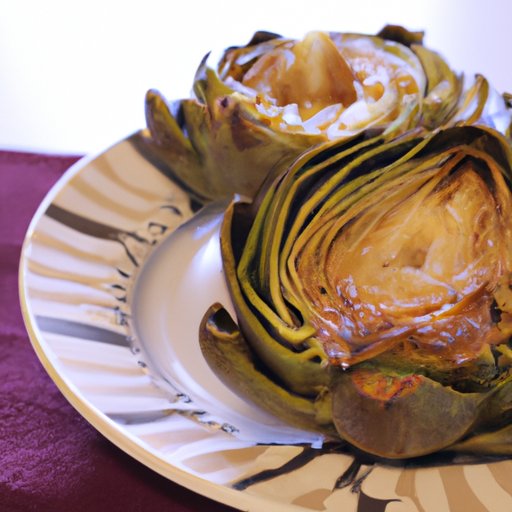
Roasted Artichoke: An Easy and Delicious Recipe
Here is a simple and delicious recipe for roasted artichoke. It’s the perfect side dish for any meal!
Ingredients Needed
- 2 artichokes
- 1/4 cup olive oil
- 3 cloves garlic, minced
- 2 tablespoons lemon juice
- 1 teaspoon dried oregano
- Salt and pepper to taste
Step-by-Step Instructions
- Preheat oven to 400°F (200°C).
- Trim the artichokes and discard the stems. Cut each artichoke in half and remove the chokes.
- In a small bowl, whisk together the olive oil, garlic, lemon juice, oregano, salt, and pepper.
- Brush the artichoke halves with the olive oil mixture.
- Place the artichoke halves on a baking sheet, cut side down. Roast for 25-30 minutes, or until tender.
- Serve warm.
Artichoke Recipes for Every Occasion
No matter what the occasion, there’s an artichoke recipe that’s perfect for it. Here are some ideas to get you started:
Appetizers
Try a classic like deep-fried artichoke hearts, or get creative with artichoke dip, crostini, and bruschetta.
Entrees
Add artichoke to pasta dishes, salads, pizzas, and sandwiches. Or, try something more adventurous like artichoke risotto or artichoke paella.
Side Dishes
For a light side dish, try grilled artichoke or roasted artichoke. For something heartier, make artichoke gratin or artichoke casserole.
Healthy Ways to Eat Artichoke: Ideas for Appetizers, Entrees and Side Dishes
Eating artichoke can be a healthy part of any diet. Here are some ideas for appetizers, entrees, and side dishes that are both nutritious and delicious:
Low-Calorie Artichoke Recipes
Try artichoke salad, artichoke soup, or artichoke frittata. These recipes are low in calories and packed with nutrition.
Nutritional Value of Artichoke
Artichoke is rich in vitamins and minerals, such as vitamin C, folate, magnesium, and potassium. It is also a good source of dietary fiber, which can help promote digestive health and reduce cholesterol levels. Additionally, artichoke is low in calories and fat, making it a great choice for weight loss and overall health.
Conclusion
Artichoke is a delicious and versatile vegetable that is packed with nutrients. With its mild, nutty flavor, it can be enjoyed in a variety of ways. Now that you know how to select, clean, and cook artichoke, you can start experimenting with recipes and adding it to your meals.
(Note: Is this article not meeting your expectations? Do you have knowledge or insights to share? Unlock new opportunities and expand your reach by joining our authors team. Click Registration to join us and share your expertise with our readers.)