
Introduction
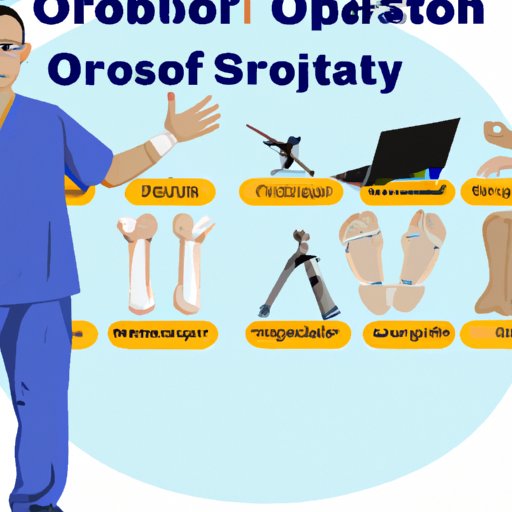
Orthopedists are medical doctors who specialize in diagnosing and treating musculoskeletal conditions, such as fractures, joint pain, ligament tears, and spinal disorders. They use a variety of treatments, including medications, physical therapy, and surgery, to help patients recover from injury or illness. Becoming an orthopedist requires extensive education, training, and experience in the field.
This article will provide an overview of the steps required to become an orthopedist, including the education and training necessary for the job. It will also discuss the day-to-day responsibilities of an orthopedist, the types of surgeries they may perform, and the risks and benefits associated with the profession. Additionally, it will explore how technology is changing the field of orthopedics and the importance of communication between orthopedists and their patients.
Education and Training Required to Become an Orthopedist
The path to becoming an orthopedist begins with obtaining an undergraduate degree. While there is no specific major required to pursue a career in orthopedics, students should focus on courses that prepare them for medical school, such as biology, chemistry, physics, and mathematics. After graduating from college, prospective orthopedists must complete four years of medical school, where they learn about anatomy, physiology, pharmacology, and other medical topics.
Once medical school is complete, aspiring orthopedists must then complete a residency program, which typically takes three to five years to complete. During this time, they gain hands-on experience in the field and develop their skills by working under the guidance of experienced physicians. Some orthopedists may choose to pursue a fellowship program after completing their residency, which allows them to specialize in a particular area of orthopedics, such as pediatrics or sports medicine.
Day-to-Day Responsibilities of an Orthopedist
The primary responsibility of an orthopedist is to diagnose and treat musculoskeletal conditions, including fractures, sprains, tendonitis, and arthritis. They use a variety of techniques, such as physical examinations and imaging tests, to assess a patient’s condition and determine the best course of treatment. Orthopedists also prescribe medications and refer patients to physical therapists or other specialists when necessary.
In some cases, orthopedists may need to perform surgery to treat a patient’s condition. This can include procedures such as arthroscopy, joint replacement, and fracture repair. Orthopedists may also be responsible for managing their patient’s long-term care, which includes monitoring their progress and prescribing additional treatments as needed.

Medical Equipment Used by Orthopedists
In order to diagnose and treat musculoskeletal conditions, orthopedists rely on a variety of medical equipment. X-ray machines are used to capture images of bones and joints, while ultrasound machines are used to assess soft tissues, such as muscles, tendons, and ligaments. Magnetic resonance imaging (MRI) machines provide detailed images of the body, and surgical instruments are used to perform operations.
Types of Surgeries Performed by Orthopedists
Orthopedic surgeons may perform a variety of surgeries depending on the patient’s condition. Arthroscopy is a minimally invasive procedure used to diagnose and treat joint problems, such as torn cartilage or a damaged ligament. Joint replacement involves replacing a damaged joint with a prosthetic joint, while fracture repair involves setting broken bones and restoring stability to the affected area.
Risks and Benefits Associated with Becoming an Orthopedist
Becoming an orthopedist involves both risks and benefits. On the plus side, orthopedists enjoy professional satisfaction from helping people get back to their normal activities after an injury or illness. They also benefit from financial stability, as orthopedic surgeons are among the highest-paid physicians in the medical field. Additionally, orthopedists typically work in comfortable and well-equipped environments.
However, there are also drawbacks to pursuing a career in orthopedics. Orthopedists often have to work long hours and deal with stressful situations, such as emergency surgeries. In addition, they may face legal challenges if they fail to provide adequate care to their patients.

Importance of Communication Between Orthopedists and Their Patients
Good communication between orthopedists and their patients is essential for providing quality care. It helps build trust between doctor and patient and sets realistic expectations for treatment outcomes. Additionally, it allows orthopedists to provide personalized care that meets each patient’s individual needs.
How Technology is Changing the Field of Orthopedics
Technology is playing an increasingly important role in the field of orthopedics. Improved surgical techniques, such as robotic-assisted surgeries, allow orthopedists to perform complex procedures with greater precision and accuracy. Diagnostic technologies, such as 3D printing and computer simulations, have enhanced the ability to diagnose and treat musculoskeletal conditions. Finally, telemedicine has increased patient access to orthopedic care, allowing them to receive treatment without having to leave their homes.
Conclusion
Becoming an orthopedist requires extensive education and training in the field. Once qualified, orthopedists are responsible for diagnosing and treating musculoskeletal conditions using a variety of approaches, including surgery. The risks and benefits associated with this profession should be weighed carefully before making the decision to pursue a career in orthopedics. Good communication between orthopedists and their patients is essential for providing quality care. Finally, technology is playing an increasingly important role in the field of orthopedics, allowing for improved surgical techniques, enhanced diagnostics, and increased patient access.
(Note: Is this article not meeting your expectations? Do you have knowledge or insights to share? Unlock new opportunities and expand your reach by joining our authors team. Click Registration to join us and share your expertise with our readers.)