

Introduction
Dentistry is a profession that involves the diagnosis, prevention, and treatment of diseases, disorders, and conditions of the oral cavity. It also focuses on improving the appearance of the teeth and gums through aesthetic treatments. Becoming a dentist requires extensive education, training, and licensure. In this article, we will explore the steps involved in becoming a dentist, the role of a dentist in providing oral health care, the services offered by dentists, as well as the benefits of being a dentist.

Education and Training Necessary to Become a Dentist
In order to become a dentist, you must complete an undergraduate degree and then attend dental school. After completing dental school, you must pass a licensing exam in order to practice in your state or country.
Undergraduate Degree
The first step in becoming a dentist is to complete an undergraduate degree. Most dental schools require applicants to have a bachelor’s degree, although some schools may accept students with an associate’s degree. Regardless of the type of degree, most programs require applicants to complete courses in biology, chemistry, physics, and math. Additionally, many dental schools also require applicants to take the Dental Admissions Test (DAT).
Dental School
After completing an undergraduate degree, prospective dentists must attend dental school. During dental school, students receive instruction in topics such as anatomy, pathology, pharmacology, and radiology. They also gain hands-on experience through clinical rotations. Upon completion of the program, students must pass both written and practical exams in order to receive their degree.
Licensing Exam
Once they have completed dental school, dentists must pass a licensing exam in order to practice in their state or country. In the United States, the licensing exam is administered by the American Dental Association (ADA). The exam tests the knowledge and skills acquired during dental school. Upon passing the exam, dentists are licensed to practice in the state in which they took the exam.
The Role of a Dentist in Providing Oral Health Care
The primary role of a dentist is to diagnose and treat dental problems. This includes identifying and treating cavities, gum disease, and other oral health issues. Dentists also educate patients about proper oral hygiene practices, such as brushing and flossing regularly. Additionally, dentists create individualized treatment plans for each patient, taking into account the patient’s medical history and current condition.
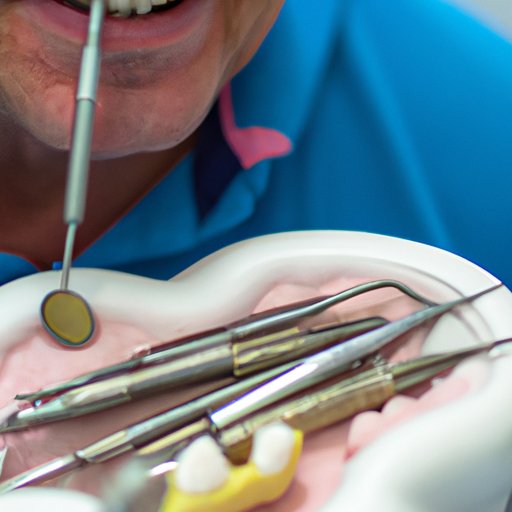
Various Dental Services Offered by Dentists
Dentists provide a variety of services to their patients. These include preventive care, restorative care, cosmetic dentistry, and orthodontics.
Preventive Care
Preventive care is the cornerstone of good oral health. During preventive care appointments, dentists clean and polish the teeth, check for signs of decay and gum disease, and provide advice on how to maintain good oral hygiene. Research has shown that regular preventive care can reduce the risk of developing dental problems. (American Dental Association, 2020)
Restorative Care
Restorative care is used to repair damage to the teeth caused by decay, trauma, or wear and tear. Common restorative procedures include fillings, crowns, bridges, and implants. Dentists use these procedures to restore the function and aesthetics of the teeth.
Cosmetic Dentistry
Cosmetic dentistry is used to improve the appearance of the teeth and smile. Common procedures include whitening, veneers, and bonding. These procedures can help patients achieve a brighter, more symmetrical, and aesthetically pleasing smile. (Colgate Professional, 2018)
Orthodontics
Orthodontics is the branch of dentistry that focuses on correcting misaligned teeth and jaws. Common orthodontic procedures include braces, retainers, and aligners. Orthodontic treatment can help patients achieve a straighter, healthier smile. (Colgate Professional, 2019)

Benefits of Being a Dentist
Being a dentist comes with numerous benefits. These include financial rewards, satisfaction from helping patients, and professional recognition.
Financial Rewards
Dentistry is a financially rewarding career. According to the Bureau of Labor Statistics, the median annual salary for dentists in the United States is $151,850. (Bureau of Labor Statistics, 2020)
Satisfaction from Helping Patients
Dentists derive great satisfaction from helping their patients. By providing quality care, dentists can make a positive impact on their patients’ lives. From relieving pain to restoring smiles, dentists have the opportunity to make a lasting difference in people’s lives.
Professional Recognition
Dentists are highly respected members of the medical community. As such, they often receive recognition for their expertise and dedication to their craft. This recognition can come in the form of awards, honors, and invitations to participate in professional organizations.
Best Practices for Running a Successful Dental Practice
In addition to providing quality care, dentists must also be savvy businesspeople in order to run a successful practice. This includes building relationships with patients, properly managing finances, and staying up-to-date with technology.
Building Patient Relationships
Patient relationships are key to running a successful practice. Building strong relationships with patients helps create loyalty and trust, which can lead to long-term success. To build relationships with patients, dentists should focus on providing excellent customer service and clear communication.
Properly Managing Finances
Dentists must also be adept at managing finances in order to keep their practice running smoothly. This includes setting fees, billing patients, and managing accounts receivable. Additionally, dentists should invest in the latest technology to ensure their practice remains competitive.
Staying Up-to-Date with Technology
Technology is constantly evolving in the field of dentistry. Dentists should stay up-to-date with the latest technology in order to remain competitive. This includes digital x-rays, intraoral cameras, and CAD/CAM technology. By investing in the latest technology, dentists can provide the best possible care to their patients.
Latest Technology Used in Dentistry
The field of dentistry has seen a number of advancements in recent years. Here are some of the latest technologies used in dentistry.
Digital X-Rays
Digital x-rays are used to detect cavities, fractures, and other abnormalities in the teeth and jaw. Digital x-rays are faster and more efficient than traditional x-rays, and they produce better images with less radiation exposure. (Colgate Professional, 2016)
Intraoral Cameras
Intraoral cameras are used to take pictures of the inside of the mouth. These cameras allow dentists to get a better look at the teeth and gums and diagnose problems more accurately. (Colgate Professional, 2015)
CAD/CAM Technology
Computer-aided design and computer-aided manufacturing (CAD/CAM) technology is used to create dental prosthetics, such as crowns, bridges, and veneers. This technology allows dentists to quickly and accurately create custom-fitted prosthetics. (Colgate Professional, 2017)
Conclusion
Becoming a dentist requires extensive education, training, and licensure. The role of a dentist is to diagnose and treat dental problems, educate patients about oral health care, and develop individualized treatment plans. Dentists offer a variety of services, including preventive care, restorative care, cosmetic dentistry, and orthodontics. Additionally, being a dentist comes with numerous benefits, such as financial rewards, satisfaction from helping patients, and professional recognition. Finally, dentists should stay up-to-date with the latest technology in order to remain competitive.
(Note: Is this article not meeting your expectations? Do you have knowledge or insights to share? Unlock new opportunities and expand your reach by joining our authors team. Click Registration to join us and share your expertise with our readers.)