
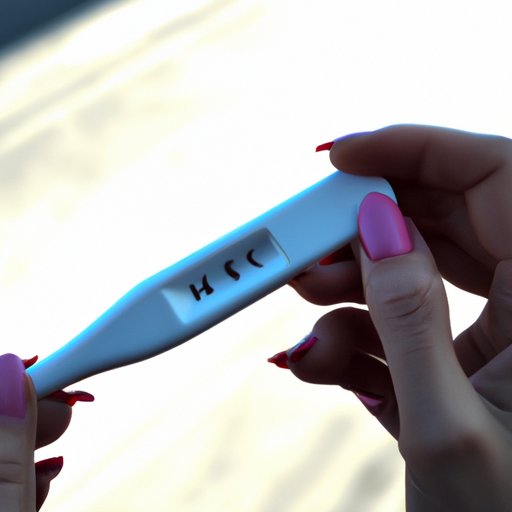
Introduction
Pregnancy is the period of time during which a woman carries a fetus in her uterus. It typically lasts for 40 weeks, or 9 months, from the first day of the woman’s last menstrual period. During this time, various changes occur in the mother’s body as the fetus grows and develops.
In this article, we’ll explore how soon a woman can tell if she is pregnant. We’ll look at signs and symptoms that may indicate pregnancy, when to take a pregnancy test, and what are the most reliable tests for pregnancy. We’ll also discuss the timing of conception and early pregnancy.
Signs and Symptoms of Early Pregnancy: How to Tell If You’re Pregnant
There are several signs and symptoms that can indicate pregnancy. The most common early sign of pregnancy is a missed period. Other signs and symptoms include nausea/vomiting, breast changes, fatigue, food cravings/aversions, and frequent urination. However, it is important to note that these signs and symptoms can also be caused by other conditions, such as stress or an underlying medical condition.
When these signs and symptoms are present, it is recommended that a woman take a pregnancy test to determine if she is pregnant. In some cases, a woman may experience symptoms as early as two weeks after conception.
When Can I Take a Pregnancy Test to Know for Sure?
There are several types of pregnancy tests available. Home pregnancy tests measure levels of the hormone human chorionic gonadotropin (hCG) in a woman’s urine. Blood tests measure hCG in the blood, and ultrasounds can detect a gestational sac in the uterus. Home pregnancy tests are usually accurate one week after a missed period, while blood tests can detect hCG levels as early as six days after ovulation.
It is important to note that home pregnancy tests may give false positives or false negatives, so it is best to confirm a positive result with a blood test or ultrasound. Additionally, it is important to read the instructions on the package carefully and follow them exactly.
Common Questions About Knowing When You’re Pregnant
Many women have questions about knowing when they are pregnant. One common question is “How soon after conception can you tell if you’re pregnant?” The answer depends on the type of test used and the sensitivity of the test. Home pregnancy tests are usually accurate one week after a missed period, while blood tests can detect hCG levels as early as six days after ovulation.
Another common question is “What is the earliest sign of pregnancy?” The earliest sign of pregnancy is usually a missed period, although some women may experience other symptoms, such as nausea/vomiting, breast changes, fatigue, food cravings/aversions, and frequent urination, before their period is due.
Finally, many women wonder “What is the most reliable test for pregnancy?” The most reliable test for pregnancy is a blood test, which can detect hCG levels as early as six days after ovulation. Ultrasounds can also detect gestational sacs in the uterus, although this is usually done after a positive home pregnancy test.
Understanding the Timing of Conception and Early Pregnancy
In order to understand when a woman can tell if she is pregnant, it is important to understand the timing of conception and early pregnancy. Fertilization typically occurs around 10-14 days after the first day of a woman’s last menstrual period. The fertilized egg then implants into the lining of the uterus around 6-12 days later. From there, the gestational period begins and lasts for roughly 40 weeks.
The timing of conception and early pregnancy can vary greatly from woman to woman. Some women may experience signs and symptoms as early as two weeks after conception, while others may not experience any until much later in the pregnancy.
Conclusion
In conclusion, it is possible to tell if a woman is pregnant as early as two weeks after conception. Common signs and symptoms include a missed period, nausea/vomiting, breast changes, fatigue, food cravings/aversions, and frequent urination. A home pregnancy test is usually accurate one week after a missed period, while blood tests can detect hCG levels as early as six days after ovulation. Understanding the timing of conception and early pregnancy is essential to determining when a woman can tell if she is pregnant.
If you think you may be pregnant, it is important to speak to your healthcare provider for further testing and guidance. For more information, visit the American College of Obstetricians and Gynecologists’ website at http://www.acog.org.
(Note: Is this article not meeting your expectations? Do you have knowledge or insights to share? Unlock new opportunities and expand your reach by joining our authors team. Click Registration to join us and share your expertise with our readers.)