
Introduction
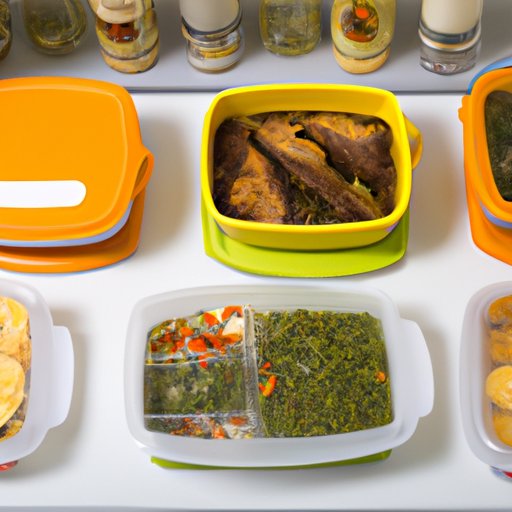
Ready-to-eat food is convenient and often more cost-effective than cooking from scratch. However, proper storage is essential for maintaining the safety and quality of the food. Improper storage can lead to a variety of foodborne illnesses, as well as spoilage or contamination. In this article, we’ll explore the best practices for storing ready-to-eat food, including the use of airtight containers, refrigerator storage, reheating tips, optimal temperatures, and ways to reduce the risk of cross-contamination.
Benefits of Airtight Containers
Airtight containers are a great way to store ready-to-eat food. They keep food fresh and free from contaminants, and they’re also easy to clean and transport. According to a study published in the Journal of Food Science, airtight containers are effective at reducing the rate of microbial growth on food, which helps to prevent food spoilage and contamination.
Airtight containers come in a variety of materials, such as plastic, glass, and stainless steel. Plastic containers are lightweight and inexpensive, but they may contain chemicals that can leach into the food over time. Glass containers are heavier and more expensive, but they’re non-porous and won’t absorb odors or flavors. Stainless steel containers are durable and dishwasher safe, but they’re also more expensive than plastic or glass containers.
Refrigerator Storage
When storing ready-to-eat food in a refrigerator, it’s important to maintain optimal temperatures. According to the United States Department of Agriculture (USDA), the ideal temperature for refrigerated foods is 40°F or below. Keeping the temperature too high can cause bacteria to grow rapidly, leading to foodborne illness. It’s also important to label and organize stored food to ensure that it’s used within the recommended timeframe.
The USDA recommends labeling food with the date it was purchased or prepared. This will help you keep track of when the food should be used and discarded. Additionally, it’s important to organize food in the refrigerator so that older items are used first. This will help to reduce the risk of spoilage and contamination.
Reheating Ready-to-Eat Food
It’s important to follow best practices when reheating ready-to-eat food. The USDA recommends reheating food to an internal temperature of 165°F or higher, which will help to kill any bacteria that may have grown during storage. Additionally, it’s important to avoid cross-contamination by using separate utensils for raw and cooked foods.
“When reheating food, it’s important to make sure that it’s heated to the appropriate temperature,” says registered dietitian Natalie Rizzo. “This will help to ensure that the food is safe to eat and will retain its flavor and texture.”
Optimal Temperature for Storing Ready-to-Eat Food
When storing ready-to-eat food, it’s important to consider the optimal temperature for the food. According to the USDA, most perishable foods should be stored at a temperature of 40°F or lower. Foods such as eggs, dairy products, and cooked meats should be stored at a temperature of 32°F or lower.
Additionally, it’s important to remember that different types of food require different storage temperatures. For example, canned goods can be stored at room temperature, while fruits and vegetables should be stored in the refrigerator. Taking the time to research the optimal storage temperature for each type of food will help to ensure that the food is kept safe and fresh.
Cross-Contamination Risks
Cross-contamination is a major concern when storing ready-to-eat food. To reduce the risk of cross-contamination, the USDA recommends washing hands and surfaces before and after handling food. Additionally, it’s important to keep raw and cooked foods separate, as well as to avoid using the same utensils for both types of food.
“Cross-contamination is one of the leading causes of foodborne illnesses,” says registered dietitian Miriam Jacobson. “Taking the necessary steps to reduce the risk of cross-contamination can help to ensure that the food is safe to eat.”
Conclusion
Storing ready-to-eat food properly is essential for ensuring the safety and quality of the food. Airtight containers are a great way to keep food fresh and free from contaminants, while the refrigerator is ideal for maintaining optimal temperatures. When reheating food, it’s important to make sure that it’s heated to the appropriate temperature to kill any bacteria that may have grown during storage. Additionally, it’s important to take steps to reduce the risk of cross-contamination, such as washing hands and surfaces before and after handling food.
By following these best practices for storing ready-to-eat food, you can help to ensure that the food is safe to eat and retains its flavor and texture.
(Note: Is this article not meeting your expectations? Do you have knowledge or insights to share? Unlock new opportunities and expand your reach by joining our authors team. Click Registration to join us and share your expertise with our readers.)