
Introduction
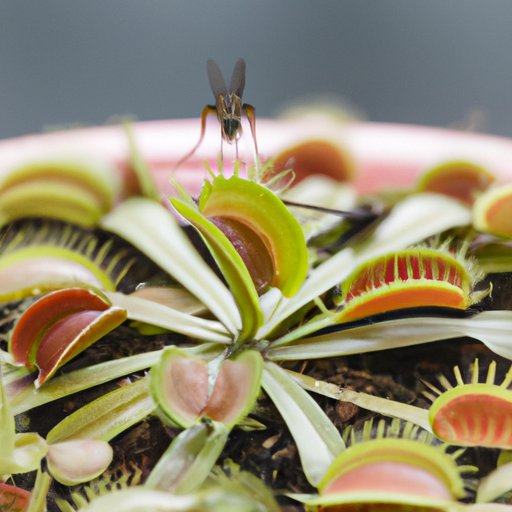
The Venus Fly Trap is a carnivorous plant native to the wetlands of North and South Carolina. Its unique trapping mechanism has fascinated scientists and gardeners alike for centuries. While its appearance may be intimidating, caring for a Venus Fly Trap can be an enjoyable experience. One of the most important aspects of caring for a Venus Fly Trap is understanding how often it needs to eat.
Analyzing the Feeding Habits of Venus Fly Traps
Venus Fly Traps are carnivorous plants that feed on small insects. This includes flies, moths, spiders, ants, and other types of crawling insects. The insects provide essential nutrients that cannot be obtained from the soil. Without these nutrients, the plant would not be able to survive.
Insects serve as the primary source of food for Venus Fly Traps. However, it is possible to feed them with other sources such as fish food or raw meat. These should only be used as occasional treats, as they do not provide the same nutritional value as insects.

Exploring How Often Venus Fly Traps Need to Eat
It is important to understand how often Venus Fly Traps need to eat in order to ensure their health and longevity. Generally speaking, Venus Fly Traps should be fed every 7 to 10 days. This is enough time for the plant to digest its previous meal and prepare itself for the next one.
When creating a meal plan for your Venus Fly Trap, it is best to err on the side of caution and feed the plant less often rather than more often. Overfeeding can lead to digestive problems and even death. It is also important to make sure that the insect you choose is the appropriate size for the plant. Too large of a prey can cause the trap to become damaged.

Understanding the Digestive System of Venus Fly Traps
In order to understand how often Venus Fly Traps need to be fed, it is important to understand how their digestive system works. The digestive process begins when an insect triggers the sensitive hairs inside the trap. This causes the trap to snap shut, trapping the insect inside. The trap then secretes digestive enzymes that break down the insect into a liquid form.
The digestion process typically takes between 5 to 12 days, depending on the size of the prey and the environmental conditions. During this time, the trap will remain closed until the digestion is complete. Once the digestion process is finished, the trap will reopen and the remains of the prey will be expelled.

Tips for Properly Feeding a Venus Fly Trap
Now that you understand how often Venus Fly Traps need to eat and how their digestive system works, here are some tips for properly feeding your Venus Fly Trap:
1. Choose the right type of insect. The ideal prey for a Venus Fly Trap is small, crawling insects such as flies, moths, or ants. Avoid feeding large insects as they can cause damage to the trap.
2. Use proper feeding techniques. When feeding your Venus Fly Trap, gently place the insect inside the trap and close it. Do not force the insect into the trap as this can damage the delicate hairs on the inside.
3. Feed your Venus Fly Trap at regular intervals. As mentioned earlier, it is best to feed your Venus Fly Trap every 7 to 10 days. This will give the plant enough time to digest its previous meal before being fed again.
Conclusion
Caring for a Venus Fly Trap can be a rewarding experience. By understanding how often it needs to eat and following the tips outlined above, you can ensure that your Venus Fly Trap stays healthy and happy. Keep in mind that overfeeding can be detrimental to the plant’s health, so always err on the side of caution when feeding your Venus Fly Trap.
(Note: Is this article not meeting your expectations? Do you have knowledge or insights to share? Unlock new opportunities and expand your reach by joining our authors team. Click Registration to join us and share your expertise with our readers.)