
Introduction
Buying a home is a major financial decision, and it’s important to understand the mortgage approval process before taking the leap. Knowing how much of a mortgage you can get approved for will help you set realistic expectations and narrow down the type of home you should purchase. In this article, we’ll explore the different factors that affect your mortgage approval and provide tips on how to maximize your chances of getting approved for the most amount of money.
Analyzing Your Debt-to-Income Ratio to Determine How Much of a Mortgage You Can Get Approved For
One of the key factors lenders use when evaluating mortgage applications is the borrower’s debt-to-income (DTI) ratio. This ratio measures the percentage of your gross monthly income that goes toward paying off debts. The higher your DTI ratio, the less likely you are to be approved for a loan. It’s important to calculate your own DTI ratio to get a better understanding of how much of a mortgage you can qualify for.
What is a Debt-to-Income Ratio?
Your debt-to-income ratio is a simple calculation that compares how much money you make each month to how much money you owe. To calculate your DTI ratio, add up all your monthly debt payments (including student loans, auto loans, credit cards, and other recurring loans) and divide that number by your gross monthly income. The resulting percentage is your DTI ratio. For example, if you have $1,000 in monthly debt payments and a gross monthly income of $4,000, your DTI ratio would be 25% ($1,000 / $4,000 = 0.25).
Calculating Your Debt-to-Income Ratio
Calculating your debt-to-income ratio is relatively straightforward. Start by adding up your total monthly debt payments, including your rent or mortgage, student loans, car payments, and any other recurring loans. Next, divide that number by your gross monthly income. That’s the total percentage of your income that goes toward paying off debts each month. If you don’t know your exact income, you can use an estimate based on your last few paychecks.
Understanding the Impact of Your Debt-to-Income Ratio on Mortgage Approval
Most lenders prefer to see a DTI ratio of 36% or lower when evaluating mortgage applications. That means that no more than 36% of your gross monthly income should go toward paying off debts. If your DTI ratio is higher than 36%, you may still be able to qualify for a loan, but you may need to take steps to improve your ratio before applying. These steps could include paying down existing debt, increasing your income, or both.
Exploring Different Loan Types to See Which One Will Help You Get the Most Mortgage
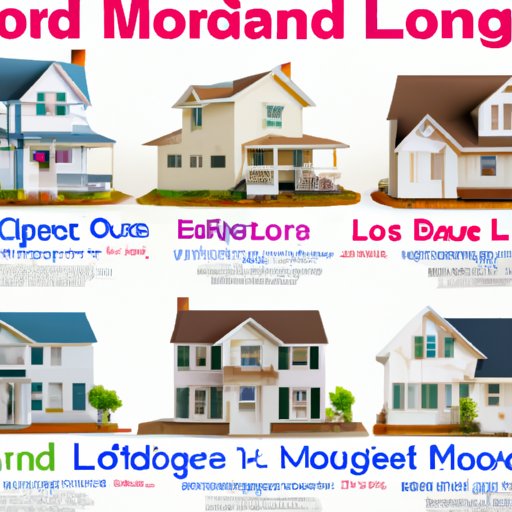
Once you know your DTI ratio, you can start exploring which type of loan best fits your needs. There are several different loan options available, each with its own pros and cons. Here are some of the most common types of loans:
Fixed-Rate Mortgages
A fixed-rate mortgage is one in which the interest rate stays the same throughout the life of the loan. This type of loan is ideal for people who plan to stay in their home for a long time and want the security of knowing their monthly payments won’t change. Fixed-rate mortgages typically require a larger down payment than other loan types.
Adjustable-Rate Mortgages
An adjustable-rate mortgage (ARM) is a loan in which the interest rate changes over time. ARMs usually start out with a lower interest rate than fixed-rate mortgages, but the rate can increase or decrease depending on market conditions. ARMs are best for people who plan to move or refinance in a few years and don’t want to be locked into a fixed-rate loan.
Jumbo Loans
A jumbo loan is a loan that exceeds the conforming loan limit set by the Federal Housing Finance Agency. Jumbo loans often come with higher interest rates and stricter lending requirements, but they can help borrowers finance larger homes. It’s important to note that jumbo loans may not be available in all areas.
FHA Loans
FHA loans are government-insured loans that are designed to help first-time homebuyers and those with lower incomes. FHA loans have lower down payment requirements than traditional loans, but they also come with additional fees and higher interest rates.
VA Loans
VA loans are loans guaranteed by the U.S. Department of Veterans Affairs. These loans are specifically for veterans, active-duty military personnel, and surviving spouses. VA loans offer competitive interest rates and do not require a down payment or private mortgage insurance.
USDA Loans
USDA loans are government-backed loans designed to help low- and moderate-income families buy homes in rural areas. USDA loans have no down payment requirement and offer competitive interest rates. However, these loans are only available in certain parts of the country.
Getting Pre-Approved for a Mortgage and Understanding What That Means
Before beginning your home search, it’s a good idea to get pre-approved for a mortgage. Pre-approval is a process in which a lender reviews your financial information and gives you an indication of how much money you can borrow. Pre-approval can give you a leg up when it comes to negotiating with sellers, as it shows them that you’re a serious buyer.
What is Pre-Approval?
Pre-approval is a process in which a lender evaluates your financial information and credit history to determine how much money you can borrow. During the pre-approval process, the lender will review your credit report, verify your income and employment, and assess your ability to repay the loan. After reviewing this information, the lender will give you an indication of how much money you can borrow.
Advantages of Pre-Approval
Getting pre-approved for a mortgage has several advantages. First, it gives you a better understanding of how much money you can borrow and what type of home you can afford. Second, it shows sellers that you’re a serious buyer and can help you negotiate a better deal. Finally, it can speed up the closing process since the lender has already reviewed your financial information.
Steps for Getting Pre-Approved
The pre-approval process typically takes a few days to complete. To get started, you’ll need to gather the necessary documents, such as proof of income, bank statements, tax returns, and more. Once you have the documents, contact the lender and provide the required information. The lender will then review your information and give you an indication of how much money you can borrow.

Understanding How Credit Scores Affect Your Mortgage Approval Amount
Your credit score is a major factor in determining how much of a mortgage you can get approved for. Lenders use your credit score to evaluate your creditworthiness and determine whether you’re a good candidate for a loan. Generally speaking, the higher your credit score, the more money you can borrow and the better your interest rate will be.
What is a Credit Score?
Your credit score is a three-digit number that represents your creditworthiness. It’s based on information from your credit report, such as payment history and outstanding balances. Your credit score is calculated using a variety of factors, including payment history, credit utilization, length of credit history, and more. A higher credit score indicates that you’re a responsible borrower and a lower credit score indicates that you may be a riskier borrower.
Factors that Impact Your Credit Score
There are several factors that can impact your credit score, including: payment history, credit utilization, length of credit history, types of credit used, and new credit inquiries. It’s important to monitor your credit score and take steps to improve it if possible. Paying bills on time, keeping credit utilization low, and avoiding opening new accounts can all help improve your credit score.
How Your Credit Score Impacts Your Mortgage Approval
Most lenders prefer to see a credit score of at least 620 when evaluating mortgage applications. If your credit score is below 620, you may still be able to qualify for a loan, but you may be offered a higher interest rate or stricter terms. Additionally, the higher your credit score, the more money you may be able to borrow.
Comparing Mortgage Rates to Get the Best Deal Possible
When shopping for a mortgage, it’s important to compare rates from multiple lenders to ensure you’re getting the best deal possible. Interest rates can vary significantly from lender to lender, so it pays to shop around. Here are some tips for comparing mortgage rates:
Understanding Interest Rates
Interest rates are the cost of borrowing money. They’re expressed as a percentage of the loan amount and can vary widely between lenders. When comparing mortgage rates, it’s important to understand the difference between fixed-rate and adjustable-rate loans. Fixed-rate loans have the same interest rate throughout the life of the loan, while adjustable-rate loans have a variable interest rate that changes over time.
What is an APR?
Annual Percentage Rate (APR) is the total cost of borrowing money, including the interest rate and any other fees. APR is expressed as a percentage of the loan amount and can vary significantly from lender to lender. When comparing mortgage rates, it’s important to look at both the interest rate and the APR to get an accurate picture of the total cost of the loan.
Shopping Around for the Best Mortgage Rate
It pays to shop around when looking for a mortgage. Talk to multiple lenders to compare rates, terms, and fees. Make sure to ask about discounts and special offers, as some lenders may offer incentives for choosing them. Additionally, don’t be afraid to negotiate. Many lenders are willing to work with you to get the best deal possible.
Knowing the Difference Between Conforming and Non-conforming Loans
When shopping for a mortgage, it’s important to understand the difference between conforming and non-conforming loans. Conforming loans are those that meet the standards set by the Federal Housing Finance Agency, while non-conforming loans are those that do not meet these standards. Here’s a closer look at the differences between the two types of loans:
What is a Conforming Loan?
A conforming loan is a loan that meets the standards set by the Federal Housing Finance Agency. These loans typically have lower interest rates and are easier to qualify for than non-conforming loans. However, conforming loans have stricter requirements, such as a higher credit score and a larger down payment.
What is a Non-Conforming Loan?
A non-conforming loan is a loan that does not meet the standards set by the Federal Housing Finance Agency. These loans typically have higher interest rates and looser qualification requirements. They may also require a larger down payment. Non-conforming loans can be a good option for borrowers with less-than-perfect credit or insufficient funds for a down payment.
Pros and Cons of Each Type of Loan
Each type of loan has its own advantages and disadvantages. Conforming loans tend to have lower interest rates and stricter qualification requirements, but they may not be available in all areas. Non-conforming loans typically have higher interest rates and looser qualification requirements, but they may not be available in all areas either. It’s important to research both types of loans to determine which one is right for you.

Researching Lender Requirements to Make Sure You Meet Them
When searching for a mortgage, it’s important to research the lender’s requirements to make sure you meet them. Lenders typically have specific guidelines that must be met in order to qualify for a loan. Here are some things to consider when researching lender requirements:
Identifying Different Lender Requirements
Every lender has different requirements for approving a loan. Some lenders require a minimum credit score or a certain amount of money for a down payment. Others may require additional documentation or income verification. It’s important to research the lender’s requirements to make sure you meet them before applying for a loan.
Knowing What Documents You Need to Provide
Most lenders require certain documents in order to approve a loan. These documents can include proof of income, bank statements, tax returns, and more. Make sure you have all the necessary documents before applying for a loan, as this can save you time and help speed up the process.
Understanding the Timeline for Approval
The timeline for loan approval can vary depending on the lender and the complexity of the loan. Generally speaking, the process can take anywhere from a few days to a few weeks. If you need to close quickly, it’s a good idea to research lenders that specialize in expedited closings.
Conclusion
Knowing how much of a mortgage you can get approved for is an important part of the home buying process. Factors such as your debt-to-income ratio, loan type, credit score, and lender requirements can all impact your mortgage approval. It’s important to understand these factors and take steps to maximize your chances of getting approved for the most amount of money.
By following the tips outlined in this article, you can get a better understanding of how much of a mortgage you can get approved for and find the best loan for your needs. So take the time to do your research and make sure you get the best deal possible.
(Note: Is this article not meeting your expectations? Do you have knowledge or insights to share? Unlock new opportunities and expand your reach by joining our authors team. Click Registration to join us and share your expertise with our readers.)