

Introduction
Gaining muscle mass is a common goal that requires dedication and consistency. The key to gaining muscle is to create a calorie surplus, which means consuming more energy than you expend. In this article, we’ll explore how many calories you should eat to gain muscle, as well as the importance of macronutrients, timing meals, and eating quality foods.
Developing a Calorie Surplus – How Many Calories Should You Eat to Gain Muscle?
The first step in determining the number of calories you need to consume to gain muscle is to calculate your daily caloric needs. Your basal metabolic rate (BMR) is an estimate of how many calories your body needs to support its basic functions like breathing, circulating blood, and digesting food. You can use an online BMR calculator to determine your individual needs.
Once you have calculated your BMR, you can then set a calorie surplus goal. This is the amount of additional calories you need to consume to create a calorie surplus and build muscle. A good starting point is around 500-700 calories per day above your BMR.
It’s important to note that everyone is different and your specific needs may be higher or lower depending on factors like age, gender, activity level, and body composition. It’s also important to adjust your caloric intake as needed to meet your goals. If you’re not gaining muscle, you may need to increase your calorie surplus. On the other hand, if you’re gaining too much fat, you may need to reduce your calorie surplus.
Eating for Muscle Growth: Calculating Your Caloric Intake for Maximum Gains
In addition to calculating your caloric needs, it’s also important to consider macronutrient ratios when planning your meals. Macronutrients are proteins, carbohydrates, and fats, and the right balance of these nutrients can help maximize muscle growth. Most experts recommend a macronutrient ratio of 40% protein, 40% carbohydrates, and 20% fat.
Timing your meals is also important for muscle growth. Eating a meal or snack every three to four hours will provide your body with a steady supply of energy and essential nutrients. This will help fuel recovery and repair and ensure your muscles get the nutrition they need to grow.
Finally, variety in your diet is important for muscle growth. Eating a variety of foods from each food group will ensure you’re getting all the vitamins, minerals, and other nutrients your body needs to build muscle.

Gaining Muscle with the Right Calorie Intake
Eating enough calories is essential for gaining muscle, but it’s also important to focus on eating quality foods. Eating whole, unprocessed foods that are high in protein, healthy fats, and complex carbohydrates will provide your body with the energy and nutrients it needs to build muscle.
Eating quality foods is also important for overall health and wellbeing. Consuming nutrient-dense foods will help support muscle recovery, boost immunity, and provide your body with the energy it needs to perform at its best.

What the Science Says: The Ideal Number of Calories for Building Muscle
According to the American College of Sports Medicine, the recommended calorie intake for muscle gain is between 15-18 calories per pound of body weight per day. So if you weigh 150 pounds, your recommended calorie intake would be between 2,250-2,700 calories per day.
However, there are a number of factors that can affect calorie intake including age, gender, activity level, and body composition. For example, someone who is more active may require more calories than someone who is less active. Additionally, someone who has more muscle mass may require more calories than someone who has less muscle mass.
Bulking Up: How Many Calories Do You Need to Add Muscle Mass?
If your goal is to add muscle mass, you may need to increase your calorie surplus even further. Bulking up safely requires patience and discipline. It’s important to set realistic goals and gradually increase your caloric intake over time. If you’re trying to gain muscle quickly, you may end up gaining more fat than muscle.
Creating a Calorie Deficit to Achieve Your Muscle-Building Goals
Creating a calorie deficit is another way to achieve your muscle-building goals. While a calorie deficit will result in weight loss, it can also help you gain muscle. When creating a calorie deficit, it’s important to maintain a healthy balance of protein, carbohydrates, and fats.
Calculating your calorie deficit is relatively simple. To do this, subtract 500-1,000 calories from your estimated daily caloric needs. This will give you an idea of how many calories you need to consume to create a calorie deficit and still meet your muscle-building goals.
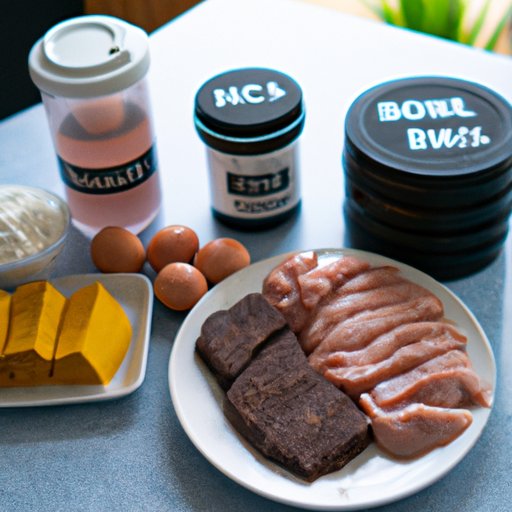
Optimizing Your Macronutrient Ratios to Maximize Muscle Gains
As mentioned earlier, macronutrients play an important role in muscle growth. Protein is essential for muscle growth and repair, so it’s important to consume adequate amounts of lean proteins like fish, poultry, and eggs. Fats are also important for muscle growth, so it’s important to include healthy sources of fats like nuts, seeds, and avocados in your diet.
Finally, carbohydrates are an important source of energy and should make up the majority of your caloric intake. Complex carbohydrates like oats, quinoa, sweet potatoes, and brown rice are great sources of energy and should be included in your diet to maximize muscle gains.
Conclusion
Gaining muscle requires dedication and consistency. To maximize muscle gains, it’s important to calculate your daily caloric needs and create a calorie surplus. You should also focus on optimizing your macronutrient ratios, timing your meals, and eating quality foods. Finally, remember to adjust your caloric intake as needed and to set realistic goals.
(Note: Is this article not meeting your expectations? Do you have knowledge or insights to share? Unlock new opportunities and expand your reach by joining our authors team. Click Registration to join us and share your expertise with our readers.)