
Introduction
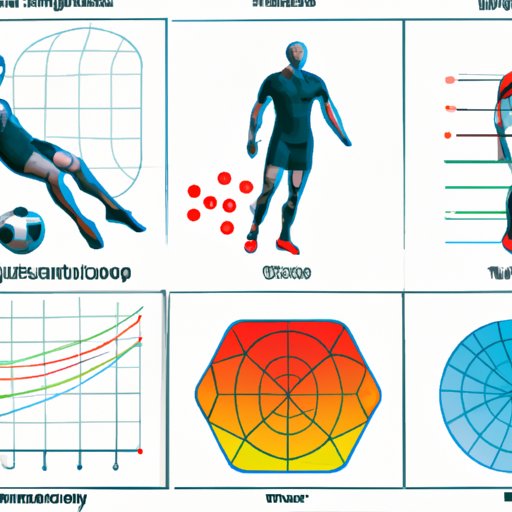
Soccer, also known as football, is one of the most popular sports in the world. According to FIFA, the international governing body of soccer, over 260 million people play soccer in more than 200 countries around the globe. But while the sport itself is relatively simple—two teams of 11 players each try to score goals against each other—the science behind it is complex and varied. From understanding the physics of ball trajectory to analyzing data collected by wearable sensors, science plays an important role in optimizing player performance and team strategies.
Exploring the Physics of Soccer: How Ball Trajectory and Force Affects Gameplay
The physics of soccer is an area of study that has attracted the attention of many scientists and engineers. One of the main focuses of this research is understanding the trajectories of a soccer ball. Because the ball is not perfectly round, its trajectory will be affected by air resistance, spin, and other factors. This makes predicting the movement of the ball difficult, and even professional players have difficulty accurately predicting where the ball will go.
In addition to studying ball trajectories, researchers have also explored the forces behind the ball’s movements. For example, the Magnus effect causes the ball to curve when it is kicked with spin. This phenomenon occurs because the air molecules on one side of the ball are moving faster than those on the other side, causing the ball to move in the direction of the slower air molecules. Other forces such as drag and lift also influence the motion of a soccer ball.

Examining the Role of Technology in Soccer: Analyzing Player Performance with Wearable Sensors
Over the past few years, technology has been playing an increasingly important role in soccer. One of the biggest advances has been the use of wearable sensors to collect data on players’ performances. These sensors can measure things like speed, acceleration, and heart rate, giving coaches and trainers insights into their players’ physical condition.
Wearable sensors also allow coaches to analyze the data they collect in order to identify areas for improvement. For example, if a player’s heart rate is too high during a match, this could indicate that they need to work on their endurance. Or if their acceleration is lower than expected, they might need to focus on improving their agility. By using this data to identify areas for improvement, coaches can help their players become better performers.
Investigating the Use of Biomechanics in Soccer: Maximizing Player Performance
Biomechanics is another area of science that has been gaining traction in soccer. This field of study examines how the body moves in relation to external forces, such as gravity and friction. By understanding the biomechanics of soccer, coaches and players can identify ways to maximize their performance.
For example, a coach might use biomechanical principles to design drills that focus on improving a player’s balance or agility. They could also use biomechanics to analyze a player’s technique and identify areas for improvement, such as reducing wasted energy or increasing the efficiency of their movements. By applying biomechanical principles, players and coaches can optimize performance and reduce the risk of injury.

Analyzing the Role of Psychology in Soccer: Developing Effective Team Strategies
Psychology is another important factor in soccer, as it can influence the way players approach the game and the strategies they use. For example, some psychological principles, such as goal setting, can help players stay focused and motivated. Other principles, such as mental rehearsal, can help players prepare for specific situations, such as penalty kicks or defending against a breakaway attack.
At the team level, psychology can also be used to develop effective strategies. Coaches can use psychological principles, such as social facilitation, to encourage players to work together and increase their performance. They can also use principles, such as groupthink, to identify potential problems in their strategy and address them before they become an issue.

Understanding the Role of Nutrition in Soccer: Optimizing Player Health and Performance
Nutrition is another important aspect of soccer, as it can have a significant impact on players’ health and performance. Soccer requires a lot of energy, and proper nutrition is essential for players to meet their energy needs. In addition, certain nutrients, such as carbohydrates and proteins, can help players build and maintain muscle mass, which is important for strength and endurance.
Players also need to ensure that they are getting enough vitamins and minerals, such as iron and calcium, to support their bodies’ functions. Proper hydration is also important, as it helps players maintain their energy levels and prevents dehydration. By ensuring that they are meeting their nutritional needs, players can optimize their health and performance on the field.
Conclusion
Soccer is a complex sport with many variables that can affect performance. By understanding the science behind the game—including the physics of ball trajectories, the forces behind the ball’s movements, the benefits of wearable sensors, the principles of biomechanics, the role of psychology in developing effective strategies, and the importance of nutrition—players and coaches can optimize performance and gain an edge over their opponents.
From exploring ball trajectories to analyzing data collected by wearable sensors, science provides valuable insights into soccer. By taking advantage of these insights, players and coaches can unlock their potential and maximize their performance on the field.
(Note: Is this article not meeting your expectations? Do you have knowledge or insights to share? Unlock new opportunities and expand your reach by joining our authors team. Click Registration to join us and share your expertise with our readers.)