
Introduction
Computer science is an ever-evolving field that has revolutionized our lives in countless ways. From its humble beginnings in the 1940s, computer science has grown to encompass a wide range of applications and technologies, including the world of entertainment. In recent years, computer science has had a profound impact on the way we interact with media, from video games and movies to live concerts and theme parks. In this article, we’ll explore how computer science is being used in entertainment and what the implications are for the future.
Exploring the Role of Computer Science in Video Game Development
Video game development is one of the most popular applications of computer science in entertainment. According to a recent survey by the Entertainment Software Association, nearly two-thirds of American households own at least one gaming device. With the growing popularity of gaming, developers are increasingly relying on computer science to create immersive and engaging experiences for players. Let’s take a closer look at how computer science is used in the game design process.
Understanding the Process of Game Design
Game design is the process of creating a playable video game. It involves a variety of tasks, such as creating characters and storylines, designing levels, and developing mechanics. Computer science plays an essential role in all of these tasks. For example, developers will use algorithms to generate random elements within a game, such as the layout of a dungeon or the behavior of an enemy. Algorithms can also be used to create procedural content, which is content that is generated algorithmically instead of by hand.
Examining the Use of Algorithms and Artificial Intelligence in Gaming
Algorithms and artificial intelligence (AI) are critical components of modern video game development. AI can be used to create realistic and believable non-player characters (NPCs) that react to the player’s actions. AI can also be used for pathfinding, which is the process of determining the best route for a character to take from point A to point B. In addition, AI can be used to create dynamic difficulty adjustments, which allow the game to adjust the difficulty level based on the player’s skill level.
Investigating the Use of 3D Modeling and Rendering for Video Games
Computer graphics are an integral part of modern video game development. 3D modeling and rendering allow developers to create photorealistic environments and objects that can be explored by players. Developers use a variety of techniques to create these environments, such as ray tracing and global illumination. Ray tracing is a process in which light rays are simulated as they travel from a source to a destination, while global illumination simulates the indirect lighting of objects in a scene.
Understanding Computer Animation Techniques Used in Movies
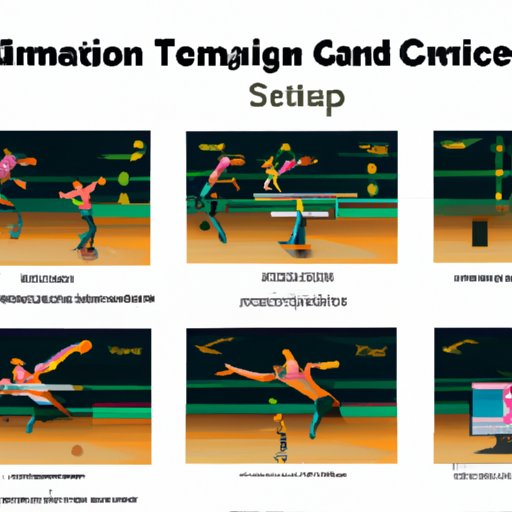
Computer animation has become an integral part of the movie industry. Animators use a variety of techniques to bring their creations to life, and computer science plays a key role in many of these processes. Let’s take a closer look at some of the most popular animation techniques.
Exploring Traditional Animation Techniques
Traditional animation techniques involve drawing individual frames and then playing them back in rapid succession to create the illusion of movement. This technique has been used in animation since the early days of cinema. Today, animators use computer software to streamline the process of creating traditional animations. For example, Adobe Animate CC is a popular software package that allows animators to quickly create traditional animations.
Investigating the Use of Computer Generated Imagery (CGI)
Computer Generated Imagery (CGI) is a term used to describe any form of digital imagery created using computer graphics. CGI is commonly used in animated films and television shows, as well as in live action films. CGI can be used to create realistic environments and characters that would otherwise be impossible to achieve using traditional animation techniques. For example, the Lord of the Rings trilogy was heavily reliant on CGI to create its iconic landscapes and creatures.
Examining Motion Capture Technology
Motion capture technology is a tool used to capture the movements of actors and translate them into digital data. This data can then be used to create realistic animations that mimic the movement of the actor. Motion capture technology is commonly used in films and video games to create lifelike characters and environments. The technology has become increasingly sophisticated over the years, allowing animators to create more realistic and detailed animations.
Examining the Use of Artificial Intelligence in Music Production
Artificial intelligence (AI) is making its way into the world of music production. AI is being used to automate various aspects of the music creation process, from composition to mixing and mastering. Let’s take a closer look at how AI is impacting the music industry.
Understanding the Role of AI in Music Composition
AI is being used to automate the process of composing music. For example, Google’s Magenta project uses machine learning algorithms to generate musical compositions. AI can also be used to create “intelligent” instruments, such as Yamaha’s Motif XF synthesizer, which can automatically generate melodies and chord progressions.
Analyzing the Impact of AI on Music Mixing and Mastering
AI is also being used to automate the process of music mixing and mastering. Companies such as iZotope offer AI-powered tools that can analyze a track and automatically adjust the mix and master settings. AI-powered tools can also be used to detect problems in recordings, such as clipping, distortion, and other audio artifacts.

Investigating the Impact of Virtual Reality on Theme Park Experiences
Virtual reality (VR) is having a major impact on the theme park industry. VR technology is being used to create immersive environments that transport visitors to different worlds. Let’s take a closer look at how VR is being used in theme parks.
Exploring the Use of Holograms and Other Virtual Technologies
Theme parks are incorporating virtual technologies to create unique experiences for visitors. Holograms, for example, are being used to create interactive avatars that can interact with guests. Other technologies, such as projection mapping and augmented reality, are also being used to create immersive environments. These technologies are powered by computer science, from the algorithms used to generate the visuals to the hardware used to display them.
Examining the Role of Immersive Environments in Theme Parks
Immersive environments are becoming increasingly popular in theme parks. These environments are designed to fully immerse visitors in a particular experience. For example, Disney’s Star Wars: Galaxy’s Edge attraction uses a combination of physical sets and virtual technology to create a realistic Star Wars universe. Computer science plays a key role in creating these immersive environments, from the algorithms used to generate the visuals to the hardware used to render them.
Analyzing the Role of Computer Science in Special Effects for TV and Film
Computer science is playing an increasingly important role in the world of special effects for television and film. Special effects are used to create realistic environments and characters that would otherwise be impossible to achieve. Let’s take a closer look at how computer science is being used in the world of special effects.
Understanding the Basics of Visual Effects
Visual effects (VFX) are the process of creating realistic environments and characters using computer-generated imagery (CGI). VFX can be used to create anything from a simple background matte painting to a complex creature or environment. Computer science plays an essential role in the process of creating VFX, from the algorithms used to generate the visuals to the hardware used to render them.
Investigating the Use of Computer Generated Imagery (CGI)
CGI is a critical component of modern visual effects. CGI can be used to create realistic environments and characters that would otherwise be impossible to achieve using traditional techniques. CGI is typically created using 3D modeling and rendering software, such as Autodesk Maya and Autodesk 3ds Max. These programs use algorithms and other computer science techniques to generate photorealistic images.
Examining Motion Capture Technology
Motion capture technology is also used to create realistic VFX. Motion capture technology captures the movements of actors and translates them into digital data. This data can then be used to create realistic animations that mimic the movement of the actor. Motion capture technology is commonly used in films and video games to create lifelike characters and environments.
Investigating the Application of Computer Science in Augmented Reality Gaming
Augmented reality (AR) is rapidly becoming a popular form of entertainment. AR games allow users to interact with virtual objects in the real world. Computer science plays an essential role in the development of AR games, from the algorithms used to generate the visuals to the hardware used to render them. Let’s take a closer look at how computer science is being used in the world of AR gaming.
Exploring the Use of Augmented Reality in Mobile Games
Augmented reality is being used to create immersive mobile gaming experiences. For example, Pokémon Go is a popular AR game that allows players to catch virtual Pokémon in the real world. The game relies on computer vision algorithms to detect the user’s location and generate realistic 3D models of the Pokémon. Additionally, the game uses machine learning algorithms to generate the behavior of the Pokémon.
Understanding the Role of AI in Augmented Reality Gaming
AI is also playing an important role in the development of AR games. AI can be used to create realistic and believable non-player characters (NPCs) that react to the player’s actions. AI can also be used for pathfinding, which is the process of determining the best route for a character to take from point A to point B. In addition, AI can be used to create dynamic difficulty adjustments, which allow the game to adjust the difficulty level based on the player’s skill level.
Conclusion
Computer science has had a profound impact on the world of entertainment. It is being used to create immersive video games, realistic animations, and innovative theme park experiences. Additionally, computer science is playing an increasingly important role in the production of music and special effects for television and film. As computer science continues to evolve, we can expect to see even more applications of computer science in the world of entertainment.
(Note: Is this article not meeting your expectations? Do you have knowledge or insights to share? Unlock new opportunities and expand your reach by joining our authors team. Click Registration to join us and share your expertise with our readers.)