
Introduction
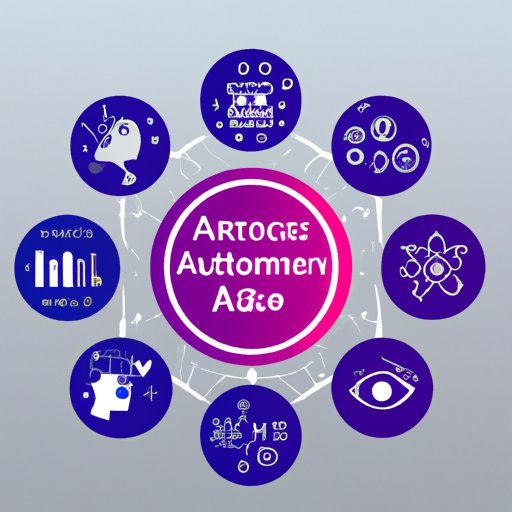
Artificial intelligence (AI) is a broad term that refers to the development of computer systems capable of performing tasks that normally require human intelligence. AI is becoming increasingly popular in the business world due to its ability to automate processes, improve customer experience, enhance data analysis capabilities, facilitate faster decision-making, increase accuracy of predictions, improve cybersecurity, and facilitate communication between devices. This article will explore how AI is helping businesses succeed.
Automation of Business Processes
One of the key benefits of AI is its ability to automate business processes. Automation allows businesses to streamline their operations and reduce manual labor costs. AI can be used to automate mundane tasks such as data entry and customer service interactions, freeing up employees to focus on more important tasks. According to a study by McKinsey Global Institute, “By 2030, automation could free up 25 percent of the time currently spent on work activities, or the equivalent of almost 2 billion full-time workers.”
An example of successful automation is Amazon’s robotic fulfillment centers. The company utilizes robots to pick, pack, and ship products to customers quickly and efficiently. This has allowed Amazon to reduce costs and speed up delivery times, resulting in a better customer experience.
Improved Customer Experience
AI can also be used to improve customer experience. AI-powered chatbots can provide customers with quick and accurate responses to their queries. These chatbots are powered by natural language processing (NLP) and are able to understand customer requests and provide personalized answers. AI-driven customer engagement tools can also be used to analyze customer behavior and preferences to provide tailored recommendations.
An example of a company using AI to improve customer experience is Netflix. The streaming giant uses AI to recommend content to users based on their viewing history. Netflix also uses AI to detect user preferences and interests and tailor content accordingly. By leveraging AI, Netflix is able to provide a better customer experience.
Enhanced Data Analysis Capabilities
Another way AI is helping businesses is through enhanced data analysis capabilities. AI-powered analytics tools can quickly process large amounts of data and identify patterns and trends. This allows businesses to make informed decisions and optimize their operations. According to a study by Forrester, “AI-driven analytics can help organizations gain insights up to 10 times faster than traditional methods.”
An example of a company utilizing AI for data analysis is Walmart. The retail giant uses AI to analyze customer buying patterns and predict demand. This helps Walmart better manage inventory and ensure shelves are stocked with the right products at the right time.
Faster Decision-Making
AI can also be used to facilitate faster decision-making. AI-powered tools can quickly process large amounts of data and identify potential opportunities. This can help businesses make quicker and more informed decisions. According to a study by PwC, “AI-enabled decision-making can result in decisions that are up to 80 percent faster and 75 percent more accurate than those made by humans.”
An example of a company leveraging AI for faster decision-making is Google. The tech giant uses AI to process large amounts of data and identify potential opportunities. Google’s AI-powered tools also help it make decisions quickly and accurately.
Increased Accuracy of Predictions
AI can also be used to increase the accuracy of predictions. AI-powered predictive analytics tools can analyze historical data and identify patterns and trends. This allows businesses to make more accurate predictions about the future. According to a study by Deloitte, “AI-enabled predictive analytics can increase the accuracy of predictions by up to 95 percent.”
An example of a company using AI for predictions is Uber. The ride-hailing giant uses AI to predict demand for rides and adjust prices accordingly. By leveraging AI, Uber is able to make more accurate predictions and optimize its operations.
Improved Cybersecurity
AI can also be used to improve cybersecurity. AI-powered security tools can detect threats and vulnerabilities in real-time and alert administrators. This helps businesses protect their data and systems from cyberattacks. According to a study by Gartner, “AI-powered security solutions can reduce the time to detect and respond to cyberthreats by up to 50 percent.”
An example of a company leveraging AI for improved cybersecurity is Microsoft. The tech giant uses AI to detect and block malicious activity. Microsoft’s AI-powered tools also help it quickly identify and respond to cyberthreats.
Facilitated Communication between Devices
Finally, AI can be used to facilitate communication between devices. AI-powered tools can enable devices to communicate with each other and exchange data. This can help businesses improve efficiency and productivity. According to a study by IDC, “AI-enabled communication between devices can increase productivity by up to 30 percent.”
An example of a company utilizing AI for communication between devices is Apple. The tech giant uses AI to enable its devices to communicate with each other. Apple’s AI-powered tools also help it quickly exchange data and information between devices.
Conclusion
In conclusion, AI is proving to be an invaluable tool for businesses. AI can automate processes, improve customer experience, enhance data analysis capabilities, facilitate faster decision-making, increase accuracy of predictions, improve cybersecurity, and facilitate communication between devices. As AI continues to evolve, businesses will be able to leverage it to their advantage and stay ahead of the competition.
(Note: Is this article not meeting your expectations? Do you have knowledge or insights to share? Unlock new opportunities and expand your reach by joining our authors team. Click Registration to join us and share your expertise with our readers.)