
Introduction
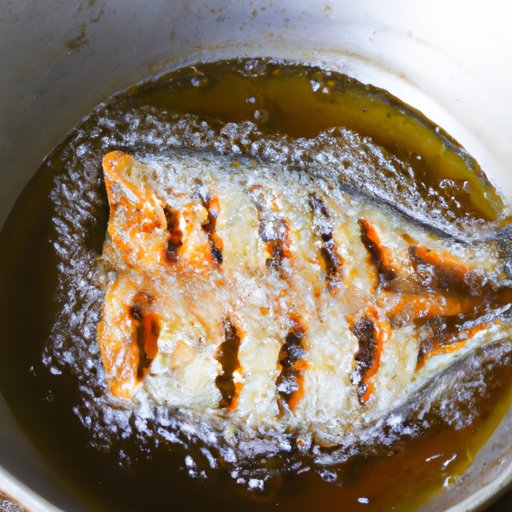
Frying fish is a great way to make a delicious meal. But how hot should oil be to fry fish properly? Without the right temperature, you can end up with a soggy, greasy mess. In this article, we’ll explore the science behind the perfect temperature for frying fish and provide tips and techniques on achieving optimal results.

A Guide to the Perfect Temperature for Frying Fish
The optimal temperature for frying fish depends on several factors, including the type of oil used, the size and thickness of the fish, and the desired texture. Generally speaking, the oil should be between 350°F and 375°F (177°C and 191°C). However, it’s important to note that the exact temperature will vary depending on the situation.
Factors That Affect Temperature
When it comes to frying fish, there are several factors that can affect the temperature of the oil. The type of oil used is one of the most important. Oils with higher smoke points (the temperature at which the oil starts to break down) are better for frying, as they can withstand higher temperatures without breaking down. Popular options for frying fish include vegetable oil, canola oil, and peanut oil.
The size and thickness of the fish also play a role in determining the optimal temperature for frying. Thinner pieces of fish require lower temperatures, while thicker pieces can withstand higher temperatures. It’s also important to consider the desired texture of the fish. For instance, if you want a crispier crust, you’ll need to use a higher temperature.

The Science Behind the Perfect Temperature for Frying Fish
When it comes to frying fish, there is some science involved. Heat transfer plays a major role in the process, as it helps to cook the fish evenly. At lower temperatures, the heat has to travel further into the fish, resulting in longer cooking times. At higher temperatures, the heat travels faster, which leads to shorter cooking times.
Different types of oils have different levels of heat transfer. Oils with higher viscosity (thickness) tend to have slower heat transfer, while thinner oils have faster heat transfer. This means that thinner oils are better for frying fish, as they can reach the desired temperature quicker.
Learn the Best Temperature for Frying Fish
Now that you understand the science behind the perfect temperature for frying fish, it’s time to learn how to achieve it. Here are some tips and techniques to help you get the job done:
- Start by preheating your oil. This will help ensure that the oil reaches the desired temperature quickly.
- Use a thermometer to measure the temperature of the oil. Most thermometers will have a range of 350°F to 375°F (177°C to 191°C).
- Adjust the heat of your stove or deep fryer as needed. If the oil gets too hot, reduce the heat. If the oil is not hot enough, increase the heat.
- Be sure to keep an eye on the temperature of the oil. As the fish cooks, the temperature will drop. You may need to adjust the heat again to maintain the desired temperature.
It’s also important to know what to avoid when frying fish. Never leave the oil unattended, as it can easily overheat and cause a fire. Also, never add cold food to hot oil, as this can cause the oil to splatter and burn you.
Conclusion
Frying fish is an art form that requires the right temperature of oil. The optimal temperature for frying fish is usually between 350°F and 375°F (177°C and 191°C), but this can vary depending on the type of oil used, the size and thickness of the fish, and the desired texture. To achieve the perfect temperature, start by preheating the oil, use a thermometer to measure the temperature, and adjust the heat as needed. With the right temperature and proper technique, you can make a delicious fried fish.
(Note: Is this article not meeting your expectations? Do you have knowledge or insights to share? Unlock new opportunities and expand your reach by joining our authors team. Click Registration to join us and share your expertise with our readers.)