
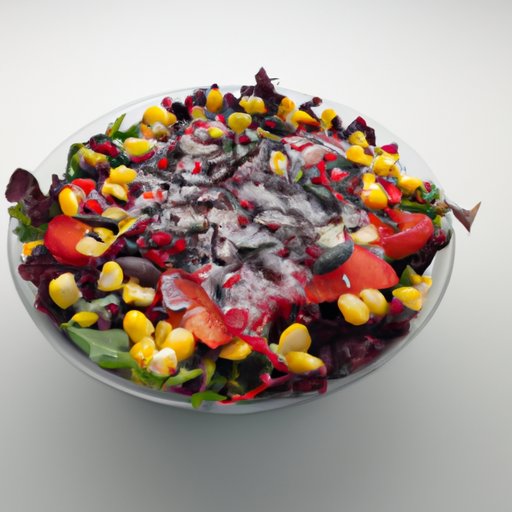
Introduction
Salads are a popular dish that can be found in any cuisine. From the classic Caesar salad to the ever-trendy kale salad, these dishes have become staples in many diets. Not only do they provide a delicious way to get your daily dose of vegetables and fruits, but they also offer a range of health benefits. This article will explore the nutritional benefits of salads, how to make them healthier at home, and tips for making them more interesting.

Exploring the Nutritional Benefits of Salads
Salads are packed with vitamins, minerals, and antioxidants, which are essential for good health. Fruits and vegetables are the main ingredients in a salad, and they provide essential nutrients like vitamin A, C, and K, as well as potassium, magnesium, and fiber. Additionally, salads often contain other nutrient-rich ingredients like nuts, seeds, and legumes.
Macronutrients such as proteins, carbohydrates, and fats are also present in salads. The type of macronutrients in a salad depends on the ingredients used. For example, a green salad may contain mostly carbohydrates and fiber, while a bean salad may contain more protein and fat. Each macronutrient plays an important role in maintaining a balanced diet and promoting overall health.

How to Make a Healthy Salad at Home
Making a healthy salad at home is easy and doesn’t require any special skills or ingredients. Start by choosing a variety of fresh vegetables and fruits, such as lettuce, spinach, tomatoes, cucumbers, carrots, peppers, and apples. You can also add ingredients like nuts, seeds, beans, and even grains for extra flavor and nutrition.
When it comes to dressings, opt for low-fat and low-sugar options. Olive oil and vinegar, lemon juice, and herbs are all great choices. Avoid creamy dressings like ranch or thousand island, as they tend to be higher in calories and fat. You can also make your own dressing by combining olive oil, vinegar, garlic, and herbs.
The Healthiest Ingredients for Salad Dressings
When it comes to dressings, there are a variety of options to choose from. Olive oil and vinegar is a classic combination that adds flavor without adding too many calories. Balsamic vinaigrette, pesto, and hummus are also great options. For those looking for a low-calorie option, try using a mix of lemon juice, garlic, and herbs.
You can also make your own healthy salad dressings at home. To do this, combine olive oil, vinegar, garlic, and herbs. This is a great way to add some flavor to your salads without adding too many calories. Additionally, you can experiment with different flavors by adding spices and herbs to create your own signature dressing.
Different Types of Salads and Their Health Benefits
There are a variety of salads you can make at home. Green salads are a popular choice and are packed with vitamins and minerals. These salads usually contain lettuce, spinach, tomatoes, cucumbers, peppers, and other vegetables. They are also a great way to get your daily dose of fiber.
Fruit salads are another popular choice and are a great way to get your daily dose of vitamin C. They are usually made with a variety of seasonal fruits such as strawberries, blueberries, and oranges. Bean salads are also a great option and provide a good source of protein and fiber. Lastly, grain salads are a great way to get your daily dose of whole grains, which are essential for good health.
Tips for Making Salads More Interesting and Exciting
Salads can easily become boring if you don’t switch up the ingredients and toppings. To make salads more exciting, try adding variety with different ingredients like nuts, seeds, and dried fruit. You can also add creative toppings and mix-ins like cheese, avocados, olives, and croutons. Experimenting with different flavors and textures is the key to making salads more interesting.

Salads as a Delicious Way to Help Manage Weight Loss
Salads are a great way to reduce calorie intake and lose weight. Since they are usually low in calories, they can be a great addition to any meal plan. Adding lean proteins like chicken, fish, or tofu can also help increase the amount of protein in the meal, which can help keep you feeling full for longer. Additionally, adding healthy fats like avocado or nuts can help add flavor and nutrition to your salad.
Conclusion
Eating salads can be a great way to get a variety of vitamins, minerals, and antioxidants. They are also a delicious and healthy way to help manage weight loss. When making salads at home, it’s important to choose the right ingredients and dressings, and to add variety with different mix-ins and toppings. By following these tips, you can enjoy a nutritious and delicious salad every day.
(Note: Is this article not meeting your expectations? Do you have knowledge or insights to share? Unlock new opportunities and expand your reach by joining our authors team. Click Registration to join us and share your expertise with our readers.)