

Introduction
The sun is an inexhaustible source of energy and is the ultimate source of virtually all of the energy on Earth. That energy arrives in the form of sunlight, a combination of heat and light radiation which travels 93 million miles to reach our planet. But how does this energy make its way to the Earth? In this article, we will explore the physics of how the energy from the sun travels to Earth, investigate how the atmosphere affects the transfer of energy, and examine the various technologies that can be used to harness solar energy for use on our planet.
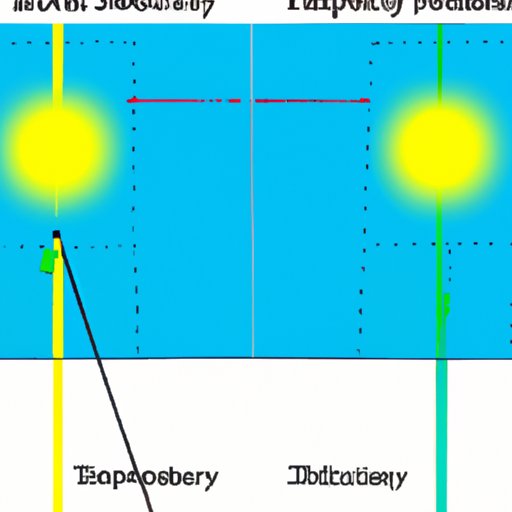
Exploring the Physics of Solar Energy Transfer
At the core of the sun, nuclear reactions generate tremendous amounts of energy in the form of photons. This energy then radiates outward in all directions, including towards Earth. According to NASA, “The sun emits energy at a rate of 3.86 x 1026 watts, or 386 billion billion megawatts.”1 Once these photons reach Earth, they are absorbed by the atmosphere and converted into heat and light. The amount of energy that reaches the planet depends on the distance between the Earth and the sun, as well as the amount of cloud cover and atmospheric particles that absorb or reflect the radiation.
Investigating How the Atmosphere Affects Solar Energy Transfer
The atmosphere plays a key role in the transfer of energy from the sun to the Earth. It acts like a blanket, trapping the heat and allowing it to warm the surface of the planet. At the same time, the atmosphere also filters out some of the higher-energy radiation, such as ultraviolet rays, which can be harmful to living organisms. This filtering effect helps keep the Earth’s climate in balance. However, when too much energy is trapped in the atmosphere, it can lead to climate change.
According to Dr. Gavin Schmidt, director of the NASA Goddard Institute for Space Studies, “The increase in greenhouse gases over the last century has led to a net warming effect. This warming has caused changes in the global climate system, including more frequent and intense heat waves, heavier precipitation events, and longer and more severe droughts.”2 Thus, the atmosphere not only affects the transfer of energy from the sun to the Earth, but also the climate of our planet.
Examining Technologies that Harness Solar Energy for Use on Earth
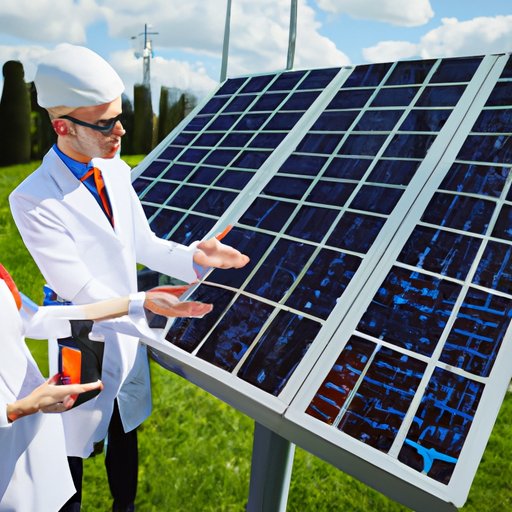
There are a variety of technologies that can be used to capture and convert the energy from the sun into electricity and other forms of usable energy. These include solar panels, solar thermal systems, and concentrated solar power (CSP).
Solar panels are photovoltaic cells that convert sunlight into electricity. They are made up of layers of semiconducting material, such as silicon, which convert the photons into electrons. These electrons can then be used to power electrical devices. Solar panels can be installed on rooftops or in large arrays, and are becoming increasingly popular as a source of clean, renewable energy.
Solar thermal systems use mirrors or lenses to concentrate sunlight onto a receiver, which absorbs the heat and converts it into thermal energy. This energy can then be used to heat water or air, or to generate electricity. Solar thermal systems are often used to heat swimming pools or to provide hot water for homes and businesses.
Concentrated solar power (CSP) systems use mirrors or lenses to concentrate sunlight onto a receiver, which absorbs the heat and converts it into thermal energy. This energy can then be used to generate electricity. CSP systems are commonly used in large-scale power plants, and are becoming increasingly popular as a source of renewable energy.
Conclusion
In conclusion, the energy from the sun travels to Earth in the form of sunlight, a combination of heat and light radiation which travels 93 million miles to reach our planet. The atmosphere plays a key role in the transfer of energy from the sun to the Earth, as it traps the heat and filters out some of the higher-energy radiation. There are a variety of technologies that can be used to capture and convert the energy from the sun into electricity and other forms of usable energy, such as solar panels, solar thermal systems, and concentrated solar power. By utilizing these technologies, we can harness the power of the sun and use it to power our homes and businesses with clean, renewable energy.
Resources
Websites
Books/Publications
- Rosenberg, M. (2018). Solar Energy: A Comprehensive Guide to Solar Energy Systems and Applications. CRC Press.
- Goswami, D.Y. & Hegde, G. (Eds.). (2015). Solar Energy: Fundamentals, Design, Modelling and Applications. Springer.
- Hegde, G., Goswami, D.Y. & Limaye, A. (Eds.). (2014). Solar Energy: Renewable Energy and the Environment. CRC Press.
Organizations/Institutions
- Solar Energy Industries Association
- Solar Energy International
- National Renewable Energy Laboratory (NREL)
References
- NASA. (2020). Sun-Earth Day: Solar Energy. Retrieved from https://www.nasa.gov/mission_pages/sunearth/science/index.html
- Schmidt, G. (2020). Climate Change: How Do We Know?. Retrieved from https://climate.nasa.
(Note: Is this article not meeting your expectations? Do you have knowledge or insights to share? Unlock new opportunities and expand your reach by joining our authors team. Click Registration to join us and share your expertise with our readers.)