
Introduction
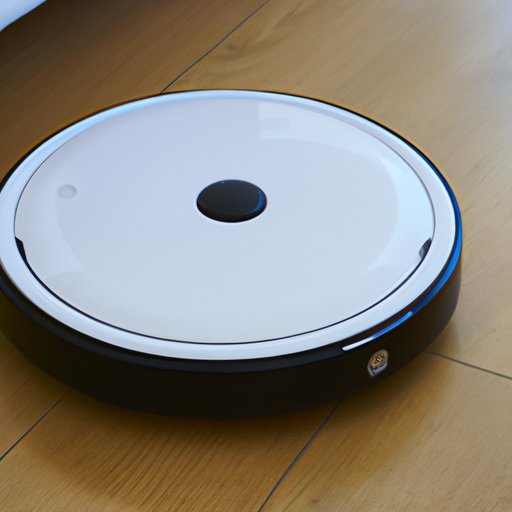
Robot vacuums are a popular choice for those who don’t have time to manually clean their floors. These automated devices are designed to move around your home, picking up dirt and debris from carpets and hard floors with ease. But how exactly do robot vacuums work? In this article, we’ll explore the technology behind these devices and explain how they operate.

Explaining the Parts of a Robot Vacuum Cleaner
Robot vacuums are made up of several key components that enable them to move around your home and pick up dirt and debris. Here is a brief overview of the parts that make up a robot vacuum cleaner:
Motor
The motor is the most important part of a robot vacuum cleaner. It powers the device and enables it to move around your home. Most robot vacuums use brushless motors, which are more efficient and powerful than traditional brushed motors. The motor also helps to generate suction, which is used to lift dirt and debris off the floor.
Brushes and Wheels
Robot vacuums are equipped with brushes and wheels that help them move around your home. The brushes are designed to agitate dirt and debris, while the wheels allow the device to navigate around obstacles and furniture. Some models also feature additional cleaning tools, such as mops, for extra cleaning power.
Sensors
Robot vacuums are equipped with sensors that allow them to detect obstacles and navigate around your home. Most models feature infrared sensors, which detect walls and furniture, as well as optical sensors that detect dirt and debris. This helps the device to create a virtual map of your home and determine the best path for cleaning.

Demonstrating How a Robot Vacuum Moves and Cleans
Now that we’ve discussed the parts of a robot vacuum cleaner, let’s take a look at how they move and clean. Most robot vacuums use a combination of navigation and suction to clean your home.
Navigation
Robot vacuums use a combination of sensors and software algorithms to navigate around your home. The sensors detect obstacles and furniture, while the algorithms calculate the most efficient route for cleaning. Some models also feature mapping technology, which allows the device to create a virtual map of your home for more efficient cleaning.
Suction
Once the robot vacuum has navigated around your home, it uses suction to lift dirt and debris off the floor. Most models feature “edge cleaning” technology, which enables the device to get into tight spaces and corners. Some models also feature additional cleaning tools, such as mops, for extra cleaning power.
Comparing Robot Vacuums to Traditional Vacuums
Robot vacuums offer several advantages over traditional vacuums. According to a study published in the International Journal of Robotics Research, robot vacuums are able to clean more efficiently and thoroughly than traditional vacuums. They also require less effort to operate and are better suited for homes with pets.
Advantages of Robot Vacuums
Robot vacuums offer several advantages over traditional vacuums. For starters, they are much more efficient and effective at cleaning your home. Since they can navigate around obstacles and furniture, they are able to cover more ground in less time. Additionally, robot vacuums are easier to use and require less effort to operate.
Disadvantages of Traditional Vacuums
Traditional vacuums offer less flexibility and require more effort to operate. They are also not as efficient at cleaning, since they lack the ability to navigate around obstacles and furniture. Additionally, traditional vacuums are not well suited for homes with pets, since pet hair can easily clog the filters.
Explaining the Benefits of Using a Robot Vacuum
Robot vacuums provide several benefits that make them ideal for those who don’t have time to manually clean their floors. Here are some of the main benefits of using a robot vacuum.
Convenience
Robot vacuums are incredibly convenient to use. You simply set the device to clean and it will automatically move around your home, picking up dirt and debris without any effort on your part. This makes them a great option for busy households where there isn’t enough time to manually clean the floors.
Automation
Robot vacuums are fully automated devices, meaning they require no input from you in order to operate. This makes them ideal for those who don’t have time to manually clean their floors. Additionally, most models come with scheduling features that allow you to set the device to clean at certain times of the day.
Reviewing Different Types of Robot Vacuums
Robot vacuums come in a variety of shapes and sizes, each offering different features and capabilities. Here are some of the most common types of robot vacuums available.
Mapping
Some robot vacuums come equipped with mapping technology, which allows the device to create a virtual map of your home. This helps the device to navigate around obstacles and furniture more efficiently. Additionally, some models come with boundary strips that allow you to designate areas that the device should avoid.
Scheduling
Most robot vacuums come with scheduling features that allow you to set the device to clean at certain times of the day. This is especially useful for those who don’t have time to manually clean their floors. Additionally, some models come with remote control features that allow you to control the device from your smartphone.

Examining Different Features of Robot Vacuums
Robot vacuums come with a variety of features that make them more efficient and effective at cleaning your home. Here are some of the most common features available.
Battery Life
One of the most important features to consider when buying a robot vacuum is battery life. Most models come with rechargeable batteries, which can last anywhere from 30 minutes to two hours on a single charge. Additionally, some models come with docking stations, which allow the device to recharge itself after a cleaning cycle.
Filtration Systems
Robot vacuums come with a variety of filtration systems that help to keep the air in your home clean. Most models feature HEPA filters, which trap 99.7% of airborne particles, while others come with activated carbon filters that help to remove odors. Additionally, some models come with UV light filters that help to kill bacteria and allergens.
Conclusion
Robot vacuums are a great choice for those who don’t have time to manually clean their floors. These automated devices use a combination of navigation and suction to move around your home and pick up dirt and debris. They also come with a variety of features, such as mapping technology, scheduling, and filtration systems, that make them more efficient and effective at cleaning. We hope this article has provided some insight into how robot vacuums work and the benefits they offer.
Further research on robot vacuums should focus on the different types of sensors used in the devices and how they affect performance. Additionally, studies should be conducted to compare the efficacy of robot vacuums to traditional vacuums in order to determine which is better suited for certain tasks.
(Note: Is this article not meeting your expectations? Do you have knowledge or insights to share? Unlock new opportunities and expand your reach by joining our authors team. Click Registration to join us and share your expertise with our readers.)