

Introduction
Service dogs are specially trained canines that provide assistance to individuals who have physical, mental, or emotional disabilities. These dogs are an invaluable resource for those with disabilities, providing them with mobility, medical alert, and emotional support services. In this article, we will explore how to make your dog a service dog, including identifying qualifying disabilities, understanding the training process, and determining the need for professional assistance in training. We also look at the legal rights and responsibilities of service dog owners.
Identifying Qualifying Disabilities for Service Dogs
The Americans with Disabilities Act (ADA) defines service animals as any dog that has been individually trained to do work or perform tasks for the benefit of an individual with a disability. To qualify for a service dog, a person must have a disability that substantially limits one or more major life activities. This includes physical, mental, and emotional disabilities.
Physical Disabilities
Service dogs can be used to assist people with physical disabilities such as blindness or deafness, spinal cord injuries, or mobility impairments. These dogs can help the person with daily tasks such as opening doors, turning on lights, or retrieving items. They can also provide balance and stability when walking or standing.
Mental Health Disorders
Service dogs can also be used to assist people with mental health disorders such as post-traumatic stress disorder (PTSD), anxiety, depression, or bipolar disorder. These dogs can provide comfort and security during times of distress and remind the person to take their medication or attend therapy sessions.
Other Conditions
Service dogs can also be used to assist people with other conditions such as autism spectrum disorder, seizure disorders, diabetes, or chronic pain. These dogs can provide reminders to take medications, monitor blood sugar levels, alert caretakers of seizures, or provide tactile stimulation to reduce anxiety.
Exploring the Types of Tasks Service Dogs Can Perform
Service dogs are trained to perform specific tasks that help the person with their disability. The types of tasks vary depending on the person’s needs, but here are some of the most common tasks that service dogs can perform.
Mobility Assistance
Service dogs can help people with physical disabilities by providing balance and stability when walking or standing. They can also open and close doors, turn on lights, and retrieve items from hard-to-reach places. Additionally, service dogs can help people with wheelchairs by pushing buttons, pulling wheelchairs up ramps, and carrying items.
Medical Alerts
Service dogs can also be trained to alert their owners of medical emergencies such as low blood sugar, seizures, or allergies. They can also remind their owners to take medications or attend therapy sessions.
Emotional Support
Service dogs can provide emotional support to people with mental health disorders such as PTSD, anxiety, or depression. These dogs can provide comfort and security during times of distress and serve as a calming presence in situations that may otherwise be overwhelming.
Other Functions
Service dogs can also be trained to perform other functions such as providing tactile stimulation to people with autism spectrum disorder, carrying items for people with mobility impairments, or monitoring blood sugar levels for people with diabetes. The tasks can be tailored to meet the individual’s specific needs.

Understanding the Training Process for Service Dogs
Training a service dog is a lengthy process that requires patience and dedication. The dog must first be trained in basic obedience commands such as sit, stay, come, and heel. After the basic obedience commands have been mastered, the dog can then be trained in task-specific commands that relate to the person’s disability. Additionally, behavior modification techniques may be necessary to ensure the dog behaves appropriately in public settings.
Basic Obedience Training
The first step in the training process is to teach the dog basic obedience commands such as sit, stay, come, and heel. These commands should be reinforced through positive reinforcement methods such as treats, praise, and playtime. It is important to remember that dogs learn best through repetition and consistency, so it is important to practice these commands regularly.
Task-Specific Training
Once the dog has mastered the basic commands, they can then be trained in task-specific commands that relate to the person’s disability. For example, if the person has a physical disability, the dog can be trained to open and close doors, turn on lights, or retrieve items. If the person has a mental health disorder, the dog can be trained to provide reminders to take medications or attend therapy sessions.
Behavior Modification
In addition to task-specific training, the dog must also be trained in behavior modification techniques to ensure that they behave appropriately in public settings. This includes teaching the dog to remain calm and quiet in crowded areas, not to beg for food, and not to bark excessively. This can be done through positive reinforcement and consistent practice.
Determining the Need for Professional Assistance in Training a Service Dog
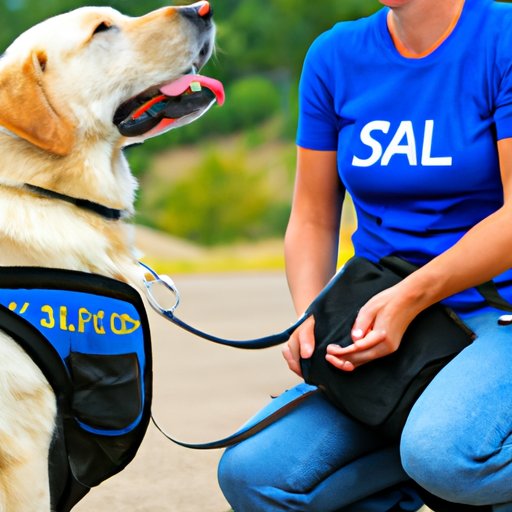
For many people, training a service dog is a daunting task. Not only is it time-consuming, but it requires a great deal of knowledge and skill. As such, many people choose to hire a professional trainer to help with the process. Professional trainers have extensive experience in training service dogs and can provide guidance and support throughout the process.
Benefits of Hiring a Professional Trainer
Hiring a professional trainer has numerous benefits. A professional trainer can provide guidance and support throughout the entire training process. They can also help identify and address potential problems before they become serious issues. Additionally, professional trainers have access to specialized equipment and resources that can make the training process easier and more effective.
How to Find a Qualified Trainer
When looking for a qualified trainer, it is important to research their credentials and experience. It is also important to ask for references and check reviews from past clients. Additionally, it is important to make sure the trainer is familiar with the specific tasks that the service dog will be performing. Once a qualified trainer has been found, the process of training the service dog can begin.

Exploring the Legal Rights and Responsibilities of Service Dog Owners
It is important to understand the legal rights and responsibilities of service dog owners. Federal and state laws provide protection for service dog owners and outline the rights and responsibilities of both the owner and the public. Additionally, many insurance companies offer coverage for service dogs.
Federal Laws
The ADA provides protection for service dog owners by prohibiting discrimination against people with disabilities. Under the ADA, businesses and establishments must allow service dogs to accompany their owners in public places. Additionally, landlords must make reasonable accommodations for service dog owners.
State Laws
Each state has its own laws regarding service dogs. It is important to research the laws in your state to make sure you are aware of your rights and responsibilities. Additionally, many states require service dogs to be licensed and vaccinated, so it is important to check your state’s requirements.
Insurance Coverage
Many insurance companies offer coverage for service dogs. This coverage typically includes veterinary care, grooming, and training. It is important to contact your insurance provider to determine what type of coverage is available and what expenses are covered.
Conclusion
Making your dog a service dog is a long and challenging process. It requires understanding the purpose of service dogs, identifying qualifying disabilities, exploring the types of tasks service dogs can perform, understanding the training process, and determining the need for professional assistance in training. Additionally, it is important to understand the legal rights and responsibilities of service dog owners and explore insurance coverage options. With the right training and preparation, your dog can become a valuable asset to you and your family.
Summary of Article
This article explored how to make your dog a service dog. It discussed identifying qualifying disabilities, exploring the types of tasks service dogs can perform, understanding the training process, determining the need for professional assistance in training, and exploring the legal rights and responsibilities of service dog owners. It is important to remember that training a service dog is a lengthy and challenging process, but with the right preparation and guidance, it can be done.
Resources for Further Reading
American Kennel Club, “Service Dogs: What Are They and How Do I Train One?,” AKC.org, 2020.
U.S. Department of Justice, “Americans with Disabilities Act,” ADA.gov, 2020.
U.S. Department of Veterans Affairs, “Service Dogs for Veterans with Mental Illness,” VA.gov, 2020.
(Note: Is this article not meeting your expectations? Do you have knowledge or insights to share? Unlock new opportunities and expand your reach by joining our authors team. Click Registration to join us and share your expertise with our readers.)