
Introduction
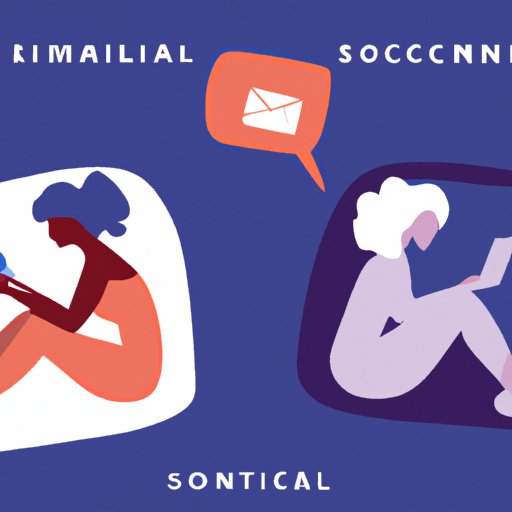
Technology is defined as “the application of scientific knowledge for practical purposes, especially in industry” (Oxford Dictionary). In recent years, technology has become an integral part of our lives, from smartphones to smart homes, and its influence continues to grow. This raises the question: Does technology isolate us? In this article, we will explore the impact of technology on human connections, examining both the positive and negative effects.
Analyzing the Impact of Technology on Human Connections
It is undeniable that technology has changed the way people communicate. The invention of email, text messages, and social media platforms such as Facebook and Twitter have made it easier than ever to stay connected with friends and family, no matter where they are in the world. Technology has also increased the speed of communication, allowing us to send messages almost instantaneously. However, some argue that this has resulted in a decrease in meaningful conversations, as people now rely on short, informal messages instead of having face-to-face conversations.
On the other hand, technology has enabled us to make new connections with people who may not have been accessible before. For example, online dating apps such as Tinder and Bumble have opened up a whole new world of potential partners, while social media platforms have allowed us to connect with people from different countries and cultures.
Examining How Social Media Is Affecting Real-Life Relationships
Social media has become an important part of many people’s lives, providing an easy way to stay in touch with friends and family. However, it can also lead to less face-to-face contact, as people become more comfortable communicating through their screens rather than in person. Furthermore, there is always the potential for misunderstandings, as tone and emotion can be difficult to convey over the internet. As Professor Sherry Turkle of MIT said, “We expect more from technology and less from each other” (Turkle, 2011).

Investigating Whether Technology Has Led to More Isolation or Greater Connectivity
The debate about whether technology has led to more isolation or greater connectivity is ongoing. On one hand, technology has allowed us to connect with people from all over the world, enabling us to share ideas, collaborate, and form virtual communities. On the other hand, spending too much time online can lead to a sense of loneliness and disconnection from the physical world. As Dr. Jean Twenge, author of iGen, stated, “There’s a lot of evidence that young people feel more isolated and lonely when they spend more time on digital media” (Twenge, 2018).
Exploring the Pros and Cons of Increased Technological Dependence
The effects of technology on human relationships are complex and cannot be easily summed up as either positive or negative. There are clear benefits to the convenience and accessibility that technology provides, but there is also a risk of addiction and a lack of face-to-face contact. Furthermore, technology can lead to misunderstandings and a feeling of disconnection from reality. As psychologist Dr. John Grohol said, “We need to be careful and mindful of how we use technology so it enhances our relationships and doesn’t replace them” (Grohol, 2016).

Looking at How Technology Has Changed Communication for Better or Worse
Technology has undoubtedly changed the way we communicate, both for better and for worse. On one hand, it has made it easier to stay in touch with friends and family, and enabled us to reach out to people we may not have been able to in the past. On the other hand, it has led to fewer meaningful conversations, as people often prefer to communicate through text or social media instead of talking face-to-face. As Dr. Sherry Turkle said, “We’re substituting machines for people in ways that don’t work very well” (Turkle, 2011).
Considering the Impact of Technology on Mental Health and Wellbeing
The impact of technology on mental health and wellbeing is an area of increasing concern. Studies have shown that excessive use of technology can lead to anxiety and depression, as well as a lack of concentration and focus. It is important to be aware of the potential risks associated with spending too much time online, and to take steps to reduce the negative impacts of technology. This could include limiting the amount of time spent on social media, setting boundaries between online and offline life, and taking regular breaks from technology.

Discussing How Technology Can Be Used to Enhance Social Interactions
In spite of the potential drawbacks, technology can also be used to enhance social interactions. For example, video chat services such as Skype and FaceTime can help people stay connected with friends and family who live far away, while social media can be used to find and connect with like-minded people. Furthermore, technology can provide a platform for creativity, enabling us to express ourselves in new and exciting ways. As psychologist Dr. John Grohol said, “When used properly, technology has the power to bring us closer together” (Grohol, 2016).
Conclusion
In conclusion, technology has clearly had a major impact on human connections, both positive and negative. While it has enabled us to stay in touch with friends and family more easily, it has also led to fewer meaningful conversations and a sense of loneliness. It is important to be aware of the potential risks associated with increased technological dependence, and to take steps to ensure that technology is used responsibly. Ultimately, technology can be used to enhance social interactions, enabling us to form new connections and foster meaningful interpersonal relationships.
(Note: Is this article not meeting your expectations? Do you have knowledge or insights to share? Unlock new opportunities and expand your reach by joining our authors team. Click Registration to join us and share your expertise with our readers.)