
Introduction
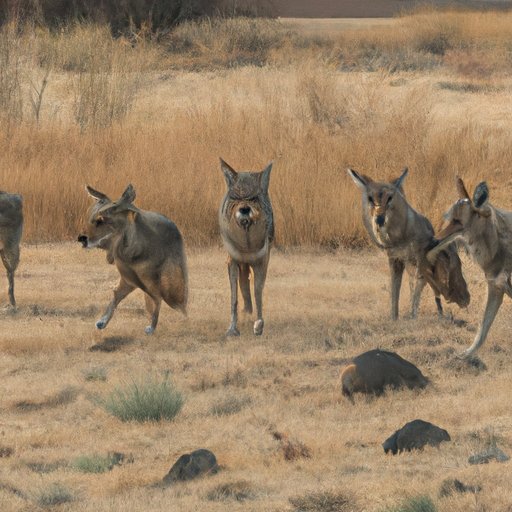
Coyotes are one of nature’s most adaptable animals, able to thrive in a variety of habitats and ecosystems across North and Central America. While coyotes have long been viewed as pests or even dangerous predators, recent research has revealed that these animals are actually quite social and cooperative creatures. But do coyotes actually travel in packs? In this article, we will explore the habits of coyotes and investigate whether or not they are truly pack animals.
Exploring the Habits of Coyotes: Do They Travel in Packs?
When it comes to coyote behavior, there is still much that we don’t understand. While it is clear that coyotes are social creatures, living and hunting in groups, do they actually travel in packs? To answer this question, we must first examine the social behavior of coyotes and investigate their pack mentality.
Coyotes: Solo Hunters or Pack Animals?
Coyotes are known to hunt in pairs or small groups, but they are also capable of hunting alone. While hunting alone may be more efficient, the benefits of being part of a pack are clear: coyotes can cover more ground and flush out prey more quickly when working together. Additionally, coyotes can use group tactics to drive prey into traps or ambush them from multiple directions. This type of cooperation is essential for successful hunting, and it demonstrates that coyotes are capable of forming complex social groups.
What Does Science Tell Us About Coyotes and Group Behavior?
Recent research has shed light on the dynamics of coyote packs and how they cooperate to hunt and survive. According to a study published in the journal Animal Behaviour, coyote packs are made up of related individuals who work together to find food, defend territory, and raise young. Additionally, the study found that coyote packs are fluid, with individuals coming and going as needed. This suggests that coyotes are not necessarily bound to a single pack and are instead free to join and leave different groups as they please.
How Coyotes Cooperate to Form Packs for Hunting and Survival
In order to understand how coyotes cooperate to form packs, it is important to examine the roles that individual coyotes play in a pack. The alpha male and female usually lead the pack, while the remaining members hunt and guard the den. Each member of the pack has a specific role to play, and these roles can shift depending on the needs of the group. For example, if the alpha pair is unable to hunt, the other members of the pack will take over the task.
By working together in packs, coyotes are able to maximize their success at hunting, defending territory, and raising young. The pack structure also provides an extra layer of protection against predators, allowing coyotes to live in areas where other animals would struggle to survive.
Conclusion
To answer the question “do coyotes travel in packs?”, the answer is yes. Recent research has revealed that coyotes are highly social animals, capable of forming complex packs for hunting and survival. By understanding the dynamics of coyote packs and the roles that individual coyotes play, we can better appreciate the adaptability and intelligence of these remarkable animals.
(Note: Is this article not meeting your expectations? Do you have knowledge or insights to share? Unlock new opportunities and expand your reach by joining our authors team. Click Registration to join us and share your expertise with our readers.)