
Introduction
A breaker is an important device in your home’s electrical system that acts like a fuse, protecting the wiring from overheating or short circuits. A faulty outlet, on the other hand, can be dangerous and can cause a breaker to trip. In this article, we will explore the risk of a faulty outlet tripping your breaker and what you need to know about breakers and faulty outlets.
Examining the Risk of a Faulty Outlet Tripping Your Breaker
If your breaker is tripping, there may be a number of causes, including a faulty outlet. To identify if a bad outlet is causing your breaker to trip, it is important to understand how breakers work. Breakers are designed to shut off power to an area when the current exceeds the breaker’s rating. If too much current passes through the breaker, it will trip and shut off power to the area.
Another way a breaker can trip is if there is an overload on the circuit. This can happen if too many appliances are plugged into the same circuit, causing an excessive amount of electricity to pass through the breaker. This can lead to the breaker tripping and shutting off the power to the area.
Troubleshooting a Tripped Breaker: Is It an Electrical Outlet Problem?
If you have identified that your breaker is tripping, the next step is to determine the source of the problem. The easiest way to do this is to unplug all the appliances and devices connected to the circuit and then reset the breaker. If the breaker trips again, then it is likely that there is an electrical outlet problem.
It is important to remember that breakers can trip for a variety of reasons. It could be something as simple as a loose connection or a faulty appliance. However, if the breaker trips repeatedly, then it is likely that there is a more serious issue such as a faulty outlet.

How to Prevent Overloads and Tripped Breakers Due to Faulty Outlets
One of the best ways to prevent overloaded circuits and tripped breakers due to faulty outlets is to properly install outlets. Make sure that the outlets you install are rated for the amount of electricity they will be using, and never overload them. If you are unsure about whether or not an outlet is rated for the amount of electricity it is being used for, contact a qualified electrician for help.
In addition to proper installation, it is also important to maintain your circuit breakers. This includes regularly testing them to make sure they are working correctly and replacing any worn-out components. Finally, it is important to avoid overloading circuits by only plugging in the number of appliances that the circuit can handle.

What You Need to Know About Breakers and Faulty Outlets
There are several different types of breakers, including single-pole and double-pole breakers. Single-pole breakers are used to protect one hot wire and are usually found in older homes. Double-pole breakers are used to protect two hot wires and are typically found in newer homes.
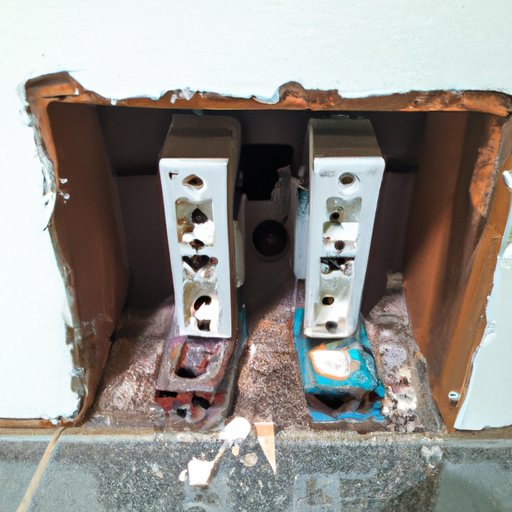
When it comes to faulty outlets, there are several signs that indicate a problem. These include flickering lights, buzzing or humming noises coming from the outlet, or a burning smell coming from the outlet. Additionally, if the outlet is warm to the touch or sparks are visible, then it is likely that the outlet is faulty.

An Overview of the Hazards of Faulty Outlets and Tripped Breakers
Faulty outlets and tripped breakers can be extremely hazardous. One of the biggest risks is the possibility of a fire. Faulty outlets can cause shorts in wires, which can generate heat and ultimately ignite combustible materials. In addition to fire, faulty outlets can also pose a risk of electric shock.
Conclusion
A bad outlet can cause a breaker to trip, leading to an overload on the circuit. To prevent this from happening, it is important to make sure that outlets are properly installed and maintained, and to avoid overloading circuits. In addition, it is important to be aware of the signs of a faulty outlet and take steps to address the issue immediately. Knowing the risks associated with faulty outlets and tripped breakers can help keep your home safe.
(Note: Is this article not meeting your expectations? Do you have knowledge or insights to share? Unlock new opportunities and expand your reach by joining our authors team. Click Registration to join us and share your expertise with our readers.)