
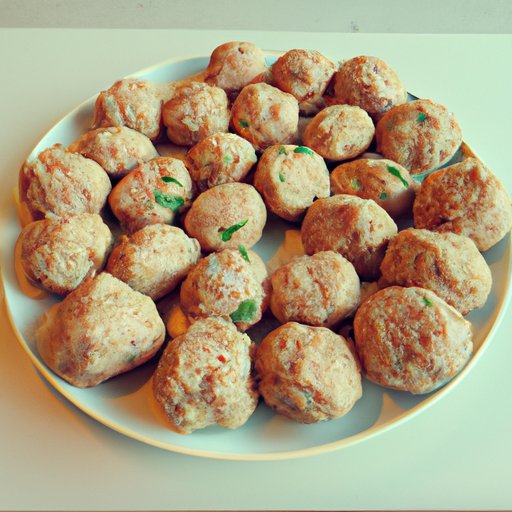
Introduction
Turkey meatballs are a popular choice for many people looking to make healthier lifestyle choices. But are they really healthy? This article will explore the nutritional benefits of turkey meatballs, compare them to other protein sources, provide tips on how to prepare them in a healthy way, and discuss potential risks associated with eating them.

Nutritional Comparison of Turkey Meatballs to Other Protein Sources
Turkey meatballs are a great source of lean protein. One cooked turkey meatball (1 oz/28 g) contains approximately 7 g of protein, 5 g of fat, and 45 calories. In comparison, a similar-sized beef meatball contains about 8 g of protein, 10 g of fat, and 70 calories. So, when it comes to protein content, turkey meatballs are slightly lower than beef meatballs. However, when it comes to fat content, turkey meatballs have less than half the amount of fat as beef meatballs.
In addition to being lower in fat, turkey meatballs also offer a few other nutritional benefits. For example, they are an excellent source of selenium, a mineral that helps protect cells from damage. They are also a good source of phosphorus, zinc, and B vitamins such as thiamin, riboflavin, and niacin. These essential nutrients help support energy production and growth, as well as the formation of red blood cells.
Benefits of Eating Turkey Meatballs for a Healthy Diet
When it comes to incorporating turkey meatballs into your diet, there are several benefits to consider. First, they are nutrient-dense – meaning they contain a large amount of vitamins and minerals in a small package. This makes them a great option for those looking to get more nutrition in their diet without adding a lot of extra calories.
Second, turkey meatballs are low in fat. This makes them a great choice for individuals looking to reduce their overall fat intake or maintain a healthy weight. Third, turkey meatballs are high in protein – which is important for building and maintaining muscle mass, as well as providing energy throughout the day.
Finally, turkey meatballs are incredibly versatile. You can use them in a variety of recipes, from appetizers to main dishes. This makes them a great option for those looking to switch up their meals and add some variety to their diets.

Cooking Tips for Preparing Healthy Turkey Meatballs
When preparing turkey meatballs, it’s important to choose lean ground turkey. Look for packages labeled “lean” or “extra lean” to ensure you’re getting the lowest fat content possible. It’s also important to avoid any added oils or fats when making the meatballs. Instead, opt for healthy binders and seasonings such as bread crumbs, egg whites, garlic, and herbs.
Another tip for preparing healthy turkey meatballs is to bake them instead of frying them. Frying adds extra fat and calories that aren’t necessary. Baking is a much healthier option and produces delicious, juicy meatballs. To bake the meatballs, preheat your oven to 375°F and line a baking sheet with parchment paper. Place the meatballs on the baking sheet and bake for 20-25 minutes, or until they are golden brown.
Reasons to Include Turkey Meatballs in Meal Plans
Turkey meatballs are a great addition to any meal plan. They are quick and easy to prepare, so they are perfect for busy weeknights. Plus, they can be used as appetizers or main dishes – so they are a great option for entertaining. And, let’s not forget that kids love them! So, if you’re looking for a way to get your kids to eat more protein, turkey meatballs are a great option.
How to Make Healthy Turkey Meatballs at Home
Making healthy turkey meatballs at home is easier than you might think. All you need is some ground turkey, a few simple ingredients, and about 30 minutes of your time. Here’s a step-by-step guide to making delicious turkey meatballs:
1. Preheat your oven to 375°F and line a baking sheet with parchment paper.
2. In a large bowl, combine 1 lb of lean ground turkey, 1 egg white, ¼ cup of breadcrumbs, 1 teaspoon of minced garlic, 1 teaspoon of dried oregano, 1 teaspoon of dried basil, and ½ teaspoon of salt. Mix everything together until fully combined.
3. Using your hands, form the mixture into 12 equal-sized meatballs and place them on the prepared baking sheet.
4. Bake for 20-25 minutes, or until the meatballs are golden brown. Enjoy!
For an even tastier turkey meatballs, try adding some chopped fresh herbs or grated Parmesan cheese to the mixture before baking. You can also experiment with different spices and seasonings to find the flavor combination that you like best.

Health Risks Associated with Eating Turkey Meatballs
Although turkey meatballs are generally considered a healthy food, there are some potential risks associated with eating them. The most common risk is contamination from bacteria, such as salmonella or E. coli. To reduce this risk, always cook the meatballs to an internal temperature of 165°F. Additionally, store leftover meatballs in the refrigerator for no more than three days, or in the freezer for up to three months.
Another potential risk is allergens in the spices or seasonings used to make the meatballs. If you or someone in your family has a food allergy, make sure to read the labels of any spices or seasonings you use to make sure they don’t contain any potential allergens.
Conclusion
In conclusion, turkey meatballs are a healthy option for those looking to incorporate more lean protein into their diet. They are low in fat, high in protein, and incredibly versatile. When preparing them, it’s important to use lean ground turkey, healthy binders and seasonings, and to bake instead of fry. Additionally, it’s important to be aware of potential health risks associated with eating turkey meatballs, such as contamination from bacteria and allergens in spices or seasonings.
To enjoy healthy turkey meatballs, follow these tips and recommendations. With a little bit of preparation, you can create delicious and nutritious meals that the whole family will love.
(Note: Is this article not meeting your expectations? Do you have knowledge or insights to share? Unlock new opportunities and expand your reach by joining our authors team. Click Registration to join us and share your expertise with our readers.)