
Introduction
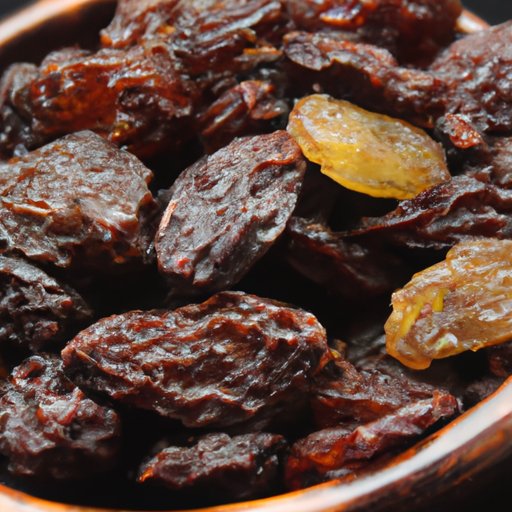
Raisins are dried grapes that have been around for centuries, with records of them being used in India as early as 2000 BC. Today, they are popular snacks around the world, and can be found in a variety of dishes from breakfast cereals to salads. But what makes raisins so healthy? In this article, we explore the nutritional value of raisins, as well as their potential health benefits. We also provide recipes and ideas for incorporating raisins into your diet.

Exploring the Health Benefits of Eating Raisins
Raisins are an excellent source of nutrition, and have numerous health benefits. Let’s take a look at some of the most important:
Fiber Content
Raisins are high in dietary fiber, with a one-ounce serving providing approximately 3.3 grams. Dietary fiber is essential for digestive health, and has been linked to reduced risk of heart disease, diabetes, and obesity. According to a study published in The American Journal of Clinical Nutrition, “high intakes of dietary fiber may reduce the risk of coronary heart disease and type 2 diabetes.”
Rich in Iron
Raisins are also an excellent source of iron, with a one-ounce serving containing 1.1 milligrams of the mineral. Iron is essential for carrying oxygen throughout the body, and can help prevent anemia. A study published in Nutrition Reviews found that “iron deficiency is the most common nutrient deficiency worldwide, particularly among women of childbearing age.”
High Antioxidant Content
Raisins are also rich in antioxidants, which can help protect against oxidative stress and damage. A study published in The Journal of Food Science found that raisins contain higher levels of antioxidants than other dried fruits such as dates, prunes, and apricots. The study concluded that raisins “could be considered as a potential source of natural antioxidants.”
A Nutritionist’s Guide to Incorporating Raisins into Your Diet
Now that you know more about the health benefits of raisins, let’s take a look at how to incorporate them into your diet:
Suggested Serving Sizes
It is recommended that adults consume no more than one ounce (about 28 grams) of raisins per day. This serving size provides approximately 115 calories, and is a good way to get the health benefits of raisins without overdoing it. Children should consume even smaller amounts, as their calorie needs are lower.
Recipes and Ideas for Adding Raisins to Meals
There are many ways to add raisins to your diet. They make a great addition to oatmeal or cereal for breakfast, and can be added to salads or rice dishes for lunch or dinner. You can also mix them into yogurt or trail mix for a healthy snack. For dessert, try adding them to muffins or cookies.
Comparing the Nutritional Value of Raisins vs. Other Dried Fruits
When comparing the nutritional value of raisins to other dried fruits, it’s important to consider both the calorie count and the amount of vitamins and minerals. Here’s a quick comparison of the nutritional value of raisins versus other dried fruits:
Calorie Comparison
Raisins have slightly more calories than other dried fruits. A one-ounce serving of raisins contains 115 calories, while a one-ounce serving of dried apricots contains just 94 calories. However, raisins are also higher in fiber and other nutrients than other dried fruits, so the difference in calorie count is not significant.
Vitamin and Mineral Comparison
Raisins are higher in iron, magnesium, and potassium than other dried fruits. A one-ounce serving of raisins contains 1.1 milligrams of iron, 15 milligrams of magnesium, and 156 milligrams of potassium. In comparison, a one-ounce serving of dried apricots contains 0.7 milligrams of iron, 10 milligrams of magnesium, and 123 milligrams of potassium.

Raisins: The Perfect Snack for a Healthy Diet
If you’re looking for a snack that is nutritious and tasty, look no further than raisins. Not only are they low in sodium, but they are also high in fiber, which helps keep you feeling full longer. Plus, they are a great source of iron and other essential vitamins and minerals.
How to Make Delicious and Nutritious Trail Mix with Raisins
Trail mix is a great way to get the nutritional benefits of raisins in a delicious snack. Here are some tips for making the perfect trail mix:
Recipe Ideas
Start by mixing together one cup of raisins with two cups of your favorite nuts. Then, add in some seeds or dried fruit for extra flavor. Try adding pumpkin seeds, sunflower seeds, dried cranberries, or dried cherries. You can also add a handful of dark chocolate chips for a sweet treat.
Tips for Making the Perfect Trail Mix
When making trail mix, it’s important to remember that a little goes a long way. Start with a small amount of ingredients, and then adjust according to your taste. You can also add spices such as cinnamon or nutmeg for extra flavor. Finally, try to avoid adding too much sugar, as this can offset the health benefits of the trail mix.
An In-Depth Look at the Vitamins, Minerals, and Antioxidants Found in Raisins
Let’s take a closer look at the vitamins, minerals, and antioxidants found in raisins:
Vitamin A
Raisins are a good source of vitamin A, with a one-ounce serving providing 8% of the daily recommended value. Vitamin A is essential for vision, immune function, and cell growth.
Vitamin C
Raisins also contain vitamin C, with a one-ounce serving providing 6% of the daily recommended value. Vitamin C is essential for collagen production, and can help protect against free radical damage.
Vitamin E
Raisins are rich in vitamin E, with a one-ounce serving providing 5% of the daily recommended value. Vitamin E is an antioxidant that can help protect against oxidative stress and damage.
Magnesium
Raisins are also a good source of magnesium, with a one-ounce serving providing 15 milligrams. Magnesium is essential for muscle and nerve function, and can help regulate blood pressure.
Potassium
Raisins are high in potassium, with a one-ounce serving providing 156 milligrams. Potassium is essential for maintaining fluid balance in the body.
Selenium
Raisins are also a good source of selenium, with a one-ounce serving providing 5 micrograms. Selenium is an essential trace mineral that can help protect against cell damage.

Uncovering the Secrets of Raisin Health Benefits
Now that you know more about the vitamins, minerals, and antioxidants found in raisins, let’s take a look at some of the potential health benefits:
Improving Digestion
Raisins are high in dietary fiber, which can help improve digestion and reduce constipation. Additionally, the high antioxidant content of raisins can help protect against oxidative stress in the gut, which can lead to better digestion.
Controlling Blood Sugar Levels
Raisins are low on the glycemic index, meaning they are slowly digested and absorbed into the bloodstream. This can help control blood sugar levels, which is important for individuals with diabetes or pre-diabetes.
Lowering Blood Pressure
Raisins are high in potassium, which can help lower blood pressure. A study published in Hypertension found that “potassium-rich foods, such as raisins, can reduce systolic blood pressure by up to 4 mmHg and diastolic blood pressure by up to 3 mmHg.”
Conclusion
Raisins are a delicious and nutritious snack that can be enjoyed by everyone. They are high in dietary fiber, iron, antioxidants, and other essential vitamins and minerals. Additionally, they can help improve digestion, control blood sugar levels, and lower blood pressure.
(Note: Is this article not meeting your expectations? Do you have knowledge or insights to share? Unlock new opportunities and expand your reach by joining our authors team. Click Registration to join us and share your expertise with our readers.)