
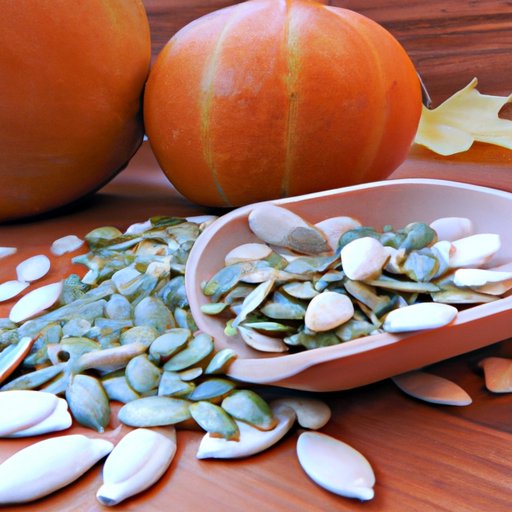
Introduction
Pumpkin seeds have been gaining popularity as a nutritious snack in recent years. But what exactly makes pumpkin seeds so healthy? In this article, we’ll explore the nutritional value, health benefits, and recipes featuring pumpkin seeds. We’ll also look at the history and different varieties of pumpkin seeds, as well as how to prepare them for cooking.

Nutritional Value of Pumpkin Seeds
Pumpkin seeds are an excellent source of nutrients. One ounce (28 grams) of pumpkin seeds contains:
- Calories: 125
- Fat: 11 grams
- Carbohydrates: 5 grams
- Fiber: 1 gram
- Protein: 5 grams
In addition to these macronutrients, pumpkin seeds are also rich in vitamins and minerals, such as iron, zinc, magnesium, and manganese. Research has also shown that pumpkin seeds contain several bioactive plant compounds, including phenolic acids, carotenoids, and cucurbitacins (1).
Health Benefits of Eating Pumpkin Seeds
Eating pumpkin seeds can offer a range of health benefits. Here are some of the top benefits associated with consuming pumpkin seeds:
Heart Health
Pumpkin seeds are rich in heart-healthy fats, including omega-3 fatty acids. Studies have shown that consuming omega-3 fatty acids can help reduce blood pressure and cholesterol levels, which can help protect against heart disease (2, 3).
Bone Health
Pumpkin seeds are a great source of calcium, magnesium, and phosphorus, which are all essential for maintaining strong bones. Studies have found that consuming sufficient amounts of these minerals can help reduce the risk of osteoporosis and other bone-related conditions (4, 5).
Digestive Health
Pumpkin seeds are high in fiber, which is important for digestive health. Studies have found that consuming adequate amounts of fiber can help prevent constipation, maintain a healthy weight, and reduce the risk of certain digestive disorders, such as diverticulitis (6, 7).
Skin Health
Pumpkin seeds are packed with skin-nourishing vitamins, minerals, and antioxidants. Studies have found that these nutrients can help protect the skin from damage caused by free radicals, which can lead to premature aging (8).
Blood Sugar Regulation
Pumpkin seeds are low in carbohydrates, which makes them a great choice for people trying to regulate their blood sugar levels. Studies have found that consuming foods with a low glycemic index can help reduce the risk of diabetes and other metabolic disorders (9, 10).
How to Incorporate Pumpkin Seeds into Your Diet
Pumpkin seeds are a versatile and delicious snack that can be enjoyed in many different ways. Here are some tips for incorporating pumpkin seeds into your diet:
Suggested Serving Size
The recommended serving size for pumpkin seeds is one ounce (28 grams). This amount provides approximately 125 calories, 11 grams of fat, 5 grams of protein, and 5 grams of carbohydrates.
Ideas for Adding Pumpkin Seeds to Meals
Pumpkin seeds can be added to a variety of meals for a tasty and nutritious boost. Try adding them to salads, stir-fries, oatmeal, yogurt, soups, or smoothies. They can also be enjoyed as a crunchy topping for casseroles or baked goods.
Recipes Featuring Pumpkin Seeds
Looking for some creative ideas for using pumpkin seeds? Try out some of these delicious recipes:
Breakfast
Start your day off right with a Pumpkin Seed & Banana Smoothie Bowl. Simply blend together ½ banana, ½ cup almond milk, 1 tablespoon pumpkin puree, 1 teaspoon pumpkin pie spice, and 2 tablespoons of pumpkin seeds. Top with extra pumpkin seeds, sliced banana, and a sprinkle of cinnamon.
Lunch
Whip up a quick and easy Pumpkin Seed Pesto Pasta for lunch. Cook 8 ounces of whole wheat pasta according to package directions. Meanwhile, combine ¼ cup pumpkin seeds, 2 cloves garlic, 1 cup fresh basil leaves, 2 tablespoons olive oil, and salt and pepper to taste in a food processor. Toss the pesto with the cooked pasta and serve.
Dinner
Try this flavorful Roasted Vegetable & Pumpkin Seed Salad for dinner. Preheat oven to 400°F (205°C). Toss together 1 chopped sweet potato, 1 chopped zucchini, 1 chopped red bell pepper, 1 tablespoon olive oil, and salt and pepper to taste on a baking sheet. Roast for 15–20 minutes, stirring once halfway through. Meanwhile, heat 1 tablespoon olive oil in a skillet over medium heat. Add 1 cup pumpkin seeds and cook until lightly toasted, about 3–5 minutes. Combine roasted vegetables and pumpkin seeds in a large bowl. Serve over a bed of greens with a drizzle of balsamic vinegar.
Snacks
Satisfy your afternoon hunger with a batch of Crunchy Pumpkin Seed Granola Bars. Preheat oven to 350°F (180°C). Mix together 1 cup rolled oats, ½ cup pumpkin seeds, ½ cup honey, and ¼ cup melted coconut oil in a bowl. Press the mixture into an 8×8-inch pan lined with parchment paper. Bake for 20–25 minutes, until golden brown. Let cool before slicing into bars.
The History of Pumpkin Seeds
Pumpkin seeds have a long and interesting history. They are believed to have originated in Central America and were first cultivated by the Aztecs and Mayans over 5,000 years ago (11). The seeds were used both as a food source and for medicinal purposes. For instance, they were thought to have natural diuretic properties and were often used to treat kidney problems (12).

Different Varieties of Pumpkin Seeds
There are many different varieties of pumpkin seeds available on the market. Here are some of the most common types:
Raw vs. Roasted
Pumpkin seeds can be found either raw or roasted. Raw pumpkin seeds are typically green in color and have a mild, nutty flavor. Roasted pumpkin seeds are usually darker in color and have a slightly more intense flavor.
Hulled vs. Unhulled
Pumpkin seeds can also be found hulled or unhulled. Hulled pumpkin seeds have had their shells removed, making them easier to eat. Unhulled pumpkin seeds still have their shells intact, which gives them a crunchier texture.
Salted vs. Unsalted
Pumpkin seeds can also be found salted or unsalted. Salted pumpkin seeds have a salty flavor, while unsalted pumpkin seeds have a more neutral taste.

How to Prepare and Cook Pumpkin Seeds
Preparing and cooking pumpkin seeds is a simple process. Here are some tips for getting the most out of your pumpkin seeds:
Soaking
Before cooking, it is recommended to soak pumpkin seeds in water overnight. This helps to soften the shells and make them easier to digest. To soak, simply add the pumpkin seeds to a bowl of cold water and let them sit overnight. Once soaked, drain the water and proceed with the recipe.
Roasting
To roast pumpkin seeds, preheat oven to 350°F (180°C). Spread the seeds on a baking sheet and bake for 12–15 minutes, until lightly browned. Be sure to stir the seeds occasionally to ensure even roasting.
Boiling
To boil pumpkin seeds, add them to a pot of boiling water and cook for 10 minutes. Drain the seeds and season with sea salt, if desired.
Conclusion
Pumpkin seeds are a nutrient-rich snack with a wide range of health benefits. They are an excellent source of macronutrients, vitamins, and minerals, and are packed with bioactive plant compounds. Eating pumpkin seeds may help reduce the risk of heart disease, bone loss, digestive disorders, skin damage, and metabolic disorders. There are many different varieties of pumpkin seeds available, and they can be enjoyed in a variety of recipes. Soaking, roasting, and boiling are all easy ways to prepare pumpkin seeds.
(Note: Is this article not meeting your expectations? Do you have knowledge or insights to share? Unlock new opportunities and expand your reach by joining our authors team. Click Registration to join us and share your expertise with our readers.)