
Introduction
The theory of evolution by natural selection is one of the most important and influential scientific theories in history. Developed by Charles Darwin in 1859, this theory has revolutionized the way we understand the development of life on Earth. This article outlines the basics of the theory and provides an overview of the scientist who developed it, its historical context, a critique of its strengths and weaknesses, a comparison to other theories in its field, and practical applications.
Biographical Sketch
Charles Darwin was born in England in 1809. He studied medicine at Edinburgh University but eventually decided to pursue a career in natural history instead. In 1831, he embarked on a five-year voyage on the HMS Beagle, during which he collected specimens and made observations about the flora and fauna of various regions around the world. These experiences led him to develop his theory of natural selection, first published in 1859 in his book On the Origin of Species.
Darwin’s work has had a lasting impact on biology, anthropology, ecology, and many other fields of science. His theory of natural selection provided a framework for understanding the development of organisms over time and their adaptation to the environment. It has since been applied to many areas of study, including medicine, genetics, and animal behavior.
Explainer
The theory of evolution by natural selection states that organisms can adapt to their environment through small changes, or variations, over time. These variations are passed down from generation to generation, leading to the emergence of new species. This process is known as “descent with modification,” and it is driven by two key components: variation and selection.
Variation refers to the differences between members of a species. For example, some birds may have longer beaks than others, and some plants may grow taller than their counterparts. Selection occurs when certain variations are more successful than others in terms of reproduction and survival. This means that organisms with advantageous traits are more likely to pass on their genes to the next generation, while those with less favorable traits are less likely to do so.
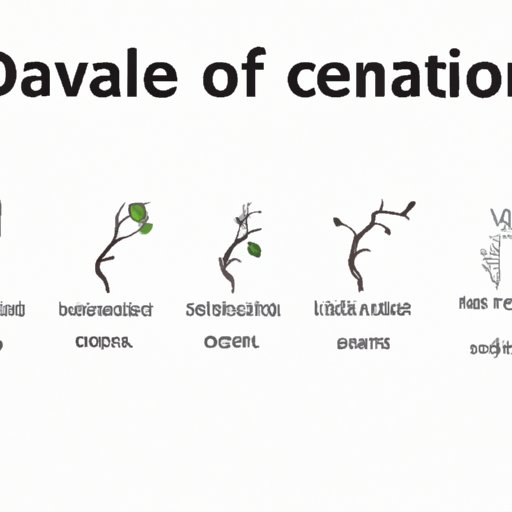
This diagram illustrates the concept of natural selection:

Historical Context
The idea of evolution by natural selection was not new in the 19th century. Ancient Greek philosopher Anaximander proposed a similar concept over 2,000 years earlier, and 18th century French biologist Jean-Baptiste Lamarck suggested that species could change over time due to environmental influences. However, it was Darwin who put forth the most comprehensive and convincing explanation of how this process works.
Darwin’s theory was largely based on observations he made during his travels on the HMS Beagle. He noticed similarities between different species in different parts of the world and hypothesized that they must have evolved from a common ancestor. He also observed the struggle for survival among organisms and concluded that those with advantageous traits were more likely to survive and reproduce.
Critique
The theory of evolution by natural selection has been widely accepted by the scientific community and is considered to be an accurate explanation of how species have changed over time. Its greatest strength is that it is supported by a wealth of evidence, including fossil records, genetic studies, and observations of species in the wild.
However, there are some limitations to the theory. For example, it does not account for the appearance of entirely new traits or species, nor does it explain why some species remain unchanged for long periods of time. Additionally, it does not address the role of chance in evolution, which may play an important role in some cases.
Comparison
The theory of evolution by natural selection should not be confused with other theories that attempt to explain the development of life on Earth. For example, creationism posits that species were created by a divine being and have remained unchanged ever since. Lamarck’s theory of evolution suggests that organisms can acquire traits through their own efforts and pass them down to their offspring. Neither of these theories has been substantiated by scientific evidence.
Application
Evolution by natural selection has wide-reaching implications for the real world. For example, it can help us understand why some diseases are more common in certain populations and why some species are better adapted to their environment than others. It can also provide insight into the effects of human activities such as pollution and habitat destruction on species diversity.
In addition, evolutionary theory can be used to inform medical treatments and agricultural practices. For example, it can help us understand how pathogens evolve resistance to antibiotics and how crops can be selected for greater productivity and disease resistance.
Conclusion
In summary, the theory of evolution by natural selection is one of the most important scientific theories of all time. Developed by Charles Darwin in the 19th century, it explains how organisms can adapt to their environment through small changes over time. It is supported by a wealth of evidence and has far-reaching implications for our understanding of the natural world. Although there are some limitations to the theory, it remains an invaluable tool for scientists today.
(Note: Is this article not meeting your expectations? Do you have knowledge or insights to share? Unlock new opportunities and expand your reach by joining our authors team. Click Registration to join us and share your expertise with our readers.)