
Introduction
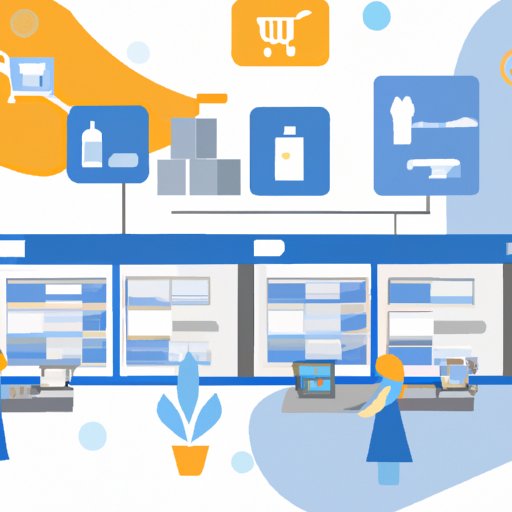
Technology has revolutionized the way we shop and interact with stores. From physical layouts to online shopping, technological advancements have drastically changed the way stores operate. In this article, we will explore how technology has impacted store design and layout, online shopping, customer experience, inventory management, employees, and efficiency and profitability.

Exploring the Impact of Technology on Store Design and Layout
Technology has changed the physical layout of stores, making them more inviting and efficient. For example, many retailers have implemented digital signage to provide customers with product information, promotional offers, and other vital information. Additionally, the use of beacons and sensors has enabled stores to track customers’ movements, allowing for more targeted marketing strategies. Moreover, by utilizing virtual reality (VR) and augmented reality (AR), stores can create a more immersive shopping experience for customers. As David Weinhaus, CEO of Visual Art Inc., states, “The combination of VR and AR is revolutionizing the retail industry, allowing customers to get a 360-degree view of products and providing an interactive shopping experience.”
From Brick-and-Mortar to Online Shopping: How Technology Changed the Way We Shop
Technology has also had a major impact on the way we shop. With the rise of e-commerce, customers now have access to a wide range of products that they can purchase from the comfort of their own homes. This has resulted in an increase in competition between brick-and-mortar stores and online retailers. While online shopping has its advantages, such as convenience and cost savings, it also has some drawbacks, such as not being able to physically inspect a product before purchase. Additionally, traditional brick-and-mortar stores offer customers a unique shopping experience that cannot be replicated online. According to a study by Deloitte, “Brick-and-mortar stores still offer a unique shopping experience that cannot be replaced by online retailers.”
The Role of Technology in Enhancing Customer Experience in Stores
Technology has also enabled stores to provide a more personalized shopping experience for customers. By leveraging data analytics, stores can customize their offerings based on customers’ individual needs and preferences. Additionally, stores can make use of artificial intelligence (AI) and machine learning (ML) to create more efficient and effective customer service. Furthermore, stores can utilize technologies such as facial recognition and voice recognition to ensure a secure and seamless checkout process.
Examining the Benefits and Disadvantages of Technological Advancement in Retail
Technological advancements have provided numerous benefits to stores, such as improved inventory management and increased efficiency. For instance, automated systems can be used to track inventory levels and optimize the stocking process. Additionally, these technologies can be used to streamline tasks and reduce labor costs. However, there are some potential drawbacks to using technology in stores, such as higher costs and customer privacy concerns.
A Look at How Technology Has Improved Inventory Management in Stores
Automated systems for tracking inventory levels allow stores to accurately monitor stock levels and identify opportunities for improvement. Additionally, stores can utilize RFID tags and barcode scanners to keep track of items in real time, ensuring that shelves are always stocked with the right products. Moreover, these systems can be used to optimize the stocking process and reduce losses due to shrinkage.

Analyzing the Effects of Technological Advancements on Store Employees
Technology has also had an impact on store employees. Automation has enabled stores to streamline tasks and increase job satisfaction. However, there are also potential risks associated with automation, such as job displacement and decreased job security. Additionally, some employees may not be comfortable working with new technologies. As Chris Walther, senior vice president at the National Retail Federation, states, “Retailers need to take the time to train and educate their employees on how to use new technologies.”

Utilizing Technology to Increase Efficiency and Profitability in Stores
Technology can also be used to increase efficiency and profitability in stores. For instance, stores can use data analytics to identify areas for improvement and implement new technologies to increase productivity. Additionally, stores can utilize AI and ML to automate certain processes and reduce costs. Moreover, stores can leverage technologies such as blockchain and cryptocurrency to increase security and improve customer trust.
Conclusion
Technology has revolutionized the way stores operate, from physical layouts to online shopping. It has enabled stores to provide customers with a more personalized shopping experience and has improved inventory management and increased efficiency. Additionally, technology has had both positive and negative effects on store employees. Despite the potential drawbacks, technological advancements have been beneficial to stores, helping them to become more efficient and profitable.
(Note: Is this article not meeting your expectations? Do you have knowledge or insights to share? Unlock new opportunities and expand your reach by joining our authors team. Click Registration to join us and share your expertise with our readers.)