

Introduction
Traveling nurses are healthcare professionals who provide medical care for patients in various locations on a temporary basis. They work in a variety of settings, from hospitals and healthcare facilities to private practices, military bases, and more. In this article, we’ll explore the roles, benefits, and challenges of being a travel nurse, as well as what is required to become one.
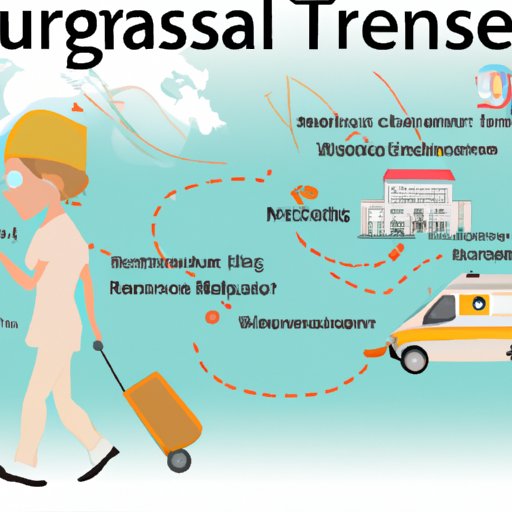
An Overview of the Role of Traveling Nurses
Traveling nurses fill an important role in the healthcare industry. According to the American Association of Colleges of Nursing (AACN), traveling nurses “provide care to patients in a variety of settings and often go where they are needed most.” They are typically hired on a short-term or long-term basis to fill in for staff nurses who are on vacation or maternity leave, or to help during times of high patient volume.
Roles and Responsibilities
The roles and responsibilities of a traveling nurse vary depending on the type of assignment and the facility in which they are working. Generally speaking, traveling nurses are responsible for providing basic nursing care, such as monitoring vital signs, administering medications, and performing diagnostic tests. They may also be responsible for more specialized tasks, such as caring for critically ill patients or assisting with complex surgical procedures.
Professional Requirements
In order to be a successful traveling nurse, there are certain professional requirements that must be met. First and foremost, traveling nurses must have a valid nursing license in the state in which they will be working. Additionally, they must be up to date on their certifications and have experience in the specialty in which they are working. For example, if they are working in an emergency room, they should have experience in emergency medicine.

The Benefits and Challenges of Being a Travel Nurse
Being a traveling nurse can be both rewarding and challenging. On the one hand, it offers the opportunity to travel to different parts of the country and experience new cultures and environments. It also provides the chance to learn new skills and gain valuable experience in a variety of settings. On the other hand, it can be difficult to adjust to the demands of a new workplace and living environment, and there can be a lot of stress involved in travel nursing assignments.
Advantages and Disadvantages
The advantages of being a traveling nurse include financial compensation, flexibility, and the opportunity to explore new places. According to a survey by the AACN, “more than half of respondents reported higher pay rates than their permanent counterparts.” Additionally, travel nurses have the flexibility to choose when and where they want to work, allowing them to make their own schedule. Finally, travel nursing allows nurses to explore different parts of the country and experience new cultures and lifestyles.
On the other hand, there can be some disadvantages to being a travel nurse. These include the lack of job security, the difficulty of adjusting to a new workplace and living environment, and the potential for homesickness. Additionally, travel nurses may not receive the same benefits and perks as permanent staff nurses, such as health insurance, paid vacation time, and retirement plans.
Exploring the Different Types of Travel Nursing Assignments
Travel nursing assignments can vary in length and scope. Some assignments are short-term, lasting only a few weeks or months, while others are long-term, lasting up to a year or more. Additionally, some assignments are specialty assignments, such as working in an intensive care unit or operating room.
Short-term vs. Long-term Assignments
Short-term assignments are those that last less than three months, while long-term assignments are those that last more than three months. Short-term assignments are generally preferred by those who want to explore new places and gain experience in different settings. However, long-term assignments offer more stability and the potential for increased earnings.
Specialty Assignments
Specialty assignments are those that require specialized knowledge and skills, such as working in an intensive care unit or operating room. These types of assignments tend to pay more than general assignments, but they also require more training and experience.
A Look at Where Travel Nurses Work
Travel nurses can work in a variety of settings, including hospitals, healthcare facilities, private practices, military bases, and more. The type of setting and the duties of the position will depend on the assignment.
Hospitals and Healthcare Facilities
Travel nurses often work in hospitals and healthcare facilities, where they provide general nursing care and assist with more specialized tasks. They may also be asked to fill in for staff nurses who are on vacation or maternity leave.
Private Practices
Travel nurses may also work in private practices, where they provide care for patients in areas such as family medicine, pediatrics, and geriatrics. They may also be asked to provide administrative support, such as scheduling appointments and managing patient records.
Military and Government
Travel nurses may also work in military or government settings, where they provide care for soldiers and veterans. They may also be asked to provide care in disaster relief situations or in remote locations.

The Salary and Benefits of Travel Nursing
Travel nurses typically earn more than their permanent counterparts due to the nature of their jobs and the demand for their services. According to the AACN survey, “the average hourly wage for travel nurses was $44.71, compared to $42.88 for permanent staff nurses.” Additionally, many travel nursing assignments come with additional benefits and perks, such as free housing, health insurance, and travel reimbursement.
Hourly Wages
Travel nurses typically earn more than their permanent counterparts due to the nature of their jobs and the demand for their services. According to the AACN survey, “the average hourly wage for travel nurses was $44.71, compared to $42.88 for permanent staff nurses.”
Benefits and Perks
Many travel nursing assignments come with additional benefits and perks, such as free housing, health insurance, and travel reimbursement. Additionally, some travel nursing agencies offer additional benefits, such as bonuses, sign-on incentives, and referral fees.
What is Required to Become a Travel Nurse?
In order to become a travel nurse, there are certain requirements that must be met. These include education and training, licensing and certifications, and skills and qualifications.
Education and Training
Most travel nurses have at least a bachelor’s degree in nursing, although some may also have a master’s degree. Additionally, they must have completed an accredited nursing program and passed the National Council Licensure Examination (NCLEX).
Licensing and Certifications
In addition to having a valid nursing license, traveling nurses must also have any necessary certifications for the specialty in which they are working. For example, those working in the ICU must have the CCRN certification.
Skills and Qualifications
In addition to the educational and certification requirements, traveling nurses must also possess certain skills and qualities. These include strong communication and interpersonal skills, the ability to work independently, and the ability to handle stress and adapt quickly to new situations.
Advice for Those Considering Becoming a Travel Nurse
If you’re considering becoming a travel nurse, there are a few things you should consider before making the leap. First, it’s important to consider your goals and determine if travel nursing is the right fit for you. Second, it’s important to research the market to find the best opportunities and understand the expectations of employers. Finally, it’s a good idea to talk to experienced travel nurses to get their perspective on the field.
Conclusion
Traveling nurses play an important role in the healthcare industry, providing essential care to patients in need. This article has explored the roles, benefits, and challenges of being a travel nurse, as well as what is required to become one. If you’re considering becoming a travel nurse, it’s important to research the market and talk to experienced travel nurses before taking the plunge.
(Note: Is this article not meeting your expectations? Do you have knowledge or insights to share? Unlock new opportunities and expand your reach by joining our authors team. Click Registration to join us and share your expertise with our readers.)