
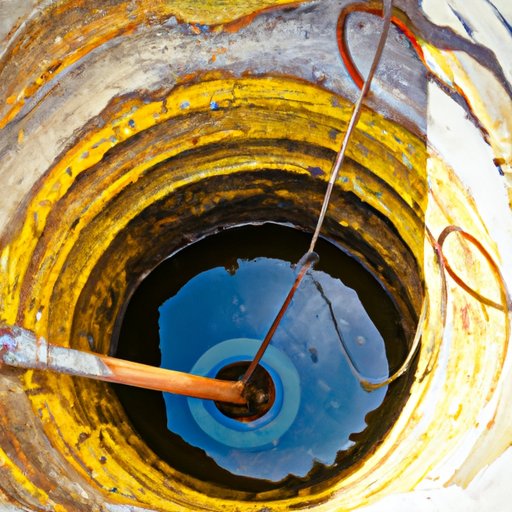
Introduction
Wells are an important source of water for many people around the world, but how deep do these wells typically go? This article explores the depths of a well, from typical depths for various types of wells to potential hazards in digging a well. Strategies are provided for reaching lower depths, and records of the deepest well are discussed.
Exploring the Depths of a Well: An In-Depth Look at Different Types of Wells
The depth of a well depends on a variety of factors, including the type of well being dug. There are three main types of wells: shallow wells, deep wells, and artesian wells. Each type of well requires different techniques and equipment to be dug and has unique advantages and disadvantages.
Shallow Wells
Shallow wells are usually less than 30 feet deep and are often dug manually. These wells are relatively easy to construct and maintain, and they are often used for irrigation and other agricultural purposes. However, shallow wells can be prone to contamination due to their proximity to the surface.
Deep Wells
Deep wells are more than 30 feet deep and require specialized equipment to be dug. These wells are more expensive to construct and maintain, but they are also more resilient to contamination due to their greater distance from the surface. Deep wells are often used for drinking water and industrial purposes.
Artesian Wells
Artesian wells are wells that have been drilled into an aquifer that is under pressure. The pressure of the aquifer forces the water up through the well and out of the ground without the need for a pump. Artesian wells are very deep, often reaching depths of over 1,000 feet, and they are often used for commercial or industrial purposes.
How Deep is Too Deep? Examining the Dangers of Digging a Well
Digging a well can be a dangerous endeavor, and it is important to take precautions when attempting to dig a well. Some of the potential hazards include cave-ins, flooding, and contamination. It is also important to consider the legal implications of digging a well, as some areas may require permits or other forms of authorization before digging can commence.
Potential Hazards in Digging a Well
One of the most common hazards when digging a well is the risk of a cave-in. Without proper support, the walls of the well can collapse, trapping anyone inside. Flooding is another concern, as a poorly constructed well can allow water to enter the well and cause flooding. Finally, there is the risk of contamination if the well is not properly sealed or if the water is not regularly tested.
Strategies for Minimizing Risk
There are several strategies that can be employed to minimize the risks associated with digging a well. First, it is important to make sure the well is properly supported with bracing or other reinforcing materials. Second, it is important to ensure the well is properly sealed to prevent water from entering the well. Finally, it is important to regularly test the water for contaminants to ensure its safety.

The Science Behind Well Depth: Understanding the Factors That Affect Well Depth
The depth of a well is determined by a variety of factors, both natural and human-made. Geological factors, such as the composition of the soil and bedrock, can affect the depth of a well. Climatic conditions, such as rainfall and temperature, can also influence the depth of a well. Finally, human interventions, such as the use of pumps or other equipment, can have an effect on the depth of a well.
Geological Factors
The composition of the soil and bedrock can have a major impact on the depth of a well. Harder rocks, such as granite, will require more effort and specialized equipment to dig through, while softer rocks, such as sandstone, will be easier to dig through. Additionally, the presence of underground waterways can also affect the depth of a well.
Climatic Conditions
Climatic conditions, such as rainfall and temperature, can also have an effect on the depth of a well. Heavy rainfall can saturate the ground, making it difficult to dig deeper. High temperatures can also cause the soil to expand, making it harder to dig.
Human Interventions
Finally, humans can have an effect on the depth of a well. Specialized equipment, such as pumps and drilling rigs, can be used to reach greater depths. Additionally, the use of explosives can be used to break through hard rock formations, allowing for deeper wells.

A Guide to Digging Deeper: Strategies for Reaching Lower Depths in a Well
While the depth of a well is determined by a variety of factors, there are several strategies that can be employed to reach lower depths. Selecting the right tools, utilizing professional services, and considering safety measures are all important steps when attempting to dig a deeper well.
Selecting the Right Tools
Choosing the right tools is essential when attempting to dig a deeper well. For shallow wells, manual tools such as shovels and buckets can be sufficient. For deeper wells, however, specialized equipment such as pumps, drilling rigs, and explosives may be required.
Utilizing Professional Services
In some cases, it may be beneficial to utilize professional services when attempting to dig a deeper well. Professionals will have access to specialized equipment and expertise that can help to ensure the safety of the well and maximize the chances of success.
Considering Safety Measures
Safety should always be the top priority when attempting to dig a deeper well. Properly supporting the well walls with bracing or other reinforcing materials is essential to prevent cave-ins, and it is also important to ensure the well is properly sealed to prevent flooding and contamination.

From Shallows to Abysses: A Comprehensive Overview of Well Depths
The depth of a well can vary greatly depending on a variety of factors, but there are certain ranges that are typical for different types of wells. Shallow wells are typically less than 30 feet deep, while deep wells are more than 30 feet deep. Artesian wells are often much deeper, often reaching depths of over 1,000 feet.
Typical Depths for Various Types of Wells
The depth of a well can vary greatly depending on the type of well being dug. Shallow wells are usually less than 30 feet deep, while deep wells can range from 30 to 100 feet deep. Artesian wells, on the other hand, can reach depths of over 1,000 feet.
Records of the Deepest Well
The deepest well ever dug is the Kola Superdeep Borehole in Russia, which reached a depth of almost 8 miles (40,230 feet). The project was started in 1970 and was abandoned in 1989 due to technical difficulties.
A Journey to the Bottom: Uncovering the Mystery of Well Depths
In some cases, the depth of a well may be unknown or estimated. In these situations, there are several strategies that can be employed to uncover the mystery of well depths. Estimating the depths of existing wells and locating unknown wells are two common approaches.
Estimating the Depths of Existing Wells
Estimating the depth of an existing well can be done by measuring the depth of the well using a plumb bob or other measuring tool. Additionally, the depth can also be estimated based on the amount of water in the well, as deeper wells tend to contain more water.
Locating Unknown Wells
Locating unknown wells can be done by examining aerial photographs or other geographic data. In some cases, the presence of a well may be indicated by vegetation patterns or other visual cues. Additionally, geophysical surveys can be used to locate underground water sources.
Conclusion
The depth of a well can vary greatly depending on a variety of factors, including the type of well being dug, geological factors, climatic conditions, and human interventions. There are several strategies that can be employed to reach lower depths, including selecting the right tools, utilizing professional services, and considering safety measures. Additionally, the depth of an existing well can be estimated by measuring the depth or examining the amount of water in the well. Finally, locating unknown wells can be done by examining aerial photographs or utilizing geophysical surveys.
Understanding the depths of a well is essential for those who rely on them for their water supply. This article has outlined the different types of wells, the potential hazards in digging a well, and the strategies for reaching lower depths. Additionally, records of the deepest well have been discussed, as well as strategies for estimating the depths of existing wells and locating unknown wells.
(Note: Is this article not meeting your expectations? Do you have knowledge or insights to share? Unlock new opportunities and expand your reach by joining our authors team. Click Registration to join us and share your expertise with our readers.)