

Introduction
The invention of the bicycle is one of the greatest innovations in human history. From its humble beginnings as a wooden frame with two wheels to its modern form as a sleek carbon fiber machine, the bicycle has come a long way over the centuries. In this article, we’ll explore the history of the bicycle and take a look at the major milestones in its evolution.
Timeline of Bicycle Innovation
Bicycles have been around for centuries, but it wasn’t until the 19th century that they began to take their modern form. Here’s a look at some of the major milestones in the history of the bicycle.
Early Bicycles and Precursors
The earliest known example of a two-wheeled vehicle is the celerifere, a French contraption made of wood and metal that was invented in the early 1700s. The celerifere had no pedals or other means of propulsion, so it was more of a toy than a practical transportation device.
In 1817, Baron Karl von Drais created the draisine, an improved version of the celerifere. The draisine had pedals and a seat, making it the first true ancestor of the modern bicycle. It proved to be popular among riders, but it was still far from perfect. The draisine was heavy and difficult to steer, and it lacked brakes, which made it dangerous to ride.
Major Innovations in Bicycle Design
In 1839, Kirkpatrick MacMillan, a Scottish blacksmith, invented the first pedal-driven bicycle. This design featured a wooden frame, two wooden wheels, and pedals connected to the rear wheel. It was much lighter and easier to ride than the draisine, and it became the basis for all subsequent bicycle designs.
In 1863, Pierre Michaux invented the velocipede, which was essentially a metal version of MacMillan’s wooden bicycle. The velocipede was also the first bicycle to feature cranks and pedals on the front wheel, which allowed riders to generate more power. This design proved to be immensely popular and helped fuel the rise of cycling as a recreational activity.
In 1885, John Kemp Starley introduced the Rover Safety Bicycle. This was the first modern bicycle, featuring a chain drive, equal-sized wheels, and a diamond frame. This design was much easier and more comfortable to ride than earlier models, and it quickly became the most popular type of bicycle in the world.
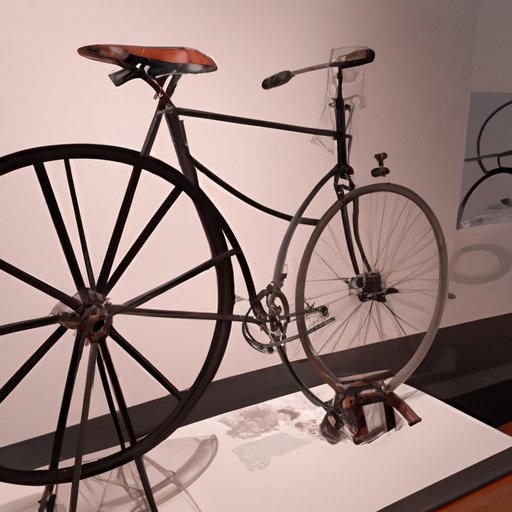
Exploring the History of Bicycle Design
The invention of the bicycle has had a profound impact on society. Here’s a look at some of the key figures who shaped the development of the bicycle and the impact the invention has had on our lives.
Key Inventors Who Shaped the Bicycle
Karl von Drais, Kirkpatrick MacMillan, Pierre Michaux, and John Kemp Starley are just a few of the key inventors who helped shape the history of the bicycle. Their inventions laid the groundwork for future generations of bicycle designers and engineers.
In addition to these inventors, many others have contributed to the evolution of the bicycle. For example, Harry D. Poulson, a bicycle mechanic from England, invented the coaster brake in 1887. This was a revolutionary innovation that made bicycles much safer and more user-friendly.
The Impact of the Bicycle on Society
The invention of the bicycle has had a huge impact on society. According to a study by the University of California, Berkeley, “the bicycle has revolutionized transportation, recreation, commerce, and public health.”
Bicycles have made it easier and more affordable for people to travel, allowing them to explore new places and expand their horizons. They have also opened up a world of possibilities for recreation, such as mountain biking, road racing, and BMX. Furthermore, bicycles have become an important part of urban transportation and are often used as a form of environmentally friendly commuting.
Finally, the bicycle has had a positive effect on public health. Studies show that regular cycling can reduce the risk of heart disease, stroke, obesity, and certain types of cancer. In addition, cycling is a great form of exercise that can help improve overall physical fitness.
The Evolution of Bicycle Technology
Over the years, bicycle technology has advanced significantly. Here’s a look at some of the major changes in bicycle design and technology.
Changes in Bicycle Design
Bicycles have gone through several major changes in design over the years. In the early days, bicycles were made primarily of wood and iron, but today they are made of lightweight materials such as aluminum, titanium, and carbon fiber.
In addition, bicycles now feature a variety of components and accessories that weren’t available in the past. From electronic shifting systems to suspension forks, today’s bicycles are more advanced than ever before.
Advancements in Bicycle Technology
In recent years, advances in technology have led to significant improvements in bicycle performance. New materials and manufacturing processes have made it possible to produce lighter, stronger, and more efficient bicycles.
In addition, the development of electronic shifting systems and other technologies has enabled cyclists to fine-tune their bikes for better performance. Finally, the introduction of disc brakes and hydraulic suspension systems has further enhanced the safety and comfort of cycling.
Conclusion
From its early beginnings as a wooden frame with two wheels to its modern form as a sleek carbon fiber machine, the bicycle has come a long way since its invention. Thanks to the efforts of countless inventors and engineers, the bicycle has evolved into a sophisticated piece of machinery that continues to make the world a better place.
(Note: Is this article not meeting your expectations? Do you have knowledge or insights to share? Unlock new opportunities and expand your reach by joining our authors team. Click Registration to join us and share your expertise with our readers.)