
Introduction
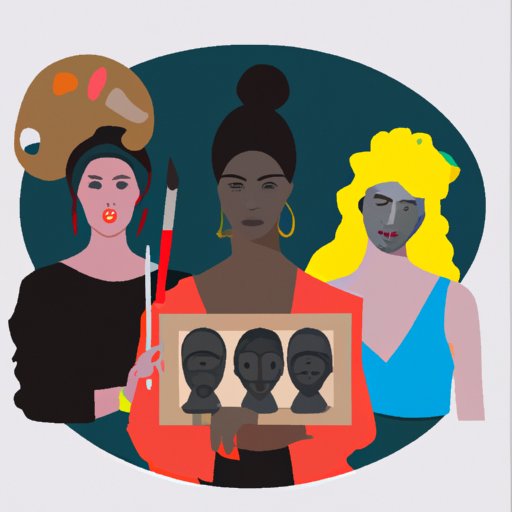
The question of why there have been no great women artists has been a source of debate for many years. Despite the fact that women have been making art since ancient times, they have often been excluded from the history of art and denied the same opportunities as their male counterparts. This article will explore the various factors that have led to this lack of recognition of female artists, as well as discussing strategies for increasing visibility and acknowledgement of their work.

Examining the Historical Context of Women in Art
In order to understand why there have been no great women artists, it is important to examine the historical context in which they have been operating. Historically, women have been systematically excluded from the art world, with men occupying positions of power and authority. According to historian Linda Nochlin, “the very idea of a woman artist was considered an oxymoron” during the Renaissance period. This exclusion was further reinforced by the patriarchal authority of the Catholic Church, which viewed artistic expression as being solely the domain of men.
The impact of this exclusion was felt in many ways. For example, women were not allowed to attend art academies and were rarely given access to the same resources and educational opportunities as their male peers. This meant that women often had to rely on informal training and mentorship, or even self-teaching, if they wanted to pursue a career in art.
Analyzing the Societal and Cultural Expectations for Women Artists
In addition to the systemic exclusion of women from the art world, there have also been societal and cultural expectations placed upon them that have limited their creativity and artistic expression. Women have traditionally been expected to conform to certain gender roles and restrictions, such as staying at home to take care of the family or being seen as primarily responsible for housework and childcare. These roles have hindered women’s ability to pursue a career in art, as they were often unable to dedicate enough time to their work.
Social norms have also played a role in shaping women’s artistic choices. Throughout history, women’s artwork has often been judged differently from men’s, with female artists being expected to focus on “feminine” topics such as motherhood or domesticity. This has resulted in a lack of recognition for women’s creative achievements, as their work has often been dismissed as being too sentimental or trivial.

Exploring the Barriers to Opportunities for Women in the Art World
The barriers to opportunities for women in the art world are numerous and complex. One of the major issues is the lack of access to funding and resources. As mentioned previously, women have historically been excluded from educational institutions and professional networks, meaning that they often do not have the same level of financial support as their male peers. This lack of financial resources can be a major obstacle for women who want to pursue a career in art, as it can make it difficult for them to produce work and exhibit it professionally.
Discrimination against women in the art market is another issue that needs to be addressed. Women have often been overlooked or undervalued by galleries and collectors, leading to a lack of recognition and financial reward for their work. This devaluation of women’s art is further compounded by the limited representation of women in the arts, with the majority of curators, gallerists, and museum directors being male.
Investigating the Impact of Gender Biases on Women’s Creative Expression
Gender biases have also had a significant impact on women’s creative expression. The traditional “Madonna/Whore” binary in art has often presented women as either idealized figures of purity or sexualized objects of desire, with little room for any other type of representation. This dichotomy has placed women in a restrictive box, limiting their ability to explore different themes and styles in their artwork.
Unconscious gender biases have also been pervasive in the art world, with critics and curators often overlooking or dismissing women’s work without giving it due consideration. This has led to a lack of appreciation for women’s artistic achievements, as their work has been overlooked or undervalued due to its association with femininity.
Assessing the Role of Patronage and Access to Resources in Promoting Women’s Artistic Achievements
In order to promote women’s artistic achievements, it is important to assess the role of patronage and access to resources. While there have been some efforts to increase investment in women’s art, the reality is that women still face many challenges when it comes to finding patrons and securing funding for their projects. This lack of financial support can make it difficult for women to produce and exhibit their work, hindering their ability to build a successful career in the arts.
At the same time, increased investment in women’s art can have many benefits. It can provide women with the resources they need to produce their work, as well as enabling them to gain recognition and acknowledgement for their achievements. Additionally, it can help to create more diverse and inclusive spaces in the art world, allowing for a wider range of perspectives and voices to be heard.

Discussing Strategies for Increasing Visibility and Acknowledgement of Women Artists
In order to increase visibility and acknowledgement of women artists, it is important to discuss strategies for doing so. One of the most effective strategies is to create spaces specifically for women’s art, such as galleries and exhibitions dedicated to showcasing female artists. This can help to ensure that women’s work is given the attention and respect that it deserves, as well as providing an opportunity for women to network and collaborate with one another.
Establishing incentives for supporting women in the arts is another important strategy. This could include initiatives such as grants and awards for female artists, or programs to provide mentorship and guidance to emerging talent. Such incentives can help to give women the financial and emotional support they need to succeed in the art world.
Finally, it is important to encourage dialogue around women’s art. This could involve creating forums and discussion groups, or organizing workshops and lectures on the topic. By facilitating open conversations about women’s art, we can begin to challenge existing stereotypes and biases, and pave the way for greater recognition of female artists.
Conclusion
In conclusion, it is clear that there are many factors that have contributed to the lack of recognition for women artists throughout history. From systematic exclusion to gender biases and lack of access to resources, women have faced numerous obstacles in their pursuit of a career in art. However, by exploring the various challenges faced by women in the art world, as well as discussing strategies for increasing visibility and acknowledgement of their work, we can begin to address these issues and create a more equitable and inclusive environment for female artists.
(Note: Is this article not meeting your expectations? Do you have knowledge or insights to share? Unlock new opportunities and expand your reach by joining our authors team. Click Registration to join us and share your expertise with our readers.)