
Introduction
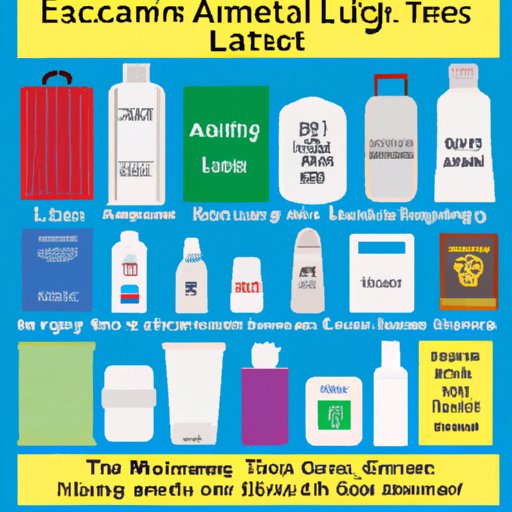
Traveling can be stressful, especially when you’re trying to pack everything you need for your trip into one small suitcase or carry-on bag. Knowing what you can and cannot bring on the plane is key to having a smooth journey. One important thing to consider when packing is the travel size ounce limit, which dictates the amount of liquid or gel products you can bring on board.
Definition of Travel Size
Travel size refers to the maximum size container that is allowed to be taken on an airplane in your carry-on bag. According to the Transportation Security Administration (TSA), this size is 3.4 ounces (100 milliliters) or less per item.
Overview of Commonly Accepted Travel Size Ounce Limit
The travel size ounce limit is an important rule to follow when packing for air travel. This limit was established by the TSA in order to ensure the safety of passengers and crew members. By limiting the size of containers that can be brought on planes, the TSA limits the amount of hazardous materials that can be brought on board. The travel size ounce limit also helps to streamline security screenings, making it easier for travelers to get through checkpoints quickly and efficiently.
Exploring the Commonly Accepted Travel Size Ounce Limit
Adhering to the TSA’s travel size ounce limit has many benefits. For one, it makes packing easier and more efficient. It eliminates the need to worry about whether items are too large to fit in your carry-on bag. Additionally, it helps to speed up security screenings, allowing passengers to move through checkpoints faster.
What Constitutes a Travel Size Container?
According to the TSA, a travel size container is any container that holds 3.4 ounces (100 milliliters) or less of a liquid or gel product. This includes bottles, tubes, jars, and aerosols. Containers that hold more than 3.4 ounces (100 milliliters) of a liquid or gel product are not considered travel size and are not allowed in carry-on bags.
How Many Ounces Are Allowed in a Carry-On Bag?
The TSA allows passengers to bring one quart-sized, clear plastic bag filled with liquids or gels in their carry-on bag. This bag must be no larger than one quart (approximately 946 milliliters). Each individual container within this bag must hold 3.4 ounces (100 milliliters) or less. All containers must fit comfortably within the quart-sized bag.
TSA’s Rules on Liquids and Gels
The TSA has strict rules regarding what types of liquids and gels are allowed in carry-on bags. Generally, these items must be in a container that is 3.4 ounces (100 milliliters) or less. Passengers are also limited to carrying one quart-sized bag of liquids and gels in their carry-on. Any liquids or gels that do not meet these requirements must be checked in with the airline.
What Is Considered a Liquid or Gel?
The TSA considers any item that is a liquid or gel to be subject to its rules on travel size containers. This includes items such as shampoo, conditioner, lotion, sunscreen, lip balm, mouthwash, hand sanitizer, and makeup. These items must all be in containers that are 3.4 ounces (100 milliliters) or smaller in order to be brought on board.
Flying with Liquids: What You Should Know About Travel Size Containers
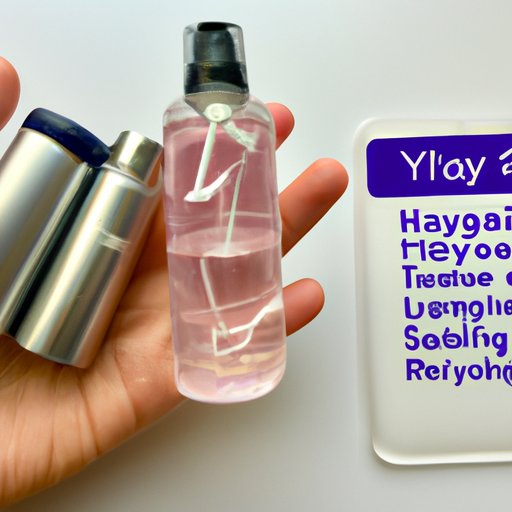
When traveling by air, it is important to understand the TSA’s rules regarding travel size containers. All liquids and gels must be in containers that are 3.4 ounces (100 milliliters) or smaller. Additionally, all containers must fit comfortably within a single quart-sized, clear plastic bag. If any of these rules are not followed, the item may be confiscated by security personnel.
TSA Requirements for Travel Size Containers
The TSA has specific regulations regarding the type of containers that are allowed in carry-on bags. All containers must be made of plastic, metal, glass, or cardboard. Additionally, all containers must be leak-proof and must have tightly sealed lids. All containers must also be clearly labeled with the product name and quantity.
How to Package Your Toiletries for Carrying On
To ensure that your toiletries comply with the TSA’s travel size restrictions, you should package them in a clear, quart-sized plastic bag. Make sure that all containers fit comfortably within the bag and that the bag is securely closed. Once the bag is packed, place it in an easily accessible spot in your carry-on bag. This will make it easier for security personnel to inspect your bag.
Tips for Packing Toiletries in Your Carry-On
When packing toiletries for air travel, there are several things to keep in mind. First, choose travel size containers that are made of plastic, metal, glass, or cardboard. Second, make sure that all containers are properly labeled with the product name and quantity. Third, package all containers in a quart-sized, clear plastic bag that can be easily accessed. Finally, check with your airline to make sure that they allow the items you are bringing on board.
The TSA Rules on Carrying Miniature Toiletries
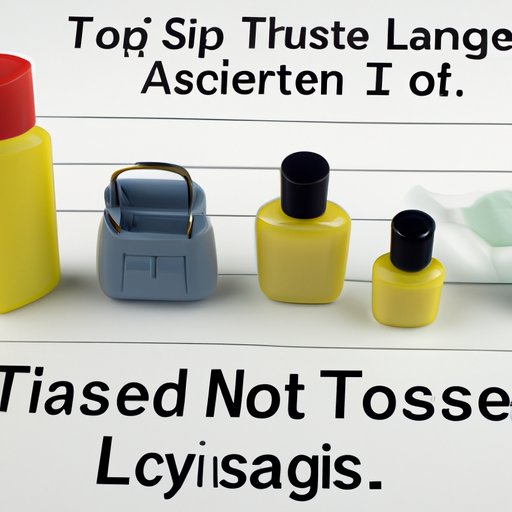
The TSA has specific rules regarding miniature toiletry items. According to the TSA, passengers are allowed to bring an unlimited number of miniature toiletry items on board as long as they are in containers that are 3.4 ounces (100 milliliters) or smaller. These items include lip balm, deodorant, toothpaste, and other similar items.
What Is Considered a Miniature Item?
The TSA defines miniature items as those that are smaller than three ounces (90 milliliters). Examples of miniature items include lip balm, deodorant, toothpaste, and other similar items. These items do not need to be placed in a quart-sized, clear plastic bag; however, they must still be in containers that are 3.4 ounces (100 milliliters) or smaller.
Limitations on How Many Miniature Items Can Be Carried On
The TSA does not have any limitations on how many miniature items passengers can carry on board. However, passengers should be aware that all containers must be 3.4 ounces (100 milliliters) or smaller. Additionally, all items must fit comfortably in the passenger’s carry-on bag.
What You Need to Know About Travel Size Toiletries and Airline Regulations
It is important to be aware of the airline’s regulations regarding travel size toiletries and other items. Different airlines have different restrictions on the size and number of items that can be brought on board. Before packing, it is important to check with the airline to make sure that the items you are bringing are allowed.
Different Airline Restrictions
Each airline has its own set of restrictions on the size and number of items that can be brought on board. Some airlines allow passengers to bring up to two quart-sized bags of liquids and gels, while others allow only one. Additionally, some airlines have stricter rules regarding travel size containers. It is important to check with your airline before packing to make sure that all of your items are allowed.
How to Pack Your Toiletries to Comply With Airline Regulations
In order to comply with airline regulations, it is important to pack your toiletries correctly. All containers should be 3.4 ounces (100 milliliters) or smaller and should fit comfortably in a quart-sized, clear plastic bag. Additionally, all containers should be properly labeled with the product name and quantity. Finally, it is important to check with the airline to make sure that the items you are bringing are allowed.
Conclusion
When it comes to air travel, understanding the travel size ounce limit is essential. This limit was established by the TSA in order to ensure the safety of passengers and crew members. Adhering to the travel size ounce limit has many benefits, including making packing easier and more efficient and helping to speed up security screenings. Additionally, it is important to be aware of the airline’s regulations regarding travel size toiletries and other items. By following these guidelines, travelers can ensure that their trips are as stress-free as possible.
(Note: Is this article not meeting your expectations? Do you have knowledge or insights to share? Unlock new opportunities and expand your reach by joining our authors team. Click Registration to join us and share your expertise with our readers.)