
Introduction
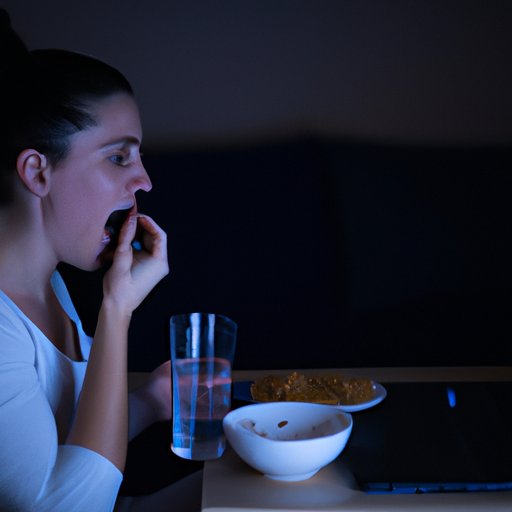
Late-night snacking is defined as eating after dinner or before bedtime. Eating late at night can lead to weight gain, poor sleep, and unhealthy food choices. If you’re looking to break your late-night snacking habits, there are several strategies that you can use. In this article, we will discuss seven tips for successfully stopping late-night snacking.
Avoid Late-Night Snacking by Eating Earlier in the Evening
Eating earlier in the evening can help reduce late-night cravings. According to a study published in the journal Nutrients, participants who ate their last meal of the day at least two hours before going to bed reported feeling fuller and having fewer cravings than those who ate their last meal closer to bedtime.
Benefits of eating earlier in the evening include improved digestion, better sleep, and improved blood sugar levels. Additionally, eating earlier in the evening can help reduce late-night cravings and make it easier to resist unhealthy snacks.
Strategies to shift meal times earlier include planning ahead and prepping meals in advance. This can help ensure that you have healthy meals ready to eat when you get home from work or school. Additionally, it’s important to listen to your body’s cues. Eat when you’re hungry and stop when you’re full.

Develop a Nighttime Routine and Stick to It
Having a nighttime routine can help reduce late-night cravings. A good nighttime routine should include activities such as reading, meditating, or taking a bath. These activities can help relax the body and mind, making it easier to resist late-night snacking.
Tips for sticking to a routine include setting an alarm to remind yourself when it’s time to start winding down for the night. Additionally, it’s important to find activities that you enjoy and that help you relax. Finally, it’s important to stay consistent with your routine and make it a priority.
Drink Plenty of Water Throughout the Day to Stay Hydrated and Full
Staying hydrated is key to reducing late-night cravings. Drinking plenty of water throughout the day can help keep you feeling full and reduce cravings. Additionally, staying hydrated can help prevent overeating, which can lead to weight gain.
Tips for drinking more water include carrying a reusable water bottle with you throughout the day and refilling it often. Additionally, adding flavor to your water can help make it more enjoyable to drink. Finally, it’s important to pay attention to your body’s cues and drink when you’re thirsty.
Find Healthy Alternatives to Late-Night Snacks
If you’re still struggling with late-night cravings, it’s important to find healthy alternatives to satisfy your cravings. Examples of healthy alternatives include yogurt and fruit, nuts and seeds, whole grain crackers and hummus, or a small bowl of cereal.
When finding healthy alternatives to late-night snacks, it’s important to make them enjoyable. Tips for making these snacks enjoyable include adding a bit of sweetness with some honey or adding crunch with nuts and seeds. Additionally, it’s important to portion out snacks so that you don’t overindulge.

Avoid Watching TV or Scrolling Through Social Media While Eating
It’s easy to get distracted when eating late at night, especially if you’re watching TV or scrolling through social media. However, it’s important to avoid these distractions while eating. Studies have shown that eating while distracted can lead to overeating, which can lead to weight gain.
Strategies for avoiding distractions while eating include turning off the TV and putting away your phone. Additionally, it’s important to focus on your food and pay attention to when you’re getting full. Taking the time to savor your food can help you eat less without feeling deprived.
Conclusion
Late-night snacking can be a difficult habit to break. However, with the right strategies, it is possible to stop eating at night. Strategies for successfully stopping late-night snacking include eating earlier in the evening, developing a nighttime routine and sticking to it, drinking plenty of water throughout the day to stay hydrated and full, finding healthy alternatives to late-night snacks, and avoiding watching TV or scrolling through social media while eating.
By following these tips, you can develop healthier late-night snacking habits and take control of your health and well-being.
(Note: Is this article not meeting your expectations? Do you have knowledge or insights to share? Unlock new opportunities and expand your reach by joining our authors team. Click Registration to join us and share your expertise with our readers.)