
Introduction
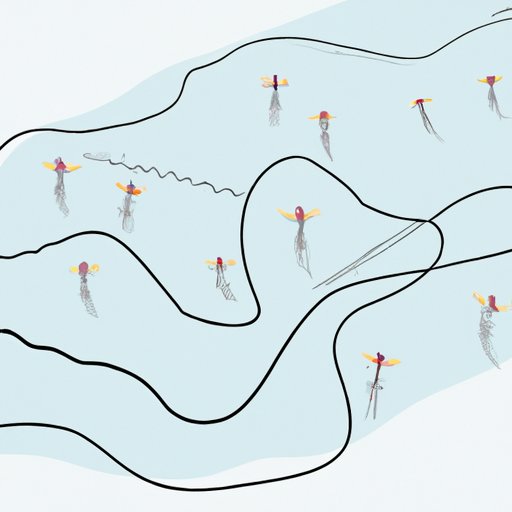
Mosquitoes are among the most widely distributed insects on the planet. As they migrate from one location to another, they carry a wide range of diseases that can affect humans, animals, and plants. In this article, we will explore how far mosquitoes can travel from water sources and the implications of their migration patterns for human health.
How Far Can Mosquitoes Travel From Water?
Mosquitoes need water to reproduce, so they tend to remain close to water sources. However, they are capable of travelling long distances in search of food or to find new breeding sites. Studies have found that mosquitoes can travel up to several miles away from their original water source.
The exact distance depends on the species of mosquito. Some species are more capable of travelling longer distances than others. For example, the Asian Tiger Mosquito (Aedes albopictus) has been found to travel up to 3.7 miles from its breeding site.
In addition, environmental factors such as wind speed and temperature can also affect the distance mosquitoes can fly from water sources. Windy days can help mosquitoes travel further, while higher temperatures can limit their flights.
Uncovering the Limits of Mosquito Dispersal
Researchers have been studying the migration patterns of various mosquito species in order to better understand the limits of their dispersal. By tracking the movements of mosquitoes over time, scientists have been able to gain insight into how far they can travel from their breeding sites.
For instance, researchers at the University of California Davis studied the migration pattern of the Aedes aegypti mosquito, which is known to spread Zika virus. They found that the mosquitoes were capable of travelling up to 1.3 miles away from their breeding sites, with some individuals flying even further.
By identifying the limits of mosquito dispersal, researchers can better predict the risk of mosquito-borne diseases in certain areas. This information can be used to inform public health initiatives and reduce the spread of disease.
Examining Variations in Mosquito Flight Ranges
Not all mosquito species have the same flight range. Some species are more capable of travelling longer distances than others. For example, Culex pipiens, a species of mosquito commonly found in North America, has been found to travel up to 22 miles from its breeding site.
Researchers believe that variation in mosquito flight ranges is based on species-specific characteristics, such as the size of their wings, as well as environmental factors such as wind speed and temperature. By understanding these variations, researchers can more accurately assess the risk of mosquito-borne diseases in different regions.
In addition, researchers are also investigating the ability of mosquitoes to survive away from water sources. Different species of mosquitoes have different levels of tolerance for dry conditions, which affects their ability to disperse over long distances.
Conclusion
Mosquitoes are capable of travelling long distances from their breeding sites, with some species capable of travelling up to several miles away. Variation in mosquito flight ranges is based on species and environmental conditions, with some species capable of travelling further than others. Understanding the limits of mosquito dispersal is essential for reducing disease risk.
By uncovering the migration patterns of different mosquito species, researchers can more accurately assess the risk of mosquito-borne diseases in different areas. This information can be used to inform public health initiatives and reduce the spread of disease.
(Note: Is this article not meeting your expectations? Do you have knowledge or insights to share? Unlock new opportunities and expand your reach by joining our authors team. Click Registration to join us and share your expertise with our readers.)