
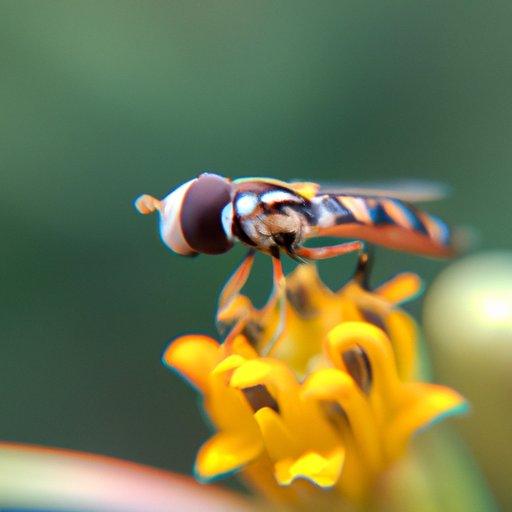
Defining Macro Photography: An Overview
Macro photography is a unique form of photography that allows you to capture intricate details and explore the world of the small. It can be used to capture stunning images of flowers, insects, and other small objects with incredible detail and clarity. In this article, we’ll explore the different types of macro photography, the benefits of macro photography, tips and techniques for getting started, and creative ideas for inspiring macro photographs.

Capturing the Details: Exploring Different Types of Macro Photography
The term “macro photography” can be used to refer to any type of photography that captures small objects in great detail. Generally, it is used to describe photographs that are taken at a very close range and feature subjects that are larger than life size. There are several different types of macro photography, including close-up photography, extreme close-up photography, reproduction photography, and high magnification photography.
Close-up Photography
Close-up photography is the most common type of macro photography. This type of photography involves shooting subjects at a very close range so that they appear larger than life size. Typically, this requires using a macro lens with a minimum focusing distance of 18 inches or less. Close-up photography can be used to capture stunning images of flowers, insects, and other small objects.
Extreme Close-up Photography
Extreme close-up photography is a more advanced type of macro photography that involves shooting subjects at even closer ranges. This type of photography typically requires a macro lens with a minimum focusing distance of 12 inches or less. Extreme close-up photography can be used to capture incredibly detailed images of small objects, such as the veins of a leaf or the eyes of an insect.
Reproduction Photography
Reproduction photography is a type of macro photography that is used to create accurate representations of small objects. This type of photography typically requires a macro lens with a minimum focusing distance of 6 inches or less. Reproduction photography can be used to capture highly detailed images of coins, stamps, and other small objects.
High Magnification Photography
High magnification photography is the most advanced type of macro photography. This type of photography involves shooting subjects at extremely close ranges and requires specialized lenses and equipment. High magnification photography can be used to capture highly detailed images of very small objects, such as the cells of a plant or the scales of a butterfly.
Exploring the Benefits of Macro Photography
Macro photography is a great way to appreciate the smaller things in life and capture unique perspectives. Here are some of the benefits of macro photography.
Appreciating the Smaller Things in Life
One of the main benefits of macro photography is that it allows you to appreciate the smaller things in life. As photographer Steve McCurry said, “When you photograph people in color, you photograph their clothes. But when you photograph people in Black and white, you photograph their souls!” With macro photography, you can capture the beauty and intricacy of small objects and appreciate them in a way that would not be possible with the naked eye.
Capturing Unique Perspectives
Another benefit of macro photography is that it allows you to capture unique perspectives. For example, you can capture the beauty of a flower from up close, or the delicate details of an insect’s wings. These unique perspectives can help you see the world in a new light and appreciate the beauty of the small.
Enhancing Color and Texture
Finally, macro photography can be used to enhance color and texture. By shooting subjects at very close ranges, you can capture the vibrant colors and intricate textures of small objects in great detail. This can be a great way to add interest and depth to your photos.
Tips and Techniques for Getting Started with Macro Photography
If you’re just getting started with macro photography, here are some tips and techniques to help you get the most out of your shots.
Finding Subjects to Photograph
The first step in macro photography is finding interesting subjects to photograph. Look for small objects with interesting shapes, colors, and textures. Flowers, insects, and other small objects can make great subjects for macro photography.
Working with Light
Lighting is an important factor in macro photography. Natural light is usually best, but you can also use artificial lighting to highlight certain features or create dramatic shadows. Experiment with different lighting setups to find the one that works best for your subject.
Using Manual Focus
Macro photography often requires manual focusing since the depth of field can be very shallow. When manually focusing, use the Live View feature on your camera to zoom in and ensure that your subject is in focus. You may also want to use a tripod to keep your camera steady while focusing.
Choosing the Right Lens
Choosing the right lens is essential for capturing stunning macro photographs. Look for lenses with a maximum aperture of f/2.8 or lower and a minimum focusing distance of 18 inches or less. Some lenses also have built-in image stabilization, which can help you capture sharper images at slower shutter speeds.
Shooting at Different Angles
Finally, don’t be afraid to experiment with different angles when shooting macro photography. Try shooting from above, below, or even from the side to capture unique perspectives. You may also want to try shooting from different distances to capture different levels of detail.

Choosing the Right Equipment for Macro Photography
In addition to a macro lens, there are several other pieces of equipment that can help you get the most out of your macro photography. Tripods, extension tubes, reverse rings, and close-up filters are all useful tools for capturing stunning macro photographs.
Tripods
Tripods are essential for macro photography, since they help keep your camera steady at slow shutter speeds. Look for a lightweight tripod with adjustable legs, so you can easily set it up in any location.
Extension Tubes
Extension tubes are rings that fit between your camera body and lens, allowing you to move the lens further away from the sensor. This can help you achieve greater magnification and capture more detailed images.
Reverse Rings
Reverse rings are used to attach a normal lens to a macro lens, allowing you to shoot at even higher magnifications. Reverse rings are especially useful for shooting extreme close-up photographs.
Close-up Filters
Close-up filters are special lenses that can be attached to the front of a normal lens. They can help you achieve greater magnification and capture more detailed images. However, they tend to reduce the quality of the image, so they should only be used when necessary.

Creative Ideas for Inspiring Macro Photographs
Macro photography can be used to create stunning images with unique perspectives and vivid colors. Here are some creative ideas for inspiring macro photographs.
Abstract Images
Abstract images are a great way to explore the world of the small. Try shooting abstract patterns or shapes to create unique compositions. You can use color, texture, and light to create interesting abstract images.
Surrealism
Macro photography can also be used to create surreal images with dreamlike qualities. Try combining elements from different parts of the world to create strange and unexpected scenes. You can also use lighting and color to create dramatic and surreal effects.
Minimalism
Minimalism is another great way to explore the world of the small. Try shooting simple compositions with minimal elements. Focus on texture and light to create striking minimalist images.
Dramatic Lighting
Finally, dramatic lighting can add depth and interest to your macro photographs. Try using backlighting, sidelighting, or other creative lighting techniques to create dramatic and captivating images.

Exploring the Impact of Macro Photography in Nature Documentary Films
Macro photography has had a huge impact on nature documentary films. It has allowed filmmakers to capture the intricate details of nature and showcase the beauty of the natural world in a way that was not previously possible. Here are some of the ways macro photography has impacted nature documentary films.
Capturing the Intricacies of Nature
Macro photography has allowed filmmakers to capture the intricate details of nature in great detail. This has allowed viewers to appreciate the small wonders of nature in a way that was not previously possible.
Showcasing the Beauty of Nature
Macro photography has also allowed filmmakers to showcase the beauty of nature in stunning detail. By capturing the vivid colors and intricate textures of small objects, filmmakers can create compelling visuals that draw viewers into the film.
Capturing Rare Moments
Macro photography has enabled filmmakers to capture rare moments in nature that would otherwise go unnoticed. By shooting at very close ranges, filmmakers can capture rare behaviors and interactions that would otherwise be impossible to see.
Documenting the Interaction between Humans and Nature
Finally, macro photography has allowed filmmakers to document the interaction between humans and nature. By capturing the intricate details of the natural world, filmmakers can show viewers the beauty and fragility of our environment.
Conclusion
Macro photography is a unique form of photography that allows you to capture intricate details and explore the world of the small. From close-up photography to high magnification photography, there are many different types of macro photography that can be used to create stunning and unique images. Macro photography can also be used to capture rare moments in nature and document the interaction between humans and nature. Whether you’re just getting started with macro photography or looking for creative ideas to inspire your shots, this article has provided some tips and techniques to help you get the most out of your macro photography.
(Note: Is this article not meeting your expectations? Do you have knowledge or insights to share? Unlock new opportunities and expand your reach by joining our authors team. Click Registration to join us and share your expertise with our readers.)