
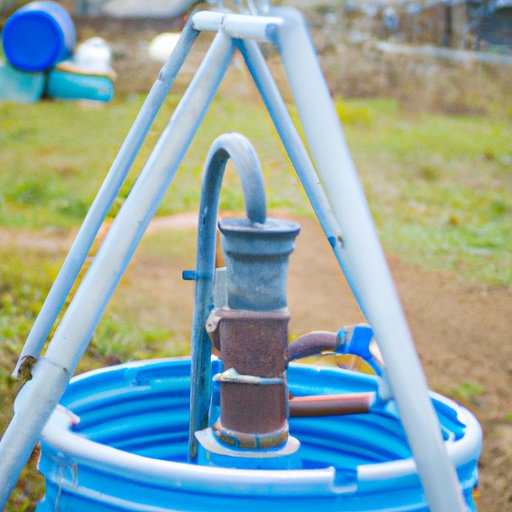
Introduction
A well is an artificial excavation used to access groundwater and other underground sources of water. They are typically found in rural areas where surface water sources are scarce or non-existent. This article will explore the history of wells, the benefits of having a well in your backyard, different types of wells, how to maintain a well, and what laws surround building a well.
A Historical Perspective on Where Wells Are Located
Wells have been around since ancient times and were used as a means of accessing potable water. In many parts of the world, wells were the only source of water and were often located near settlements. In the past, wells were dug by hand with simple tools or constructed using stone or wood. As technology advanced, so did the construction of wells, enabling deeper and longer-lasting structures.
The use of wells declined in the 20th century due to the development of piped water systems and the increased availability of surface water sources. However, there are still many areas of the world that rely on wells as their primary source of water. In some cases, wells provide the only source of safe drinking water.

The Benefits of Having a Well in Your Backyard
Having a well in your backyard can offer several advantages. One of the most obvious benefits is having access to clean water. Unlike surface water sources, which can be contaminated by pollutants, groundwater is typically cleaner and more reliable. This makes it an ideal source of drinking water.
Another benefit of having a well in your backyard is cost savings. Depending on your location, you may be able to save money on your water bill by having your own water source. Additionally, if you live in an area with limited water resources, a well can help ensure you always have access to water during times of drought.
Finally, having a well can also provide environmental benefits. By reducing the need for large-scale water infrastructure projects, wells can reduce the amount of energy and materials needed for water delivery. Additionally, they can help reduce surface water pollution caused by runoff from agricultural operations and other sources.

An Exploration of Different Types of Wells
There are three main types of wells: dug, driven, and borehole. Dug wells are the oldest type of well and involve excavating a hole and lining it with stones or brick. Driven wells are constructed by driving a pipe into the ground until it reaches an aquifer. Borehole wells are drilled into the ground using a machine, allowing them to reach greater depths than other types of wells.

How to Maintain a Well and Keep it Clean
Maintaining a well is essential for ensuring its longevity and keeping it free of contaminants. Regular maintenance should include checking for structural damage, inspecting the sealant around the wellhead, and cleaning the well pump. Additionally, it’s important to test the water regularly for bacteria and other contaminants.
In addition to regular maintenance, there are several steps you can take to keep your well clean. Make sure to cover the well when not in use to prevent debris from entering. Additionally, keep the area around the well clear of vegetation, as this can attract pests and animals. Finally, don’t allow chemicals or fertilizers to run off into the well.
DIY Projects to Build a Well
Building a well is not a project to be taken lightly. Before attempting such a task, make sure you have the necessary knowledge and skills. If you decide to go ahead with a DIY project, you’ll need to gather the necessary materials, such as a well casing, PVC pipe, and a pump. You’ll also need to familiarize yourself with the process of constructing a well, as each type has different requirements.
What Are the Laws Around Building a Well?
Before starting any work on a well, it’s important to understand the local regulations in your area. Depending on where you live, you may need to obtain a permit before beginning construction. Additionally, some areas may have restrictions on the type of well you can build and the depth at which you can dig. Make sure to research the laws in your area before starting any work.
Conclusion
Having a well in your backyard can offer several benefits, including access to clean water, cost savings, and environmental benefits. There are several types of wells, each requiring different levels of skill and materials. It’s important to understand the laws in your area before beginning any work, and to ensure regular maintenance and testing for contaminants. With the right knowledge and preparation, you can enjoy the benefits of having a well in your backyard.
(Note: Is this article not meeting your expectations? Do you have knowledge or insights to share? Unlock new opportunities and expand your reach by joining our authors team. Click Registration to join us and share your expertise with our readers.)
It’s nice that you pointed out how you may be able to save money on your water bill by having your own water source. I think the cost of water is quite high right now, so we are thinking of having a water well on our property. For that, we should definitely ask for professional well drilling services first.