
Introduction
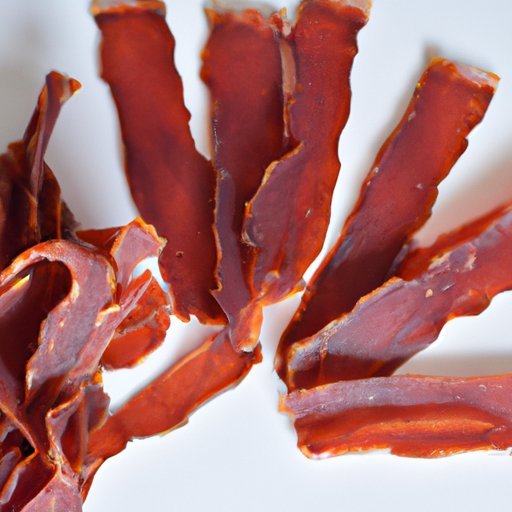
Turkey jerky is a popular snack that has been gaining traction in recent years. It’s made from lean strips of turkey that are seasoned and dried to create an easy-to-eat snack. Turkey jerky is often touted as a healthier alternative to traditional beef jerky, but is it really as healthy as it’s made out to be? In this article, we’ll explore the health benefits of turkey jerky, the pros and cons of eating it, and how you can choose the healthiest option.
Exploring the Health Benefits of Turkey Jerky
Turkey jerky is a good source of protein, which is important for maintaining muscle mass and keeping your bones strong. It’s also low in fat and calories, making it a great choice for those looking to manage their weight. Additionally, turkey jerky is rich in vitamins and minerals, including iron, zinc, and B vitamins.
The Pros and Cons of Eating Turkey Jerky
As with any food, there are pros and cons to eating turkey jerky. Let’s take a look at some of the major benefits and drawbacks:
Pros
One of the biggest advantages of turkey jerky is its convenience. It’s easy to take on the go and requires no preparation or refrigeration. Plus, it’s a low calorie snack option, so you don’t have to worry about overindulging. Additionally, turkey jerky is packed with nutrients, including protein, iron, and B vitamins.
Cons
On the downside, turkey jerky usually contains high levels of sodium. This can be a problem if you’re trying to watch your salt intake. Additionally, there is a risk of contamination with poultry products, so it’s important to buy from reputable sources. Finally, some people may be allergic to turkey, so it’s important to check for possible allergen concerns before consuming.
Is Turkey Jerky a Healthy Snack Option?
When it comes to deciding whether or not turkey jerky is a healthy snack option, there are a few factors to consider. First, it’s important to look at the quality of ingredients used. If possible, opt for natural, organic jerky with no added preservatives or artificial flavors. Additionally, it’s important to monitor your sodium intake and avoid added sugars. Finally, pay attention to the seasonings used. Avoid highly processed options with added MSG, sugar, or other unhealthy ingredients.
A Dietitian’s Guide to Eating Turkey Jerky
If you’re looking to make turkey jerky a part of your diet, here are some tips to keep in mind:
1. Opt for Natural Jerky
Whenever possible, opt for natural, organic jerky with no added preservatives or artificial flavors. This will help ensure that you’re getting the most nutritious product possible.
2. Monitor Sodium Intake
Turkey jerky tends to be high in sodium, so it’s important to monitor your intake. Look for options that are lower in sodium or opt for unsalted versions.
3. Avoid Added Sugars
Added sugar can cause a spike in blood sugar levels and can lead to weight gain. When possible, opt for options with no added sugar.

How to Choose the Healthiest Turkey Jerky
When shopping for turkey jerky, there are a few things to look for to ensure that you’re getting the healthiest product possible. First, look for minimally processed options. The fewer ingredients listed on the label, the better. Next, check the nutrition label. Look for options that are low in sodium, fat, and calories. Finally, read ingredient lists carefully. Avoid anything with MSG, high fructose corn syrup, or other unhealthy additives.

The Impact of Turkey Jerky on Your Health
Overall, turkey jerky can be a healthy snack option when eaten in moderation. It’s a good source of protein, low in fat and calories, and packed with vitamins and minerals. However, it’s important to be mindful of the potential risks associated with eating too much turkey jerky. These include high sodium content, risk of contamination, and possible allergen concerns.

A Review of the Nutritional Content of Turkey Jerky
Now let’s take a closer look at the nutritional content of turkey jerky. Most brands contain between 10 and 15 grams of protein per serving. Additionally, they are typically low in fat, with around 1 gram per serving. Calories range from 80 to 120 per serving. As far as vitamins and minerals go, turkey jerky contains iron, zinc, and B vitamins. Lastly, sodium content varies widely, but some brands contain as much as 500 milligrams per serving.
Conclusion
In conclusion, turkey jerky can be a healthy snack option when eaten in moderation. It’s a good source of protein, low in fat and calories, and packed with vitamins and minerals. However, it’s important to be mindful of the potential risks associated with eating too much turkey jerky, such as high sodium content, risk of contamination, and possible allergen concerns. When choosing turkey jerky, opt for natural, organic options with no added preservatives or artificial flavors, and check the nutrition label for sodium content. With these tips in mind, you can enjoy turkey jerky as part of a balanced, healthy diet.
(Note: Is this article not meeting your expectations? Do you have knowledge or insights to share? Unlock new opportunities and expand your reach by joining our authors team. Click Registration to join us and share your expertise with our readers.)