
Introduction
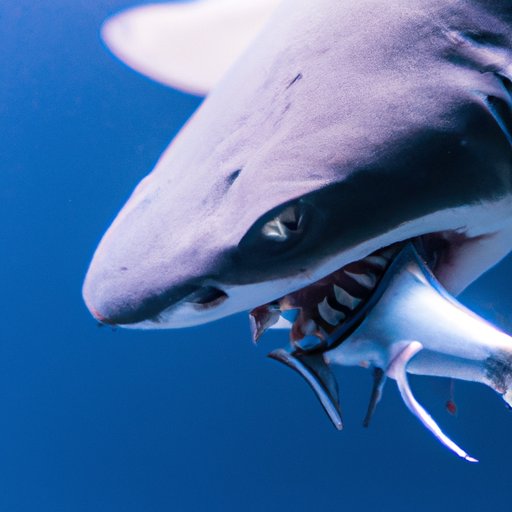
The ocean is home to a wide variety of creatures, each with its own unique set of behaviors and adaptations that help it survive in its environment. However, one of the most fascinating, yet rare, phenomena in the marine world is the occurrence of one predator preying upon another – specifically, the phenomenon of shark eating shark. In this article, we will explore the strange phenomenon of shark cannibalism and investigate the reasons behind this unusual behavior.

Investigating the Shark on Shark Action in the Ocean Depths
When it comes to the food chain, sharks are usually at the top as apex predators. As such, it’s quite surprising to find out that some species of sharks have been known to feed on other sharks. This phenomenon has been documented by scientists and fisherman alike, though it is still relatively rare. Let’s take a closer look at this peculiar behavior.
Examining the Evidence of Sharks Eating Sharks
Sharks have been documented to eat their own kind in both captivity and in the wild. In one instance, a group of researchers observed a large female tiger shark consuming another smaller female tiger shark off the coast of Hawaii. In another case, a great white shark was found to have eaten a juvenile blue shark in an aquarium. These cases are not isolated incidents; there have been numerous reports of sharks eating sharks in recent years.
Understanding the Reasons Behind This Behavior
Scientists believe that there are several factors that contribute to a shark’s decision to consume another shark. One of the most common explanations is that the larger shark is simply trying to eliminate competition for food. Since sharks are opportunistic predators, they may also turn to cannibalism if they cannot find other sources of food. It is also possible that some species of sharks may resort to cannibalism as a result of territoriality or aggression.
A Closer Look at a Rare and Bizarre Feeding Frenzy
Though shark cannibalism is a rare occurrence, it is still important to understand the implications of this behavior. Let’s take a closer look at the different types of shark cannibalism and how common it really is.
The Different Types of Shark Cannibalism
Shark cannibalism can occur in two distinct forms. The first is intra-specific cannibalism, which occurs when a shark consumes another member of its own species. The second type is inter-specific cannibalism, which is when a shark eats a different species of shark. Both forms of cannibalism are relatively rare, but they do occur in nature.
How Common is Shark Cannibalism?
Though shark cannibalism is a relatively rare occurrence, there is evidence to suggest that it is becoming more common due to changes in the oceanic environment. For example, overfishing and habitat destruction have caused some species of sharks to become more aggressive, leading to increased instances of cannibalism. Additionally, warming ocean temperatures may also be contributing to this phenomenon.

The Surprising Reality of Sharks Eating Sharks
Though it may seem counterintuitive, there are actually some benefits to shark cannibalism. Let’s take a look at why some sharks may choose to consume their own kind.
What are the Benefits of Sharks Eating Sharks?
It may seem strange, but some species of sharks may actually benefit from eating their own kind. For example, some species of shark may consume weaker or injured individuals in order to increase their chances of survival. Additionally, some species may consume other sharks in order to gain access to a new food source or to reduce competition for resources.
Is Shark Cannibalism Increasing?
Though it is difficult to measure the exact frequency of shark cannibalism, some scientists believe that it is increasing due to changes in the oceanic environment. Overfishing, habitat destruction, and climate change are all factors that could potentially lead to an increase in shark cannibalism.
What’s Behind the Increasing Incidences of Cannibalism Among Sharks?
Now that we’ve established that shark cannibalism is on the rise, let’s take a closer look at the factors that are contributing to this phenomenon.
Factors Contributing to an Increase in Shark Cannibalism
There are several factors that may be contributing to an increase in shark cannibalism. Overfishing, habitat destruction, and climate change are all believed to be contributing to the decline in prey populations for some species of shark. Additionally, competition for food and territory may also be playing a role in the increase in shark cannibalism.
Potential Solutions to Reduce Shark Cannibalism
In order to reduce the incidence of shark cannibalism, it is important to address the underlying causes of this behavior. Conservation efforts such as establishing marine protected areas and reducing fishing pressure can help to preserve prey populations and reduce competition for resources. Additionally, reducing pollution and minimizing climate change impacts can help to improve the overall health of ocean ecosystems.

How the Apex Predator Became Its Own Prey
Though shark cannibalism is a rare phenomenon, it is still important to understand how human activity may be contributing to this behavior.
Examining the Impact of Human Activity on Shark Cannibalism
Humans have had a profound impact on ocean ecosystems, with many of our activities having a direct or indirect effect on the behavior of marine animals. Overfishing, habitat destruction, and climate change are all believed to be contributing to the decline in prey populations for some species of shark, leading to increased competition for resources. Additionally, pollution and other human activities may also be causing stress and aggression in some species of shark, leading to increased instances of cannibalism.
What Can be Done to Help Sharks Avoid Becoming Prey?
In order to reduce the incidence of shark cannibalism, it is important to address the underlying causes of this behavior. Conservation efforts such as establishing marine protected areas and reducing fishing pressure can help to preserve prey populations and reduce competition for resources. Additionally, reducing pollution and minimizing climate change impacts can help to improve the overall health of ocean ecosystems, ultimately benefiting sharks and other marine life.
Conclusion
Shark cannibalism is a rare and fascinating phenomenon, yet it is becoming increasingly common due to changes in the oceanic environment. Human activities such as overfishing, habitat destruction, and climate change are all believed to be contributing to the decline in prey populations for some species of shark, leading to increased competition for resources. To help protect sharks from becoming prey, it is important to reduce human impacts on ocean ecosystems and establish marine protected areas. By doing so, we can ensure that these apex predators remain at the top of the food chain.
(Note: Is this article not meeting your expectations? Do you have knowledge or insights to share? Unlock new opportunities and expand your reach by joining our authors team. Click Registration to join us and share your expertise with our readers.)