
Introduction
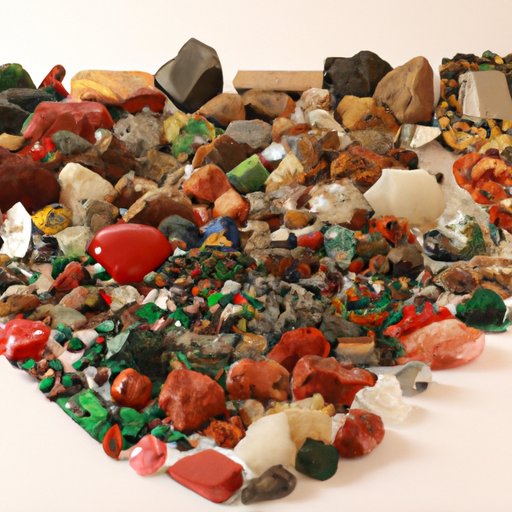
Minerals are naturally occurring substances that are found in the Earth’s crust and are essential to everyday life. They are often mined or extracted from the ground and processed into usable forms, such as metal ores, coal, and gemstones. Minerals have a variety of uses, including industrial manufacturing, construction, electronics, jewelry, agriculture, and medicine. This article will explore three ways minerals are used and discuss the benefits of utilizing minerals.
Industrial Manufacturing
Minerals are used extensively in industrial manufacturing, particularly for producing metals and other materials. Iron ore is one of the most common minerals used in industrial manufacturing and is often combined with other elements, such as carbon, to create steel. Other minerals that are commonly used in industrial manufacturing include copper, aluminum, lead, and zinc. These minerals are often used to create products such as pipes, wires, and engine parts.
The use of minerals in industrial manufacturing has many benefits. Minerals are a cost-effective way to produce high-quality products that can withstand wear and tear. They are also highly versatile and can be used to create a wide range of products. Additionally, minerals are abundant, making them an easily accessible resource.
Construction
Minerals are also used in the construction industry, primarily for building materials. Sand, gravel, and crushed stone are among the most commonly used minerals in construction and are used to create concrete, asphalt, and mortar. Clay is another mineral used in construction and is often used to make bricks and roof tiles. Copper, aluminum, and iron are also sometimes used in construction, typically for creating structural components such as beams and columns.
Using minerals in construction provides several benefits. Minerals are strong and durable, making them ideal for constructing buildings and other structures. They are also relatively inexpensive and easy to access, making them an attractive option for builders. Additionally, minerals are recyclable, meaning they can be reused multiple times.
Electronics
Minerals are also used in the production of electronics, particularly for computers and other digital devices. Silicon is one of the most commonly used minerals in electronics and is often used to create semiconductors. Other minerals that are used in electronics include gold, silver, cobalt, and copper. These minerals are often used to create wiring, circuit boards, and other components.
The use of minerals in electronics has several advantages. Minerals are extremely conductive, making them ideal for creating electrical circuits. They are also lightweight and small, allowing them to fit into tight spaces. Additionally, minerals are resistant to heat, making them well-suited for use in electronic devices.
Jewelry
Minerals are also used in the jewelry industry, primarily for creating gemstones. Diamonds, rubies, sapphires, and emeralds are all types of gemstones that are created using minerals. Gold and silver are also often used to create jewelry, such as rings, necklaces, and earrings. These minerals are often combined with other elements to create more unique pieces.
The use of minerals in jewelry has many benefits. Minerals are beautiful and can be cut and polished to create stunning pieces of jewelry. They are also durable and can last for years without fading or tarnishing. Additionally, minerals are valuable, making them a great investment for those looking to purchase jewelry.
Agriculture
Minerals are also used in agriculture, primarily for fertilizers and soil amendments. Potassium, phosphorus, and nitrogen are among the most commonly used minerals in agriculture and are often added to soil to improve its fertility. Calcium and magnesium are also often used in agricultural applications, typically for creating lime and gypsum.
The use of minerals in agriculture provides many benefits. Minerals can help improve soil quality and increase crop yields. They are also a cost-effective way to improve soil fertility, as they are widely available and relatively inexpensive. Additionally, minerals are safe and do not contain any harmful chemicals.
Medicine
Minerals are also used in medicine, primarily for supplements and medications. Iron and calcium are two of the most commonly used minerals in medicine and are often added to dietary supplements and vitamins. Magnesium and zinc are also frequently used in medicinal applications, typically for treating a variety of ailments.
The use of minerals in medicine has several advantages. Minerals are natural and do not contain any artificial additives or preservatives. They are also easy to absorb, making them ideal for use in supplements and medications. Additionally, minerals are non-toxic, making them safe to consume.
Conclusion
Minerals are an essential part of everyday life and have a variety of uses, including industrial manufacturing, construction, electronics, jewelry, agriculture, and medicine. Minerals are cost-effective, durable, and versatile, making them an attractive option for many applications. Additionally, minerals are recyclable and can be used multiple times, making them a sustainable resource. In conclusion, minerals are an invaluable resource and should be utilized whenever possible.
(Note: Is this article not meeting your expectations? Do you have knowledge or insights to share? Unlock new opportunities and expand your reach by joining our authors team. Click Registration to join us and share your expertise with our readers.)