
Introduction
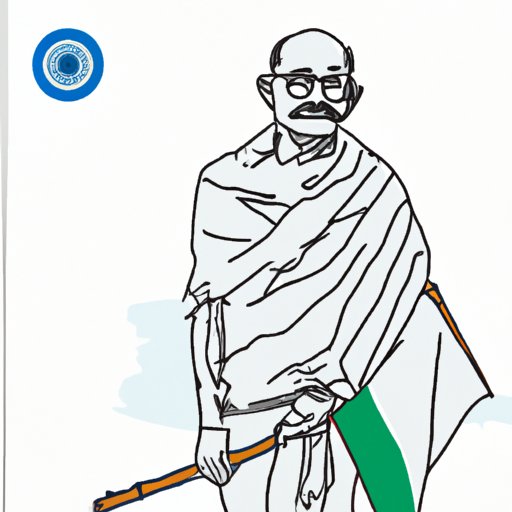
Mahatma Gandhi is widely regarded as one of the most influential leaders in modern history. He was a political and spiritual leader who led the Indian independence movement against British colonial rule in the early 20th century. But what made Gandhi such an effective leader? In this article, we will explore Gandhi’s leadership style and examine his lasting impact on modern India and the world.
Definition of Leadership
Leadership is the ability to influence and motivate others to achieve a common goal. Leaders must be able to inspire trust and loyalty from their followers, as well as demonstrate strong decision-making skills. Good leaders also possess qualities such as integrity, empathy, and courage.
Overview of Gandhi’s Background and Achievements
Gandhi, who was born Mohandas Karamchand Gandhi in 1869, was a lawyer by training. He spent much of his early life in South Africa, where he became involved in the struggle for Indian rights. After returning to India in 1915, he began to advocate for Indian independence from British rule. He adopted the philosophy of Satyagraha (non-violent resistance) and organized several peaceful protests, such as the famous Salt March of 1930.
Gandhi’s efforts were successful in leading India to independence in 1947. The country was divided into two parts – India and Pakistan – and he played a major role in negotiating the terms of the partition. He also inspired many other independence movements around the world, such as the civil rights movement in the United States.
Examining Gandhi’s Leadership Style and Impact
Gandhi’s leadership style was based on his core beliefs in non-violence and civil disobedience. He believed that moral authority was more powerful than physical force, and that peaceful protest was the best way to bring about social change.
“Non-violence is the greatest force at the disposal of mankind. It is mightier than the mightiest weapon of destruction devised by the ingenuity of man,” said Gandhi. (1)
He also advocated for self-reliance and simplicity, believing that material possessions should not be the focus of one’s life. He encouraged his followers to practice ahimsa (non-injury) and follow the path of truth. These principles were central to his leadership style and had a profound impact on the Indian independence movement.
His Principles of Non-Violence and Civil Disobedience
Gandhi’s philosophy of non-violence and civil disobedience was a key factor in his success as a leader. He believed that violence only begets more violence, and that peaceful protests were the best way to achieve social change. He also believed that civil disobedience was necessary for achieving true freedom, and that it was the duty of citizens to disobey unjust laws.
“An eye for an eye only ends up making the whole world blind,” said Gandhi. (2)

His Beliefs in Moral Authority Over Physical Force
Gandhi’s belief in moral authority over physical force was also instrumental in his success as a leader. He argued that moral strength was more powerful than physical strength, and that peaceful protests could be more effective than violent ones. He also believed that truth was more powerful than any weapon, and that people should always strive to do what is right, even if it means facing opposition or persecution.
“The weak can never forgive. Forgiveness is the attribute of the strong,” said Gandhi. (3)
His Influence on the Indian Independence Movement
Gandhi’s philosophy of non-violence and civil disobedience had a profound impact on the Indian independence movement. He was the leader of the Indian National Congress, which was the main organization leading the fight for independence from British rule. His tactics of peaceful protest were successful in gaining international attention and support for the cause.
Gandhi’s leadership also inspired many other independence movements around the world, such as the civil rights movement in the United States. His ideas of non-violence, civil disobedience, and moral authority were adopted by many other activists and leaders, and continue to be influential today.
Analyzing Gandhi’s Non-Violent Movement
Gandhi’s non-violent movement was one of the most influential in modern history. His tactics of peaceful protest and civil disobedience were successful in bringing about social change and gaining international attention and support for the Indian independence movement.

The Salt March as a Turning Point
The Salt March, which was held in 1930, was a turning point for the Indian independence movement. Gandhi and thousands of supporters marched 241 miles from Ahmedabad to the Arabian Sea, to protest the British monopoly on salt production. This march was successful in gaining worldwide attention and support for the cause, and it helped to bring about the end of British rule in India.
The Impact of His Non-Violent Protest Tactics
Gandhi’s tactics of peaceful protest and civil disobedience were influential in inspiring other independence movements around the world. His ideas of non-violence, moral authority, and self-reliance have been adopted by many other activists and leaders, and continue to be influential today.
Exploring the Legacy of Gandhi’s Ideas
Gandhi’s ideas have had a lasting impact on modern India and the world. He was a champion of equality, social justice, and tolerance, and his commitment to ending prejudice and discrimination has been an inspiration to many.
He was also a firm believer in self-reliance and simplicity. He encouraged his followers to practice ahimsa (non-injury) and follow the path of truth. These principles were central to his leadership style and had a profound impact on the Indian independence movement.
Assessing Gandhi’s Impact on Modern India
Gandhi’s influence on modern India cannot be overstated. He was instrumental in establishing democracy in the country and helping to develop a society based on equality, social justice, and tolerance. His commitment to ending prejudice and discrimination has been an inspiration to many, and his ideas are still relevant today.
Gandhi’s leadership also inspired many other independence movements around the world, such as the civil rights movement in the United States. His ideas of non-violence, civil disobedience, and moral authority were adopted by many other activists and leaders, and continue to be influential today.
Investigating Gandhi’s Contributions to Human Rights Activism
Gandhi was an early supporter of women’s rights and was a vocal advocate for the rights of all people, regardless of race, religion, or gender. He was committed to ending prejudice and discrimination, and his work was instrumental in inspiring other human rights activists around the world.
His Early Support for Women’s Rights
Gandhi was an early supporter of women’s rights and was a vocal advocate for the rights of all people, regardless of race, religion, or gender. He believed that men and women should be equal partners in society, and he encouraged women to take part in the Indian independence movement.
“A nation’s progress depends upon the education of its women,” said Gandhi. (4)

His Commitment to Ending Prejudice and Discrimination
Gandhi was committed to ending prejudice and discrimination, and he worked to promote understanding and respect among different cultures and religions. He believed that all people should be treated equally, regardless of their background or beliefs.
“No culture can live if it attempts to be exclusive,” said Gandhi. (5)
Conclusion
Gandhi was a remarkable leader who had a profound impact on modern India and the world. His philosophy of non-violence, civil disobedience, and moral authority was instrumental in leading India to independence and inspiring other independence movements around the world. His commitment to equality, social justice, and tolerance has been an inspiration to many, and his legacy continues to be felt today.
Gandhi was a visionary leader whose ideas and ideals are still relevant today. He was a champion of non-violence, civil disobedience, and human rights, and his commitment to ending prejudice and discrimination has been an inspiration to many. His legacy will continue to live on for generations to come.
(Note: Is this article not meeting your expectations? Do you have knowledge or insights to share? Unlock new opportunities and expand your reach by joining our authors team. Click Registration to join us and share your expertise with our readers.)