
Introduction
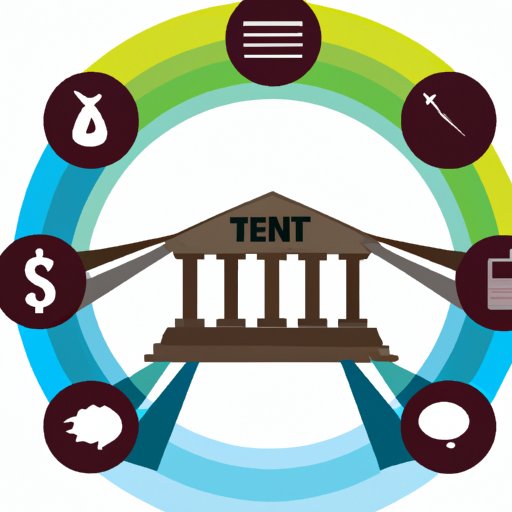
Financial intermediation is an important part of the modern economy. It refers to the process by which financial institutions, such as banks, insurance companies, and other entities, act as intermediaries between savers and borrowers. These institutions provide services that enable individuals and businesses to access capital, manage risk, and increase their financial security.
The purpose of this article is to explore the different types of financial intermediation and how they are used. We will look at credit unions, banks, investment companies, and businesses, and compare and contrast their benefits and challenges. By understanding the various forms of financial intermediation, readers can make more informed decisions about how to use them.
Credit Unions
Credit unions are non-profit organizations that provide financial services to their members. They offer a variety of services, including savings accounts, loans, mortgages, and investments. Credit unions are owned and operated by their members, and all profits are reinvested back into the organization.
Credit unions have several advantages when it comes to financial intermediation. They often offer lower fees and interest rates than traditional banks, which makes them attractive to consumers looking for better deals. They also tend to be more community-oriented and focused on providing services to local communities. Finally, because they are owned and operated by their members, credit unions can provide personalized services and advice tailored to individual needs.
However, credit unions do have some challenges when it comes to financial intermediation. For example, they may not have the same level of resources as larger banks and may not be able to offer the same range of services or products. In addition, credit unions are typically limited in terms of geographic reach, so customers may not have access to the same services or products offered by other financial institutions.
Banks
Banks are one of the most common forms of financial intermediation. Banks provide a range of services, including savings accounts, checking accounts, loans, mortgages, and investment products. Banks are regulated by governments and are generally considered to be safe and secure places to store money.
Banks play an important role in financial intermediation by providing a reliable source of capital. They facilitate the flow of funds from savers to borrowers, allowing businesses to access capital to grow and expand. Banks also provide a range of services, such as loan origination and portfolio management, which can help businesses manage their finances more effectively.
One of the key benefits of banking for financial intermediation is that banks are highly regulated. This ensures that customers’ money is safe and secure and that banks are following best practices when it comes to lending. Banks also have access to a wide range of products and services, so customers can find the right solution for their needs.
Investment Companies
Investment companies are another form of financial intermediation. Investment companies provide services such as mutual funds, ETFs, and other financial products. They are typically regulated by governments and offer a wide range of investment options.
Investment companies can play an important role in financial intermediation by providing access to capital. They can help businesses raise funds to finance growth and expansion, as well as provide investors with access to a variety of investment opportunities. Investment companies also offer a range of services, such as portfolio management and asset allocation, which can help businesses and investors manage their finances more efficiently.
However, there are some potential risks associated with investment companies. For example, investment companies may charge high fees and commissions, which can reduce returns for investors. In addition, the performance of investments can be unpredictable, so investors should always research and understand the risks before investing.
Businesses
Businesses can also use financial intermediation to access capital and manage their finances. Businesses can borrow money from banks, credit unions, and other financial institutions to finance growth and expansion. They can also use investment companies to invest in stocks, bonds, and other financial products.
Businesses can benefit from financial intermediation by accessing capital and managing their finances more effectively. However, businesses should consider a few factors before utilizing financial intermediation. For example, businesses should consider the fees and interest rates of different institutions, as well as the potential risks associated with certain investments.
Comparison and Contrast
When comparing the different types of financial intermediation, it is important to consider the benefits and challenges of each option. Credit unions offer lower fees and interest rates and are more community-focused, but may not have the same level of resources as larger banks. Banks are highly regulated and offer a wide range of services, but may charge higher fees and interest rates. Investment companies can provide access to capital and a variety of investment options, but may involve higher risks and fees. Finally, businesses can benefit from financial intermediation by accessing capital and managing their finances more effectively, but should carefully consider the fees and risks associated with different institutions.
Conclusion
In conclusion, financial intermediation is an important part of the modern economy. Different types of financial intermediation, including credit unions, banks, investment companies, and businesses, can all provide benefits and challenges. Credit unions offer lower fees and interest rates and are more community-focused, while banks are highly regulated and offer a wide range of services. Investment companies can provide access to capital and a variety of investment options, but may involve higher risks and fees. Finally, businesses can benefit from financial intermediation by accessing capital and managing their finances more effectively, but should carefully consider the fees and risks associated with different institutions.
By understanding the different types of financial intermediation and the benefits and challenges associated with each, readers can make more informed decisions about how to use them. It is important to weigh the pros and cons of each option carefully before making any decisions.
(Note: Is this article not meeting your expectations? Do you have knowledge or insights to share? Unlock new opportunities and expand your reach by joining our authors team. Click Registration to join us and share your expertise with our readers.)