
Introduction
Physical science is a branch of natural science that studies the physical world around us. It examines the properties, structure, behavior, and changes of matter and energy. Physical science can be broken down into sub-disciplines such as physics, chemistry, astronomy, and geology. For middle school students, physical science can help them explore the world around them and develop an understanding of how things work.

Exploring the Fundamentals of Physical Science
In middle school, physical science introduces students to basic concepts and topics that are important for further study in high school and college. Through physical science courses, students learn about the structure of the universe, the laws of motion and gravity, the states of matter, and other topics related to the physical world.
Hands-on Activities to Teach Physical Science in Middle School
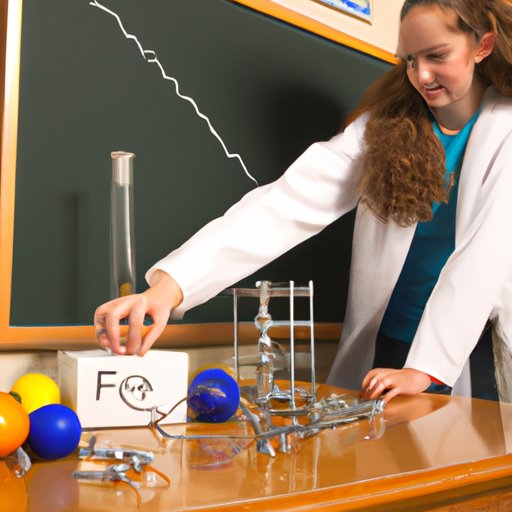
To help students better understand physical science, teachers should incorporate hands-on activities into their lessons. Experiments and projects can help students gain a deeper understanding of physical science concepts. Examples of experiments include building a model of the solar system or exploring the effects of different temperatures on the boiling point of water. Projects can involve researching the history of a particular scientific discovery or creating a timeline of major discoveries in physical science.

How Physical Science Can Help Students Prepare for College
Physical science can help students prepare for college by providing an understanding of the scientific principles that will be covered in college courses. Students who have taken physical science classes are better equipped to handle college-level coursework. According to a study by the National Center for Education Statistics, “High school students who take physical science courses are more likely to enroll in college than those who do not.”

Top 5 Physical Science Concepts for Middle Schoolers
The following are five key concepts that students should learn in physical science classes:
- Force and Motion: Force and motion are fundamental concepts in physical science. Students should learn about Newton’s three laws of motion and how they apply to everyday life.
- Energy: Energy is the capacity to do work. Students should learn about the various forms of energy, including kinetic, potential, heat, and electrical energy.
- Chemistry: Chemistry is the study of the composition, structure, and properties of matter. Students should learn about the periodic table of elements and how chemical reactions occur.
- Electricity and Magnetism: Students should learn about the basics of electricity and magnetism, including electric circuits and electromagnetic forces.
- Matter: Matter is anything that has mass and takes up space. Students should learn about the states of matter, the particle theory, and the properties of matter.
Physical Science Projects for Your Middle School Classroom
Physical science projects are a great way to engage students and give them an opportunity to explore physical science concepts in more depth. Projects can range from simple experiments to complex research projects. Some examples of projects include building a model of the solar system, constructing a working light bulb, or researching the effects of climate change.
Conclusion
Physical science is an important subject for middle school students to learn. It provides them with an understanding of the physical world around them and helps prepare them for college-level coursework. Through hands-on activities, students can gain a deeper understanding of physical science concepts and develop skills that are essential for future success.
(Note: Is this article not meeting your expectations? Do you have knowledge or insights to share? Unlock new opportunities and expand your reach by joining our authors team. Click Registration to join us and share your expertise with our readers.)