
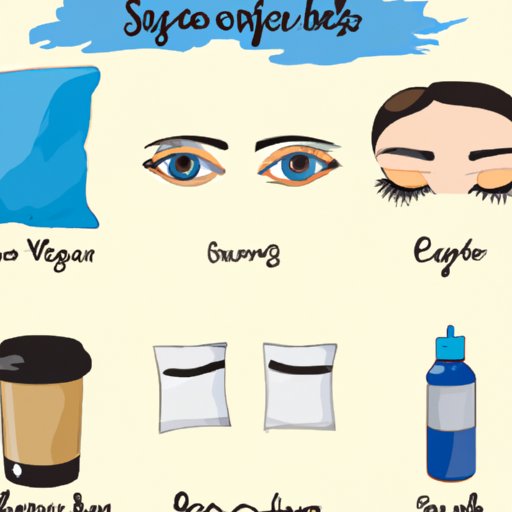
Introduction
Bags under the eyes are a common cosmetic concern for both men and women. Characterized by puffiness and dark circles, they can make you look tired and older than you really are. While there’s no one-size-fits-all solution, there are steps you can take to reduce the appearance of bags under your eyes.
Get Plenty of Sleep
Lack of sleep is one of the most common causes of bags under the eyes. When you don’t get enough sleep, your body produces excess cortisol, which can cause fluid retention in the face. According to research published in the journal Sleep Medicine Reviews, “Chronic sleep deprivation may be an important factor in facial aging and the development of wrinkles.”
Getting adequate rest each night is key to reducing bags under the eyes. Aim for seven to nine hours of sleep every night. To improve your sleep quality, follow a regular sleep schedule, avoid caffeine late in the day, and create a calming bedtime routine.
Reduce Salt Intake
Salt intake can also play a role in bags under the eyes. Eating too much salt can cause dehydration, which can lead to puffiness and dark circles. A study published in the journal Clinical Nutrition found that “increasing dietary sodium increases water retention, leading to puffiness in the face.”
To reduce salt intake, avoid processed foods and choose fresh ingredients when possible. Additionally, use herbs and spices instead of salt to season your food. You should also limit your intake of salty snacks like chips and pretzels.
Drink Lots of Water
Staying hydrated is essential for reducing bags under the eyes. When you’re dehydrated, the skin around your eyes becomes dry and wrinkled, making dark circles and puffiness more noticeable. As noted in a study published in the journal Dermatologic Surgery, “Dehydration causes the skin to become thin and dry, accentuating the appearance of dark circles and wrinkles.”
Drinking plenty of water throughout the day can help keep your skin hydrated and reduce the appearance of bags under your eyes. Aim for eight glasses of water per day. Additionally, try incorporating hydrating foods into your diet, such as cucumbers and watermelon.
Use Cold Compresses
Cold compresses can help reduce inflammation and constrict blood vessels, making them a great way to reduce bags under the eyes. A study published in the journal Plastic and Reconstructive Surgery found that “cold compression reduces swelling and discoloration due to its vasoconstricting properties.”
To use a cold compress, wrap a few ice cubes in a towel and place it over your eyes for 10 minutes. You can also use a chilled eye mask or refrigerated spoons. Do this several times a day to reduce puffiness and dark circles.
Use Caffeine Topically
Caffeine can also help reduce bags under the eyes. When applied topically, it constricts blood vessels and tightens the skin to reduce puffiness. A study published in the journal Dermatologic Surgery found that “topical caffeine application is effective in reducing periorbital edema and hyperpigmentation.”
You can use a caffeine-infused eye cream or make your own at home. Simply mix 1 teaspoon of ground coffee with 2 tablespoons of coconut oil and apply it to the area around your eyes. Leave it on for 10 minutes before rinsing.
Invest in Eye Creams
Eye creams can also help reduce bags under the eyes. Look for products that contain peptides and antioxidants, which can help boost collagen production and reduce inflammation. A study published in the journal Clinical Interventions in Aging found that “topical antioxidants and peptides can improve signs of photoaging.”
When shopping for eye creams, look for products that are specifically designed for the delicate skin around your eyes. Additionally, opt for formulas that are fragrance-free and non-comedogenic, as these won’t irritate your skin.
Conclusion
Bags under the eyes can make you look tired and older than you really are. Fortunately, there are steps you can take to reduce their appearance. From getting enough sleep to investing in eye creams, these tips can help you achieve brighter, smoother skin around your eyes.
Remember, everyone’s skin is different. It may take some trial and error to find the right combination of strategies for you. So, experiment with different techniques and stick with the ones that work best for your skin.
(Note: Is this article not meeting your expectations? Do you have knowledge or insights to share? Unlock new opportunities and expand your reach by joining our authors team. Click Registration to join us and share your expertise with our readers.)