
Introduction
Mental health is an important aspect of overall health and well-being. It is defined as “a state of well-being in which every individual realizes his or her own potential, can cope with the normal stresses of life, can work productively and fruitfully, and is able to make a contribution to her or his community” (World Health Organization).
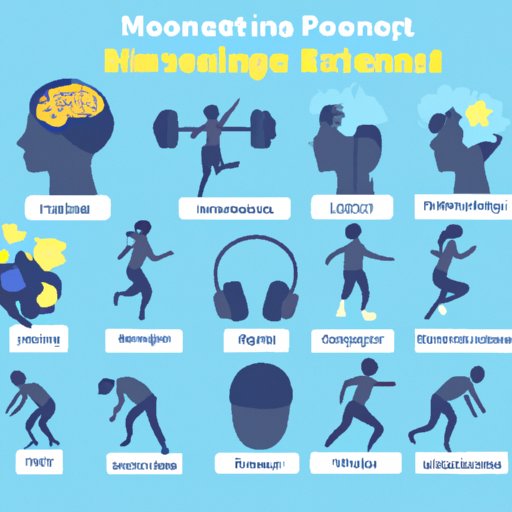
In recent years, the importance of exercise in promoting mental health has become increasingly clear. Exercise has been found to have a positive impact on mental health by reducing stress levels, improving cognitive functioning, and decreasing the risk of depression and anxiety. In this article, we will explore how exercise can improve mental health and how to incorporate it into your life.

Benefits of Exercise on Mental Health
Regular physical activity has been shown to have numerous benefits on mental health. Here are some of the ways that exercise can improve mental health:
Releases Endorphins and “Happy Hormones”
Physical activity releases endorphins, also known as “happy hormones”, which help reduce stress and improve mood. According to a study by Harvard Health Publishing, “Endorphins interact with the receptors in your brain that reduce your perception of pain. They also trigger a positive feeling in the body, similar to that of morphine.”
Lower Rates of Depression and Anxiety
Studies have found that regular exercise can significantly reduce the symptoms of depression and anxiety. In a 2017 study published in the journal Translational Psychiatry, researchers found that exercise was just as effective as antidepressant medications in treating depression, and that it was associated with fewer side effects.
Reduces Stress Levels and Improves Relaxation
Exercise has also been found to reduce stress levels and improve relaxation. A 2012 study conducted by the American Psychological Association found that regular physical activity was associated with lower levels of stress and improved relaxation.
Improves Cognitive Functioning and Memory
Regular exercise has been found to improve cognitive functioning and memory. A 2017 study published in the journal NeuroImage found that physical activity was associated with increased gray matter volume in the hippocampus, a part of the brain responsible for memory and learning.
Role of Social Interaction and Support from Physical Activities
Physical activities can also provide opportunities for social interaction and support, which can be beneficial for mental health. A 2014 study published in the journal BMC Public Health found that people who participated in group sports experienced higher levels of mental wellbeing compared to those who did not participate in any physical activities.
How to Incorporate Exercise into Your Life
Incorporating exercise into your life can be challenging, but it is possible. Here are some tips on how to start:
Setting Realistic Goals
Start small and set realistic goals. For example, aim to do 30 minutes of moderate exercise three times a week. This can be anything from going for a walk or jog to taking a dance class. Once you’ve achieved these goals, you can gradually increase the intensity and frequency of your workouts.
Choosing the Right Type of Activity
It’s important to choose an activity that you enjoy and that fits into your lifestyle. If you don’t like running, try swimming or biking instead. The key is to find something that you look forward to doing so that you’re more likely to stick with it.
Making Time to Fit in Exercise
Finding time to exercise can be difficult, especially if you have a busy schedule. Try to fit in at least 30 minutes of physical activity a day, even if it’s just a quick walk around the block. You can also break up your workouts into shorter 10-minute bursts throughout the day.
Conclusion
Exercise is essential for overall health and well-being. Regular physical activity has been shown to have a positive effect on mental health, including reducing stress levels, improving cognitive functioning, and decreasing the risk of depression and anxiety. We hope this article has given you insight into the many ways that exercise can improve mental health and how to incorporate it into your life.
(Note: Is this article not meeting your expectations? Do you have knowledge or insights to share? Unlock new opportunities and expand your reach by joining our authors team. Click Registration to join us and share your expertise with our readers.)