
Introduction
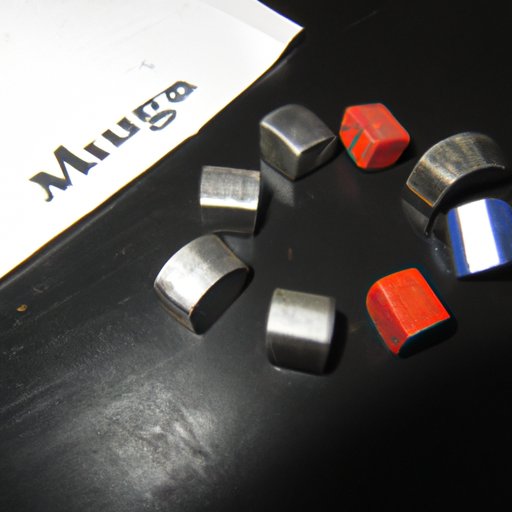
Magnetism has been a source of fascination for centuries, with ancient civilizations attributing special powers to magnets. Today, we know that magnets are objects that produce magnetic fields, which influence the behavior of other magnetic materials. But what about minerals? Are minerals magnetic, and if so, how do their magnetic properties affect our lives? In this article, we’ll explore the relationship between magnetism and mineral composition.

Exploring the Relationship between Minerals and Magnetism
Minerals are naturally occurring solid substances made up of one or more elements. There are over 4,000 known minerals, each with its own unique chemical and physical properties. Some minerals, such as magnetite, have magnetic properties, while others do not. To better understand the relationship between minerals and magnetism, let’s take a closer look at the magnetic properties of minerals and how mineral composition affects these properties.
Magnetic Properties of Minerals
The magnetic properties of minerals refer to their ability to interact with a magnetic field. Magnets are attracted to certain minerals because of the way they interact with a magnetic field. For example, magnetite is a mineral that is strongly attracted to magnets. Other minerals, such as hematite, are not attracted to magnets but can be used to create a magnetic field.

How Mineral Composition Affects Magnetic Properties
The chemical composition of a mineral can affect its magnetic properties. Minerals that contain iron, nickel, cobalt, and other elements that are strongly affected by magnetic fields will be more likely to interact with them. The physical structure of a mineral can also affect its magnetic properties. For example, some minerals have crystalline structures that allow them to align themselves in a magnetic field.
Temperature can also play a role in the magnetic properties of minerals. At higher temperatures, the electrons in a mineral become more active, making them more likely to interact with a magnetic field. Conversely, at lower temperatures, the electrons become less active, reducing the mineral’s interaction with a magnetic field.

Examining the Role of Minerals in Magnetic Fields
Minerals play an important role in both natural and artificial magnetic fields. Earth’s magnetic field is generated by the motion of molten iron in its core, and minerals like magnetite can interact with this field. Artificial magnetic fields can be created using magnets and minerals like iron, cobalt, and nickel. These fields are used in a variety of applications, such as medical imaging and data storage.
The magnetic properties of rocks can also be affected by the minerals they contain. For example, rocks that contain iron-bearing minerals can be attracted to magnets. This phenomenon is called “magnetite attraction” and can be used to locate deposits of iron ore.

A Comprehensive Guide to Magnetic Properties of Minerals
There are three main types of magnetic minerals: ferromagnetic minerals, paramagnetic minerals, and diamagnetic minerals. Ferromagnetic minerals, such as magnetite, are strongly attracted to magnets. Paramagnetic minerals, such as hematite, are weakly attracted to magnets. Diamagnetic minerals, such as quartz, are not attracted to magnets.
In addition to these three types of minerals, there is also a measure of a mineral’s magnetic susceptibility. This measure indicates how strongly a mineral will interact with a magnetic field. The higher the magnetic susceptibility, the stronger the interaction.
How Mineral Composition Affects Magnetic Properties
The chemical composition of a mineral can affect its magnetic properties. Minerals that contain iron, nickel, cobalt, and other elements that are strongly affected by magnetic fields will be more likely to interact with them. The physical structure of a mineral can also affect its magnetic properties. For example, some minerals have crystalline structures that allow them to align themselves in a magnetic field.
Temperature can also play a role in the magnetic properties of minerals. At higher temperatures, the electrons in a mineral become more active, making them more likely to interact with a magnetic field. Conversely, at lower temperatures, the electrons become less active, reducing the mineral’s interaction with a magnetic field.
Examining the Role of Minerals in Magnetic Fields
Minerals play an important role in both natural and artificial magnetic fields. Earth’s magnetic field is generated by the motion of molten iron in its core, and minerals like magnetite can interact with this field. Artificial magnetic fields can be created using magnets and minerals like iron, cobalt, and nickel. These fields are used in a variety of applications, such as medical imaging and data storage.
The magnetic properties of rocks can also be affected by the minerals they contain. For example, rocks that contain iron-bearing minerals can be attracted to magnets. This phenomenon is called “magnetite attraction” and can be used to locate deposits of iron ore.
Uncovering the Mysteries of Magnetism in Minerals
The relationship between magnetism and mineral composition has been studied for centuries. In the 18th century, scientists began to explore the magnetic properties of minerals, and in the 19th century, they discovered the concept of magnetic susceptibility. In recent years, researchers have been studying the effects of temperature on the magnetic properties of minerals. They have also developed techniques for measuring the magnetic properties of rocks.
Researchers are continuing to uncover the mysteries of magnetism in minerals, and their findings could have implications for a variety of applications, from mining to medical imaging. As our understanding of magnetism and mineral composition continues to evolve, so too will our ability to use this knowledge to improve our lives.
Conclusion
Minerals and magnetism have a complex relationship, and our understanding of it is still evolving. By exploring the magnetic properties of minerals, how mineral composition affects these properties, and the role of minerals in magnetic fields, we can gain a better understanding of the connection between magnetism and mineral composition. With further research, we may be able to unlock the potential of minerals to improve our lives.
(Note: Is this article not meeting your expectations? Do you have knowledge or insights to share? Unlock new opportunities and expand your reach by joining our authors team. Click Registration to join us and share your expertise with our readers.)