
Introduction
The perfect shirt should fit like a second skin – it should be comfortable and flattering while still accentuating your unique features. There are many factors that go into finding the right fit, from understanding different shirt styles to taking accurate measurements. This guide will provide an overview of what makes a perfectly fitted shirt, as well as tips on how to dress for your shape and get the most out of your wardrobe.

A Guide to Determining the Right Fit for Your Shirt
When it comes to finding the perfect shirt, there’s no one-size-fits-all solution. Different body shapes require different fits, and even within the same body type, individual preferences come into play. Before you start shopping for a new shirt, it’s important to take the time to understand what kind of fit works best for your body type.
Understanding Different Shirt Styles
Shirts come in a variety of styles, from slim-fit to loose-fitting. Knowing which style works best for your body type is key to finding the right fit. According to fashion expert Jessica Quirk, “For those with broad shoulders or larger chests, a slim-fit shirt can add structure and definition to your silhouette. For those with slimmer frames, opt for a relaxed fit to create the illusion of curves.”
Identifying the Correct Size
Once you’ve determined the style of shirt that works best for you, it’s time to identify the correct size. Most clothing brands use numerical sizes, such as S, M, L, etc., which correspond to specific measurements. If you’re unsure of your size, it’s best to measure yourself to ensure a perfect fit.
Knowing How to Measure for a Shirt
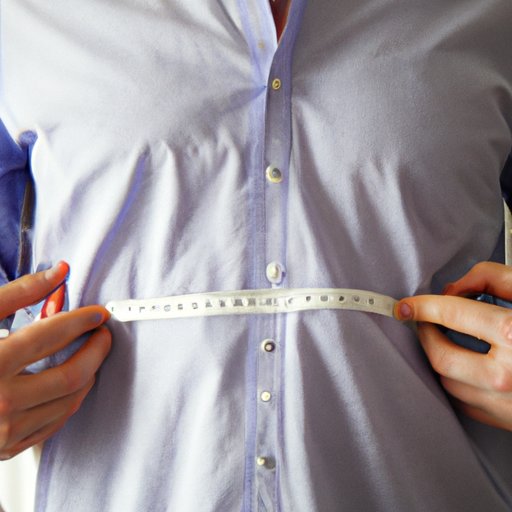
Measuring for a shirt is relatively straightforward, but it’s important to take accurate measurements to ensure the perfect fit. Start by measuring your chest, waist, and hips. Then, measure the length of your arms, shoulders, and torso. Once you’ve taken all of these measurements, compare them to the size chart of the brand you’re shopping from to determine your size.
The Anatomy of a Perfectly Fitted Shirt
Now that you know how to measure for a shirt, it’s important to understand the anatomy of a perfectly fitted shirt. Here’s a breakdown of all the elements that you should consider when shopping for a new shirt:
The Shoulders
The shoulders of a shirt should fit snugly without being too tight or too loose. The seam of the shirt should sit at the edge of your shoulder, not over it or below it.
The Sleeves
The sleeves of a shirt should end just above the wrist bone. If the sleeves are too long, they can look sloppy and make your arms appear shorter than they actually are. If the sleeves are too short, they can be uncomfortable and make your arms look stubby.
The Collar
The collar of a shirt should fit comfortably around your neck without being too tight or too loose. It should also lay flat against your chest and not stick up or fold over.
The Chest
The chest area of a shirt should fit snugly and not be too baggy. If you’re wearing a button-down shirt, make sure the buttons don’t pull or gape open.
The Waist
The waist of a shirt should hit just above your navel, creating a slight taper in the midsection. If the waist is too tight, it can be uncomfortable and make you look bigger than you actually are. If the waist is too loose, it can add bulk and make your torso look disproportionate.
The Length
The length of a shirt should hit right at the top of your pants. If the shirt is too long, it can be bulky and make you look shorter. If the shirt is too short, it can make you look disproportionate.

Five Tips for Choosing the Right Shirt for Your Body Type
Choosing the right shirt for your body type doesn’t have to be difficult. Here are five tips to keep in mind when shopping for a new shirt:
Consider Your Body Proportions
It’s important to take your body proportions into consideration when shopping for a new shirt. If you have a long torso, opt for a longer shirt; if you have a shorter torso, opt for a shorter shirt. If you have broader shoulders, opt for a slim-fit shirt; if you have narrower shoulders, opt for a looser fit.
Know Your Shape
Understanding your body shape is key to finding the right shirt. Do you have an apple-shaped body? A pear-shaped body? An hourglass-shaped body? Knowing your shape will help you pick the right style and fit for your body type.
Make Sure the Shirt Fits Snugly
A perfectly fitted shirt should fit snugly, but not too tightly. Make sure the fabric isn’t pulling or gaping in any areas, and that the shirt moves comfortably with your body.
Don’t Be Afraid to Experiment with Colors and Patterns
Shirts come in a variety of colors and patterns, so don’t be afraid to experiment. Bold colors and patterns can add visual interest to an outfit, while subtle colors and patterns can be more versatile. Find what works best for you.
Choose the Right Fabric
The fabric of a shirt can make a big difference in how it looks and feels. Stick to fabrics that are lightweight and breathable, such as cotton, linen, and silk. Avoid stiff fabrics like polyester, which can make the shirt uncomfortable and unflattering.
Finding the Right Fit: How to Measure for the Perfect Shirt
Now that you know how to choose the right shirt for your body type, it’s time to learn how to measure for the perfect fit. Here are some tips for taking accurate measurements:
Taking Measurements
Start by measuring your chest, waist, and hips. Use a flexible measuring tape and stand with good posture. Make sure the tape is level and not too tight or too loose. When measuring your arms, start at the center of your back and measure down to your wrist. When measuring your shoulders, start at the base of the neck and measure across your shoulders to the other side.
Comparing Measurements to Shirt Sizes
Once you’ve taken all of your measurements, compare them to the size chart of the brand you’re shopping from. Different brands may have slightly different sizing charts, so make sure to double-check before making a purchase.
Pay Attention to Details
When shopping for a new shirt, pay attention to the details. Look for shirts with reinforced seams and quality stitching, as these will ensure the shirt will last longer and fit better. Also, check the fabric content to make sure it’s breathable and lightweight.
How to Dress for Your Shape: Picking the Perfect Shirt
Now that you know how to measure for a shirt, it’s time to learn how to dress for your shape. Here are some tips for finding the perfect shirt for each body type:
For Pear-Shaped Bodies
Pear-shaped bodies tend to be wider at the hips than at the shoulders. To balance out your proportions, opt for a shirt that has a fitted waist and looser sleeves. Avoid overly baggy shirts, which can make your hips look even wider.
For Apple-Shaped Bodies
Apple-shaped bodies tend to be wider at the chest than at the hips. To flatter your shape, opt for a shirt that has a fitted waist and looser chest. Avoid boxy shirts, which can add bulk to your midsection.
For Hourglass-Shaped Bodies
Hourglass-shaped bodies tend to be balanced throughout. To show off your curves, opt for a shirt that has a fitted waist and fuller sleeves. Avoid overly loose shirts, which can hide your curves.
For Rectangular-Shaped Bodies
Rectangular-shaped bodies tend to be straight up and down. To create the illusion of curves, opt for a shirt that has a fitted waist and fuller sleeves. Avoid overly baggy shirts, which can make you look shapeless.

The Secret to Getting the Perfectly Tailored Shirt
If you’re looking for a truly perfect fit, investing in a tailored shirt may be the way to go. Tailored shirts are made to fit your exact measurements, so you can rest assured that the shirt will fit you like a glove. Here are some tips for getting the perfect tailored shirt:
Invest in Quality Fabrics
When investing in a tailored shirt, it’s important to invest in quality fabrics. Stick to natural fabrics like wool, cotton, and linen, which are breathable and durable. Avoid synthetic fabrics like polyester, which can be uncomfortable and unflattering.
Visit a Professional Tailor
If you’re looking for a truly custom-made shirt, it’s best to visit a professional tailor. They will take your exact measurements and craft a shirt that fits you like a glove. It may cost more, but it’s worth it for the perfect fit.
Take Advantage of Online Customization Options
If you don’t want to invest in a tailored shirt, many online stores offer customization options. You can select your desired fabric and customize the fit of the shirt to your exact measurements. It’s a great way to get a perfectly fitted shirt without breaking the bank.
Conclusion
Finding the perfect fitting shirt can be tricky, but it doesn’t have to be. By understanding different shirt styles and taking accurate measurements, you can find the shirt that fits you perfectly. Remember to consider your body proportions, know your shape, and invest in quality fabrics for the best results. With these tips, you’ll be sure to find the shirt that fits you like a glove.
(Note: Is this article not meeting your expectations? Do you have knowledge or insights to share? Unlock new opportunities and expand your reach by joining our authors team. Click Registration to join us and share your expertise with our readers.)