
Introduction
The theory of evolution is a fundamental concept in biology that explains how life has changed over time. It suggests that species have evolved from common ancestors and continue to adapt to their environment through the process of natural selection. Although the basic principles of evolutionary biology were established long ago, modern technology has been a major factor in advancing our understanding of the theory.

Examining Fossil Evidence with Modern Technology
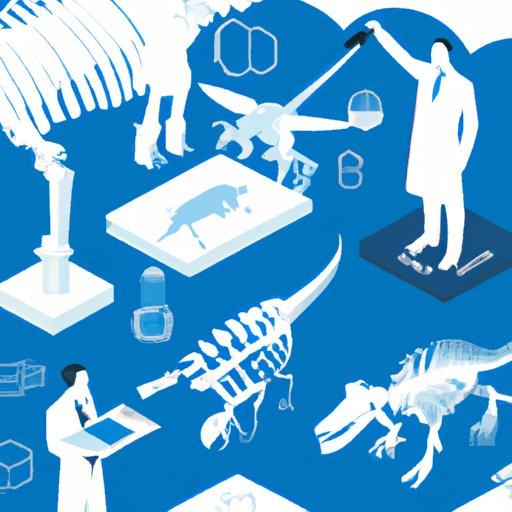
Fossils provide an important window into the history of life on Earth. By analyzing the remains of ancient organisms, we can gain insight into the processes of evolution and the way species have changed over time. The use of modern imaging techniques has been particularly useful for studying fossils, allowing researchers to examine them in unprecedented detail.
For example, computed tomography (CT) scans have been used to analyze the internal structures of fossilized skulls, providing new insights into the anatomy of extinct species. X-ray diffraction has also been used to create three-dimensional (3D) images of fossils, allowing scientists to study the fine details of their structure.
In addition, computer reconstruction has become an invaluable tool for creating digital models of ancient organisms. By combining data from multiple sources, such as CT scans, genetic analysis, and fossil records, scientists can create highly detailed digital representations of extinct species.
Utilizing Gene Sequencing to Trace Evolutionary History
Gene sequencing is another powerful tool for studying the history of evolution. By analyzing the genetic material of different species, scientists can trace their ancestral lineages and gain insight into the processes of adaptation and speciation.
For example, DNA testing has been used to identify species that are closely related and to determine how they are related to each other. This has allowed researchers to uncover previously unknown connections between species, providing valuable information about the history of life on Earth.
DNA sequencing has also been used to estimate the age of fossils. By comparing the genetic material of different species, scientists can determine when they diverged from a common ancestor and gain insight into the timing of evolutionary events.

Analyzing the Behavior of Organisms in Their Natural Environment with Drones and Remote Sensing
Drones and remote sensing technologies have been used to study the behavior of organisms in their natural environment. By using these technologies, scientists can collect large amounts of data without disturbing the animals or their habitat.
For example, drones have been used to monitor the movement of animals, allowing researchers to observe their behaviors in real time. This can provide valuable information about their interactions with their environment and the ways in which they are adapting to changing conditions.
Remote sensing technologies, such as satellites and aerial photography, have also been used to map the habitats of different species and to track changes in their distribution over time. This can help researchers understand how species are responding to environmental stressors and the ways in which they are evolving to survive in a changing world.
Using 3D Printing to Study Anatomical Structures of Extinct Species
3D printing has become an increasingly popular tool for studying the anatomy of extinct species. By using 3D printed models, scientists can examine the internal structures of fossils in greater detail than ever before.
For example, 3D printing has been used to create highly detailed replicas of dinosaur skeletons, allowing researchers to study the intricate details of their anatomy. 3D models can also be used to compare the skeletal structures of different species, providing insight into the ways in which they have evolved over time.
In addition, 3D printing has been used to reconstruct the faces of extinct species, providing valuable information about their appearance and behavior. This has helped scientists to better understand the ecology of ancient organisms and the ways in which they interacted with their environment.
Studying the Effects of Climate Change on Evolutionary Adaptation
Climate change is one of the most pressing issues facing the planet today, and it has the potential to drastically alter the course of evolution. By studying the effects of climate change on biodiversity, scientists can gain insight into the ways in which species are adapting to their changing environment.
For example, researchers have used genetic analysis to estimate the impact of climate change on the populations of different species. By studying the genetic diversity of different populations, scientists can determine how they are responding to environmental stressors and the ways in which they are evolving to survive in a changing world.
In addition, studies have been conducted to examine the responses of species to specific environmental changes, such as rising temperatures or changes in precipitation patterns. These studies can provide valuable information about the effects of climate change on evolutionary adaptation.

Exploring Predictive Models of the Future of Evolution with Artificial Intelligence
Artificial intelligence (AI) has become an increasingly important tool for exploring the future of evolution. By using AI-based predictive models, scientists can gain insight into the ways in which species may respond to changing environmental conditions and make predictions about the future of life on Earth.
For example, AI-based models can be used to predict the effects of climate change on biodiversity by analyzing the responses of species to different environmental stressors. This can provide valuable information about the likely outcomes of future evolutionary changes and help inform conservation efforts.
In addition, AI-based models can be used to examine the potential impacts of new technologies on evolutionary processes. By analyzing the effects of different scenarios, such as the introduction of genetically modified organisms, scientists can gain insight into the potential implications for the future of life on Earth.
Conclusion
Technology has played an important role in advancing our understanding of the theory of evolution. By utilizing imaging techniques, gene sequencing, drones, 3D printing, climate change, and predictive models, scientists have been able to uncover new insights into the history and future of evolutionary adaptation.
These advancements have allowed us to gain a deeper understanding of the processes of evolution and the ways in which species are responding to environmental change. As technology continues to evolve, it will no doubt play an even more important role in furthering our knowledge of the theory of evolution.
(Note: Is this article not meeting your expectations? Do you have knowledge or insights to share? Unlock new opportunities and expand your reach by joining our authors team. Click Registration to join us and share your expertise with our readers.)