
Introduction
Campbell Soup is an iconic American product that has been around for more than 150 years. It is widely consumed, but is it actually healthy? In this article, we will explore the nutritional value and health benefits of Campbell Soup, as well as the potential health risks associated with consuming it. We will look at the nutrient content of different varieties of Campbell Soup, compare it to other soups, and analyze the ingredients in each variety. We will also discuss the possible health benefits and risks of eating Campbell Soup, and make recommendations for healthy consumption.

Exploring the Nutritional Value of Campbell Soup
Campbell Soup comes in a variety of flavors and forms, including condensed soup, ready-to-eat soup, broth, and chunky soup. Each variety has its own unique nutritional profile. For example, one cup of Campbell’s Condensed Tomato Soup contains 160 calories, 3 grams of fat, 1 gram of saturated fat, 0 grams of trans fat, 1160 milligrams of sodium, 28 grams of carbohydrates, 2 grams of fiber, 4 grams of protein, and 10% of the daily recommended value of vitamin A.
When compared to other soups, Campbell Soup is relatively high in sodium and carbohydrates. For instance, one cup of Progresso Vegetable Classics Minestrone Soup contains 140 calories, 2.5 grams of fat, 0 grams of saturated fat, 0 grams of trans fat, 760 milligrams of sodium, 22 grams of carbohydrates, 5 grams of fiber, and 7 grams of protein. This shows that Campbell Soup is higher in sodium and carbohydrates, but lower in fiber and protein when compared to other soups.
Is Campbell Soup a Healthy Choice?
When it comes to determining whether or not Campbell Soup is a healthy choice, it is important to consider both the macro and micronutrients. As mentioned above, Campbell Soup is high in sodium and carbohydrates, which can be unhealthy if consumed in large amounts. On the other hand, it is also a good source of fiber, vitamins, and minerals. Additionally, many varieties of Campbell Soup are low in fat and contain no trans fats.
Overall, Campbell Soup can be a healthy choice when consumed in moderation. The key is to balance out the sodium and carbohydrates with other nutritious foods. Additionally, it is important to choose varieties that are low in fat and free of trans fats.

Analyzing the Ingredients in Campbell Soup
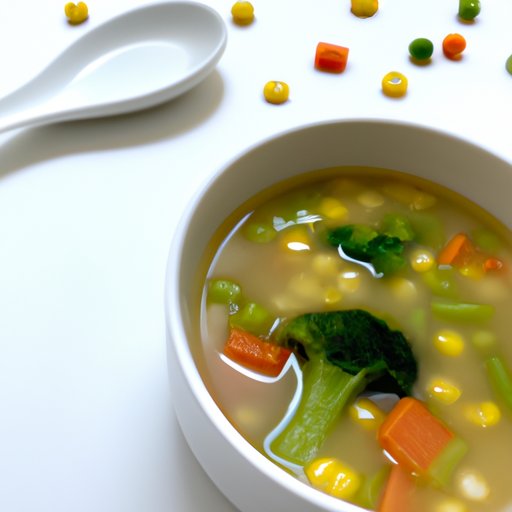
In addition to looking at the nutrient content of Campbell Soup, it is important to understand the ingredients in each variety. Common ingredients include tomatoes, carrots, celery, onions, potatoes, corn, peas, green beans, mushrooms, and beef broth. Some varieties may also contain added sugar, preservatives, artificial flavors, and MSG.
While most of these ingredients are generally considered to be healthy, some may pose certain health risks. For instance, some people may be sensitive to MSG or have allergies to certain ingredients. Additionally, some varieties may contain added sugar, which can increase calorie intake and potentially lead to weight gain.
An Overview of Campbell Soup’s Health Benefits
Despite the potential health risks associated with certain ingredients, there are still many potential health benefits from consuming Campbell Soup. For instance, Campbell Soup is a good source of vitamins and minerals, including vitamin A, vitamin C, iron, and potassium. Additionally, it is a low-fat, low-calorie option that can be a part of a healthy diet.
To maximize the health benefits of Campbell Soup, it is important to choose varieties that are low in fat, free of trans fats, and contain no added sugar. Additionally, it is important to balance out the sodium and carbohydrates with other nutritious foods.
Understanding the Health Risks of Eating Campbell Soup
While Campbell Soup can be a healthy choice when consumed in moderation, there are still potential health risks associated with it. As mentioned above, some varieties may contain added sugar, MSG, or other potentially harmful ingredients. Additionally, the high sodium content of Campbell Soup can increase blood pressure and put people at risk for heart disease.
To reduce the potential health risks associated with eating Campbell Soup, it is important to limit consumption and choose varieties that are low in fat, free of trans fats, and contain no added sugar. Additionally, it is important to balance out the sodium and carbohydrates with other nutritious foods.
Conclusion
In conclusion, Campbell Soup can be a healthy choice when consumed in moderation. It is a good source of vitamins and minerals, and can be a part of a healthy diet. However, it is important to remember that some varieties may contain added sugar, MSG, or other potentially harmful ingredients, and the high sodium content can increase blood pressure and put people at risk for heart disease. To maximize the health benefits and reduce the potential risks, it is important to limit consumption and choose varieties that are low in fat, free of trans fats, and contain no added sugar. Additionally, it is important to balance out the sodium and carbohydrates with other nutritious foods.
(Note: Is this article not meeting your expectations? Do you have knowledge or insights to share? Unlock new opportunities and expand your reach by joining our authors team. Click Registration to join us and share your expertise with our readers.)