
Introduction
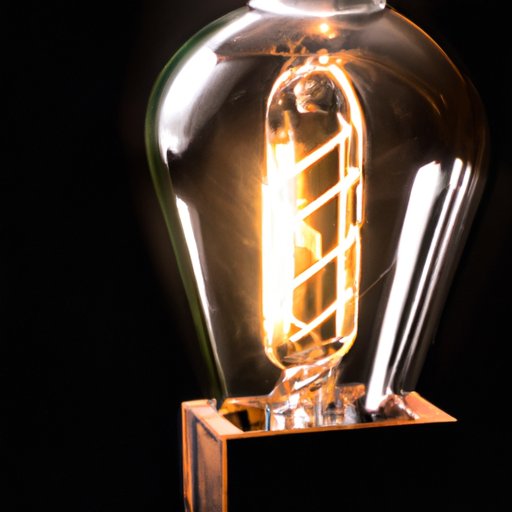
The invention of the electric light bulb is one of the most revolutionary inventions of all time. It changed the way that people lived, worked, and communicated with each other. While there were many inventors who contributed to the development of the light bulb, Thomas Edison is often credited as being the primary inventor. This article will explore the life and work of Thomas Edison and his contributions to the invention of the electric light bulb.
Biographical Exploration of Thomas Edison
Thomas Edison was born on February 11, 1847 in Milan, Ohio. His early education consisted of home schooling by his mother until he was seven years old. He then attended school in Port Huron, Michigan until the age of 12, when he decided to drop out and become an entrepreneur. Edison began selling newspapers and candy on trains, which eventually led him to pursue a career in telegraphy. After working as a telegraph operator for several years, Edison moved to New Jersey, where he established his first laboratory in 1876.
Throughout his career, Edison was granted more than 1,000 patents for his inventions. Most notably, he invented the phonograph in 1877 and the motion picture camera in 1891. However, it was his invention of the electric light bulb in 1879 that would become his most famous and influential invention. His work in the field of electricity revolutionized the world and paved the way for modern technology.

Race to Invent the Electric Light Bulb
Prior to Edison’s invention of the electric light bulb, there had been several attempts by other inventors to create an efficient and practical lighting system. William Sawyer and Albon Man had developed a carbon-filament lamp in 1875, but it had limited success due to its high cost and short lifespan. Other inventors such as Joseph Swan and Heinrich Göbel had also been working on similar ideas, but none of these inventions had achieved widespread success.
In 1878, Edison began focusing on the development of a practical incandescent light bulb. He conducted extensive research and experimentation, eventually developing a bulb with a carbon filament that could last up to 1,200 hours. Edison’s invention became the first commercially successful electric light bulb, and it quickly revolutionized the world.
“It was a tremendous achievement,” said Dr. Paul Israel, director of the Thomas A. Edison Papers at Rutgers University. “It wasn’t just the invention of the light bulb, but the entire infrastructure that went along with it — the wiring, the generators, the switches, the meters — that made it possible.”
Legacy of Thomas Edison
The impact of Edison’s invention of the electric light bulb cannot be overstated. The invention revolutionized the way that people lived and worked, allowing them to stay up later and work longer hours. It also allowed for the development of larger cities and a more interconnected global economy.
Today, Edison’s invention is celebrated in popular culture. He has been featured in numerous books, films, and television shows. He is remembered as one of the greatest inventors of all time, and his legacy lives on in the modern world.
Conclusion
Thomas Edison’s invention of the electric light bulb was a revolutionary milestone in human history. Edison’s life and career were marked by innovation and creativity, leading to the development of an invention that changed the world. His legacy continues to inspire generations of inventors and innovators, and his name will always be remembered as one of the greats.
(Note: Is this article not meeting your expectations? Do you have knowledge or insights to share? Unlock new opportunities and expand your reach by joining our authors team. Click Registration to join us and share your expertise with our readers.)